





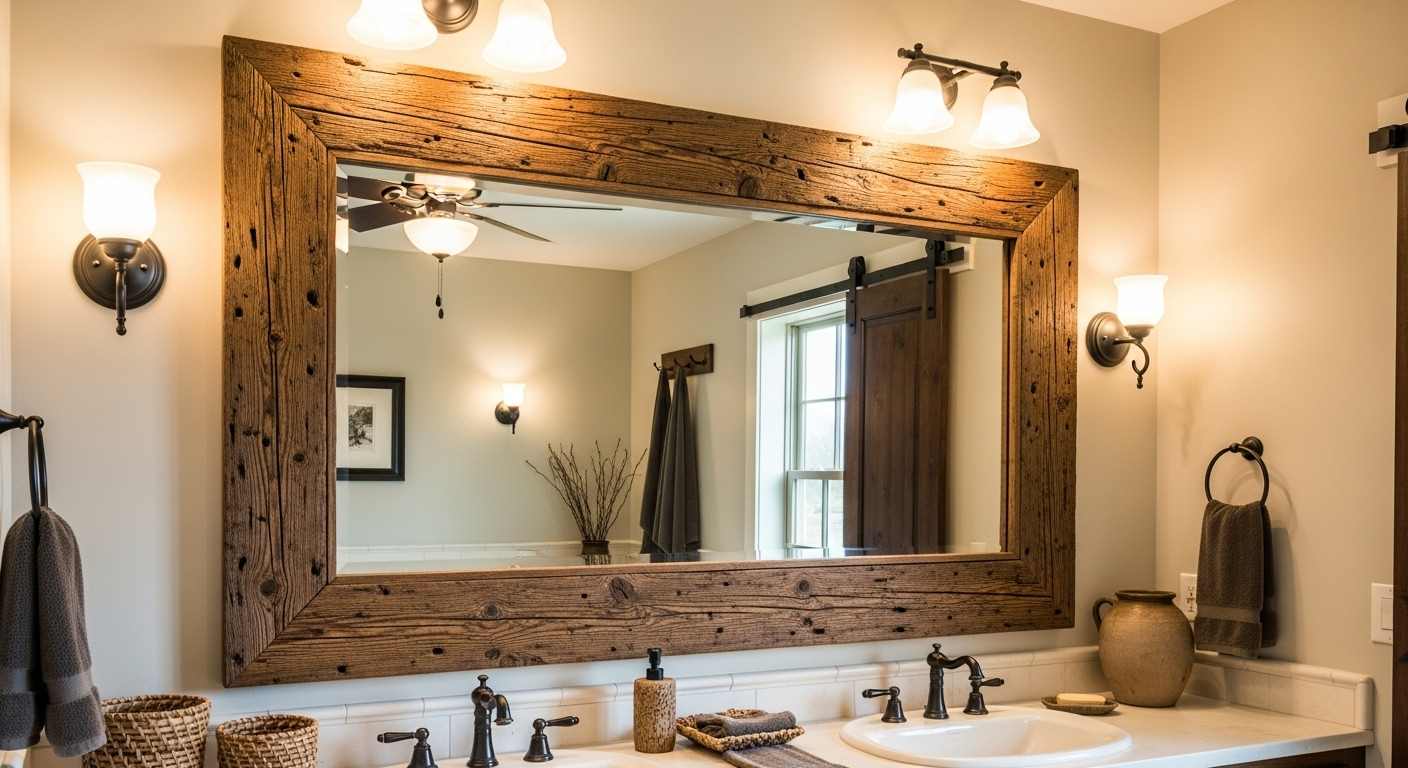

Homeowners often ask me what one design element can truly transform a bathroom, especially when they’re aiming for that warm, inviting look. My answer is consistently a rustic bathroom mirror. It’s far more than just a reflective surface; it’s a focal point, a piece of art, and it sets the tone for the entire space. As someone who’s spent decades hanging, framing, and installing these items, I’ve seen firsthand what works and what doesn’t.
- Finding the Perfect Rustic Mirror for Your Farmhouse Bathroom
- Rustic Bathroom Mirror Sizing and Placement: Getting it Right
- The Enduring Appeal of Wood-Frame Rustic Mirrors
- DIY Rustic Bathroom Mirror Projects: A Hands-On Approach
- Illuminating Your Rustic Bathroom Mirror: Practical Lighting Tips
- Frequently Asked Questions About Rustic Bathroom Mirrors
- Bringing it All Together
Getting it right involves more than just picking something pretty off the shelf. It’s about understanding materials, scale, placement, and how it all ties in with your lighting. Let me walk you through what I’ve learned from countless projects on rustic bathroom mirrors.
Finding the Perfect Rustic Mirror for Your Farmhouse Bathroom
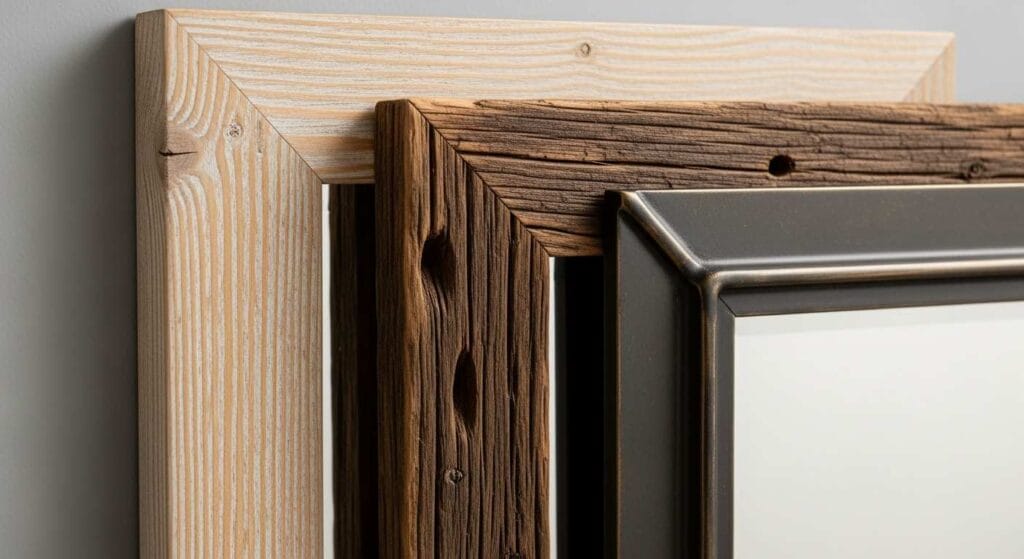
When my clients talk about “rustic” for their bathrooms, they’re usually looking for a blend of natural textures, warmth, and a touch of history. This style marries beautifully with farmhouse aesthetics, creating a cohesive, comforting look. The key to choosing the right rustic bathroom mirror for this style is to focus on materials and finishes that feel authentic and lived-in.
Think about reclaimed barn wood frames, for instance. Each piece tells a story with its unique grain, knots, and weathered patina. I’ve installed mirrors framed with centuries-old oak that just breathe character into a room. You might also consider frames made from distressed pine or fir, which can be stained or painted with a chalky finish for that classic farmhouse bathroom feel.
Sometimes, a dark metal frame, like an oil-rubbed bronze or a matte black steel, can also lean rustic, especially if it has visible joinery or a slightly industrial edge. It’s all about warmth and texture, moving away from sleek, modern lines. Brands like Rejuvenation often have great options that hit this sweet spot, durable enough for the bathroom environment.
Different Shades of Rustic Appeal
Rustic isn’t a single style; it’s a spectrum. On one end, you have the classic farmhouse, which favors lighter woods, often painted or limed, with simple, clean lines, sometimes even a shiplap-inspired frame. Then there’s the industrial rustic, which pairs wood with dark metal accents – think rivets or exposed bolts.
For a more lodge or cabin feel, you’d lean towards heavier, darker woods, perhaps with bark-on edges or a more rugged, hand-hewn look. The goal is to choose a rustic mirror that doesn’t just match your vanity but complements the overall story you’re trying to tell with your bathroom’s design.
Rustic Bathroom Mirror Sizing and Placement: Getting it Right
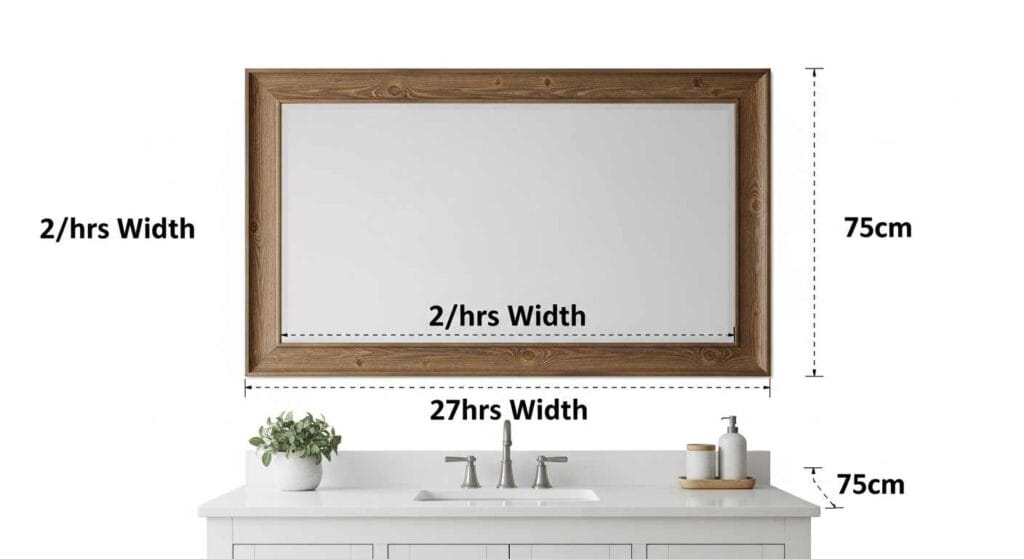
Getting the size and placement of your rustic bathroom mirror right is absolutely critical. A common mistake I see homeowners make is underestimating how much impact a mirror’s dimensions have on the visual balance of the room. It’s not just about fitting it above the sink; it’s about proper proportion and mirror sizing.
A good rule of thumb I always share is that the mirror should be no wider than your vanity itself. Ideally, it should be about 2-4 inches narrower than the vanity on each side. If you have a 36-inch wide vanity, a mirror between 28 and 32 inches wide usually looks best. For taller mirrors, aim for the top edge to be roughly eye level for the tallest user in the house, usually around 72-76 inches from the floor. This ensures everyone can comfortably see themselves without craning their neck or feeling dwarfed.
The “Rule of Two-Thirds” for Vanity Mirrors
For single vanities, I often guide clients to what I call the “rule of two-thirds.” The mirror’s width should be approximately two-thirds the width of the vanity. So, for a 48-inch vanity, a 32-inch wide mirror would be a solid choice. This creates a pleasing visual harmony.
For double vanities, you have a couple of options: two separate mirrors, each centered over its sink, or one large mirror that spans both sinks. If you go with two, apply the two-thirds rule to each section. If one large mirror, ensure it doesn’t extend beyond the vanity edges.
As for vertical placement, the bottom of the mirror should typically be at least 6-8 inches above the faucet to prevent splashing and allow for clearance. More importantly, it should sit comfortably above the backsplash, if you have one. And remember, the top of the mirror shouldn’t touch the ceiling, nor should it feel cramped between a light fixture and the vanity. Give your rustic bathroom mirror some breathing room; it’s a feature, not just a utility.
The Enduring Appeal of Wood-Frame Rustic Mirrors
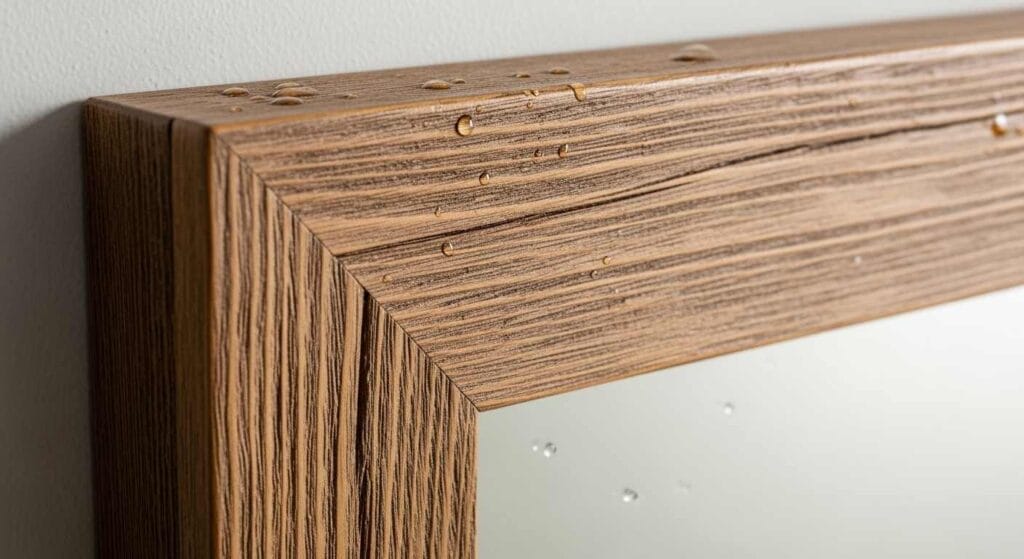
There’s something undeniably classic about a wood frame bathroom mirror. It brings warmth and natural texture that synthetic materials just can’t replicate. But when we talk about wood in a bathroom, the first thing I think about is moisture. Bathrooms are damp environments, so not just any wood will do.
For rustic wood-frame mirrors, my top picks are usually oak, maple, or even reclaimed pine. These woods are naturally durable and, when properly sealed, can handle the humidity fluctuations in a bathroom. Reclaimed barn wood, as I mentioned earlier, is fantastic because it’s already acclimated to significant environmental changes, making it quite stable. The key here is the finish.
A good quality polyurethane or a marine-grade varnish will protect the wood from moisture absorption and warping. Don’t skimp on this; an unprotected wood frame will eventually show signs of water damage, especially around the bottom edge.
Choosing the Right Wood Tone and Finish
The beauty of wood is its versatility. You can go with a dark, rich espresso stain for a more traditional, heavy rustic look, or opt for a light, natural oak with a clear matte finish to keep things bright and airy, perfect for a modern farmhouse. Distressed white or grey washes are also popular, giving that charming, slightly worn effect.
On a recent project, we used a rustic mirror with a naturally weathered grey reclaimed wood frame, pairing it with a simple white porcelain sink. The contrast was stunning and really highlighted the mirror as the centerpiece. When you pick a wood, think about how its tone will interact with your vanity, flooring, and even your wall color. You want it to complement, not clash.
DIY Rustic Bathroom Mirror Projects: A Hands-On Approach
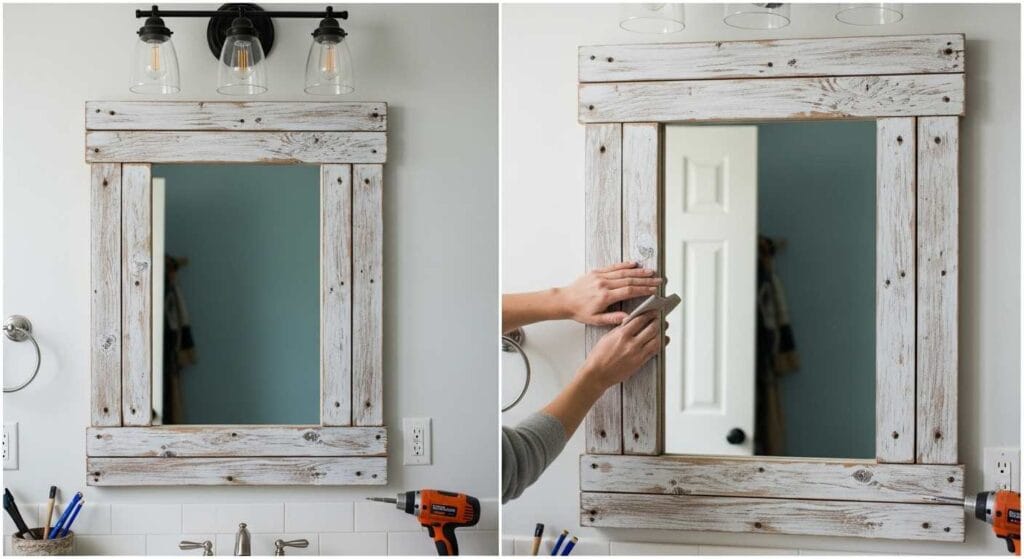
Now, I’ve seen plenty of folks tackle their own home projects, and creating a DIY rustic bathroom mirror can be incredibly rewarding. It allows for a truly custom piece that fits your exact vision and budget. But let’s be realistic – some projects are easier than others, and safety always comes first.
For a beginner, the easiest approach is to frame an existing plain mirror. You can buy a basic, unframed mirror (or use one you already have) and then build a simple frame around it using planks of wood. Reclaimed pallet wood or fence pickets are popular choices here because they’re inexpensive and often already have a weathered look. Just make sure the wood is clean and free of pests.
Cut your pieces to size, miter the corners for a cleaner joint (though butt joints can also look rustic), sand them down, and then apply your desired stain or paint. Use a strong adhesive and small brad nails to secure the frame to the mirror or wall. Always use proper eye protection and gloves when cutting wood.
Advanced DIY Techniques for a Custom Look
For those with a bit more experience, you might consider distressing new wood to give it an aged appearance. There are several methods:
Wire brushing: This pulls out the softer grain, leaving behind a raised, textured surface.
Hammering/chaining: Carefully create dents and dings for a “worn” look.
Paint distressing: Apply a base coat, then a contrasting top coat, and lightly sand or scrape in areas to reveal the base.
Vinegar and steel wool solution: This creates a natural grey, weathered patina on unfinished wood, especially oak or pine.
Remember, the goal is to make it look authentically old, not just damaged. Always seal your finished DIY rustic mirror frame, especially if it’s going in a bathroom, to protect it from moisture. A good clear matte polyurethane will maintain the rustic look while offering essential protection. And if you’re working with a large mirror, always have a second pair of hands for installation. Those things can be heavy and awkward.
Illuminating Your Rustic Bathroom Mirror: Practical Lighting Tips
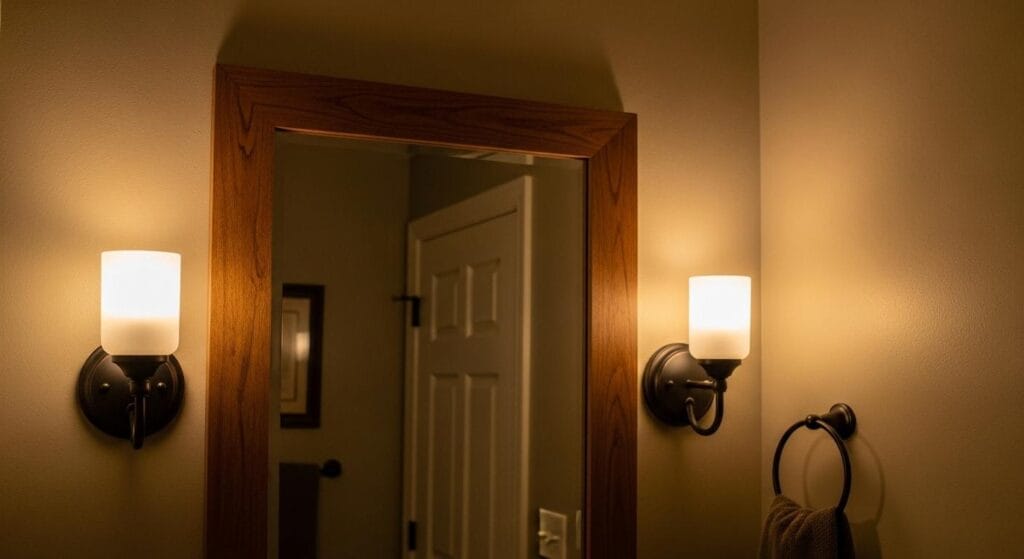
You can have the most beautiful rustic bathroom mirror in the world, but if your lighting is wrong, it won’t shine. The right lighting doesn’t just make your mirror functional for tasks like shaving or applying makeup; it enhances the mirror’s aesthetic and contributes to the overall ambiance of your rustic bathroom.
My go-to recommendation for task lighting around a rustic mirror is usually sconces. Mounting sconces on either side of the mirror at eye level (typically around 60-65 inches from the floor) provides even, shadow-free illumination. For a rustic look, choose fixtures with oil-rubbed bronze, matte black, or distressed metal finishes. Glass shades can be clear or frosted, depending on how much direct light you want. If side sconces aren’t feasible, a vanity light bar mounted directly above the mirror can work, but choose one that’s long enough to span most of the mirror’s width to avoid harsh shadows.
Beyond Task Lighting: Setting the Mood
Beyond the practical, consider the color temperature of your light bulbs. For a warm, inviting rustic feel, I always recommend bulbs in the 2700K to 3000K range (warm white). Anything higher, like 4000K or 5000K, tends to be too cool and sterile, clashing with the natural warmth of a rustic design. And for goodness sake, put your lights on a dimmer switch. This allows you to adjust the brightness for different times of day and moods, transforming your bathroom from a bright task-oriented space to a soft, relaxing retreat. It’s a small detail, but it makes a huge difference.
One mistake I often see is homeowners using exposed bulbs that are too bright or have an unnatural tint. Or, they install a single overhead light that casts shadows on your face when you’re standing at the mirror. Think about where the light is coming from and how it hits your face. You want light from the sides or evenly from above, not directly from behind you, which creates unflattering shadows. Choose fixtures that complement the rustic charm of your bathroom mirror, perhaps with a touch of seeded glass or a cage design, to complete the look.
Frequently Asked Questions About Rustic Bathroom Mirrors
What defines a rustic bathroom mirror style?
A rustic bathroom mirror style is characterized by its use of natural, often unfinished or distressed materials like wood (especially reclaimed barn wood) and sometimes metal. It emphasizes warmth, natural textures, and a lived-in, aged aesthetic, often featuring visible grain, knots, or handcrafted elements rather than sleek, polished finishes.
How do you properly size a rustic mirror for your bathroom?
To size a rustic mirror properly, ensure it’s slightly narrower than your vanity (typically 2-4 inches on each side) or about two-thirds the width of your vanity. For vertical placement, the bottom should be at least 6-8 inches above the faucet, and the top around eye level for the tallest user, allowing ample space above and below.
Can you hang any mirror in a bathroom environment?
No, not any mirror is suitable for a bathroom. While the glass itself is fine, the frame material and its finish are crucial. Wood frames should be properly sealed with a polyurethane or marine-grade varnish to prevent moisture absorption and warping. Metal frames should be rust-resistant. Unprotected materials will quickly degrade in a humid bathroom environment.
What’s the best lighting to complement a rustic bathroom mirror?
The best lighting for a rustic bathroom mirror involves sconces mounted on either side of the mirror at eye level for even illumination. If using an overhead vanity light, ensure it spans most of the mirror’s width. Choose fixtures with rustic finishes like oil-rubbed bronze or matte black, and use warm white bulbs (2700K-3000K) on a dimmer.
Are there common pitfalls to avoid when installing a rustic mirror?
Absolutely. A common pitfall is improper sizing, leading to a mirror that looks too small or too large for the vanity. Another is inadequate sealing of wood frames, causing moisture damage. Lastly, poor lighting placement, such as a single overhead light, can create unflattering shadows. Always ensure proper anchoring for heavy mirrors and sufficient protection against humidity.
Bringing it All Together
Choosing a rustic bathroom mirror is a fantastic way to inject warmth and character into your space. It’s more than just a piece of glass; it’s a statement that enhances your entire bathroom design. By paying attention to the details – the right materials, the perfect size and placement, and thoughtful lighting – you can create a bathroom that feels both functional and beautifully designed. Trust me, taking the time to plan these elements properly will make all the difference, creating a space you’ll genuinely love every day.