





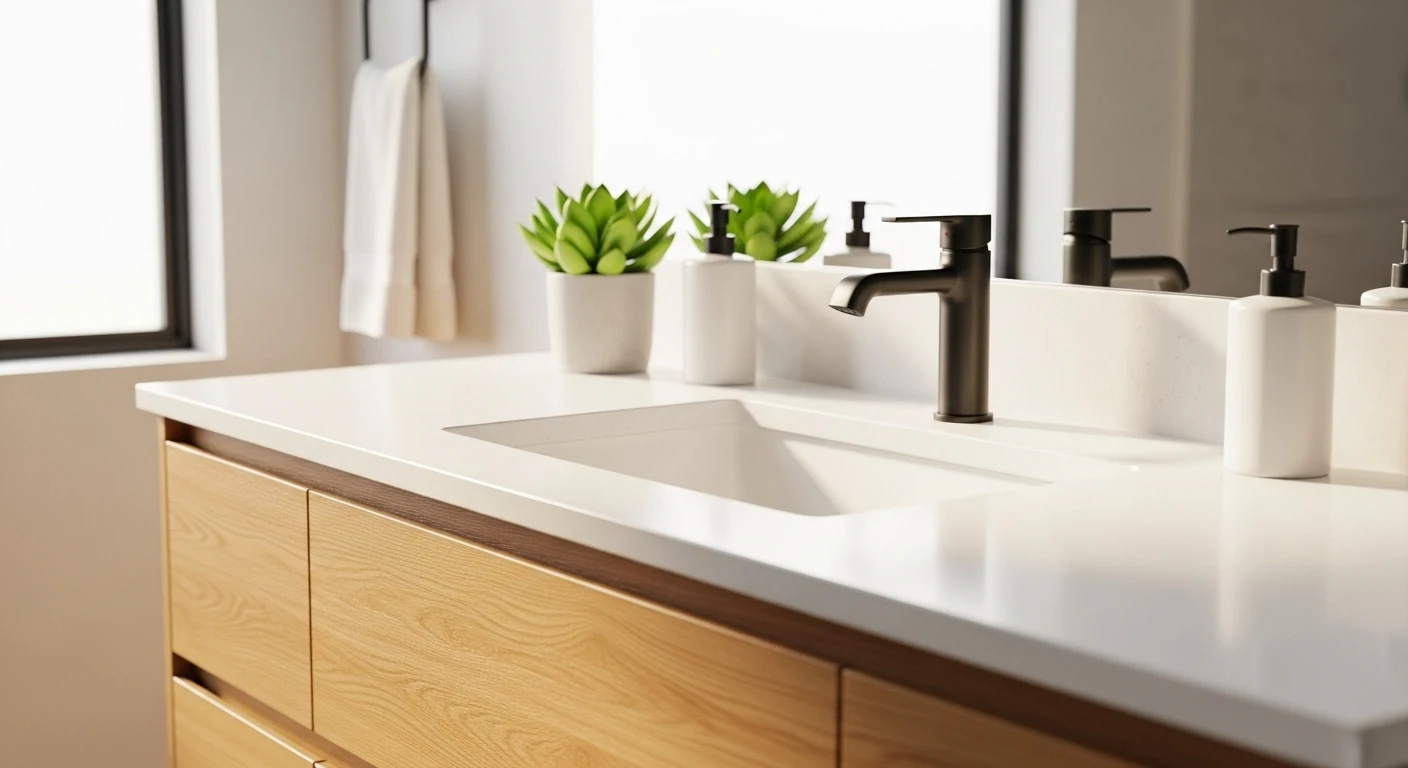

Right, sinks. People think it’s the last thing to worry about, just some little piece of a whole bathroom job, but it’s the thing you use every day. Washing your hands, brushing your teeth. It matters.
I’ve been pulling out vanities and fitting new ones since ’98. I’ve seen choices people love and choices they regret. Mostly regret, if I’m being honest. The goal here is just to tell you what I’ve seen. The real stuff, not the garbage they put in the fancy brochures.
We’ll go over the types, the materials, and the little installation details that can turn a weekend project into a month-long disaster.
The 4 Main Bathroom Sink Types
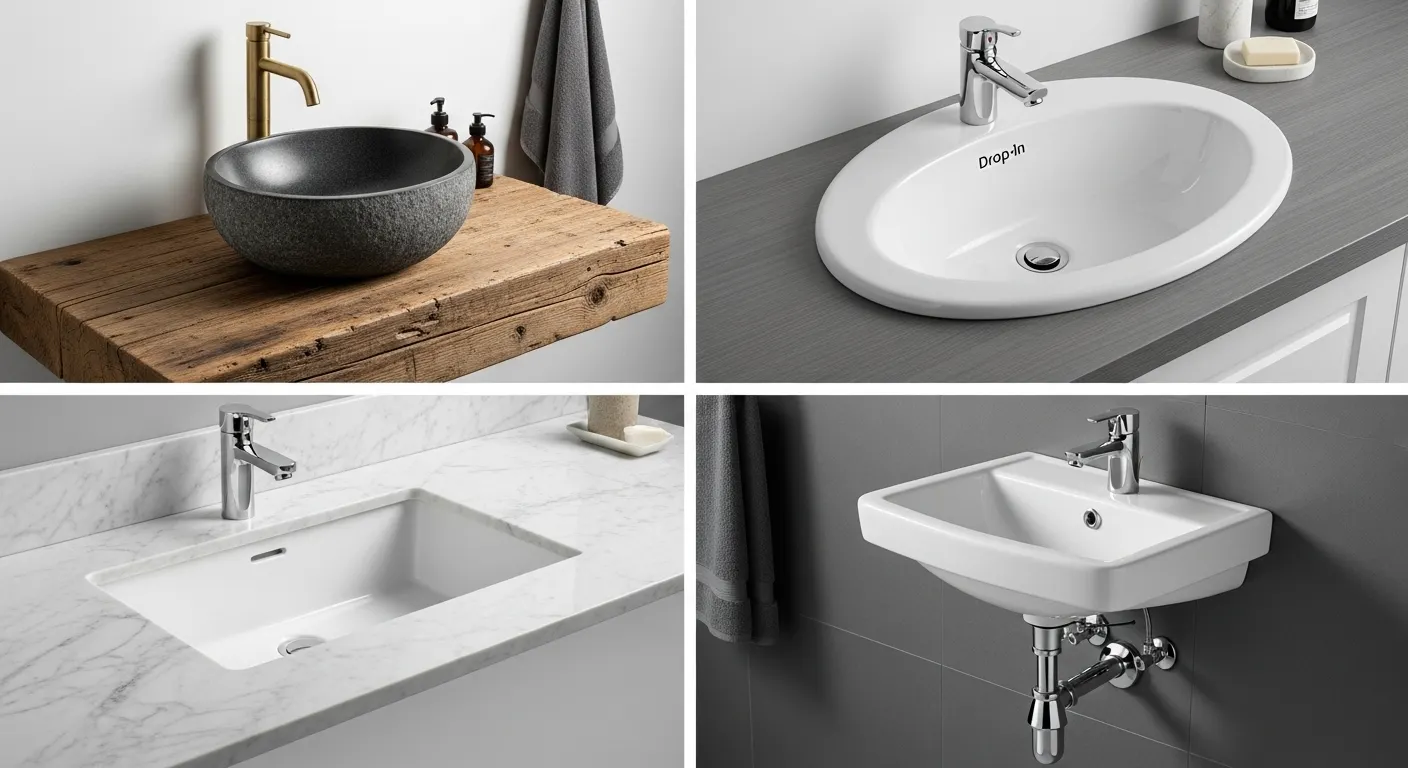
The first thing you have to decide is how the sink hooks up to the counter or the wall. This changes everything—the look, how much it costs to get some guy like me to put it in, and how much you’re going to curse while cleaning it. Let’s get into the main styles.
Vessel Sinks
It’s a bowl. Sits right on top of the counter. People love these because they make a statement. You got a nice piece of wood or granite for a countertop, a vessel sink shows it off. It’s more of a decoration than a sink, really.
Installation has to be perfect, though. You need a special tall faucet for it, or one that comes out of the wall. And if your plumber—say, a guy like Bob who does most of my jobs—doesn’t get the placement just right, water goes everywhere. Every single time you wash your hands.
The biggest complaint? Cleaning that little gap where the bowl meets the counter. It’s a trap for dust and hair and all sorts of gunk. A real pain.
Drop-In Sinks
The old standard. Probably the one your parents had. They call it a self-rimming sink because it has a lip that rests on the countertop. Supports its own weight.
These are the easiest to install, no question. Good for a weekend DIY job if you’re feeling brave. You cut a hole, run a bead of silicone around it, and just plop the sink in. Done.
But that lip. That stupid lip. You can’t just wipe water or spilled toothpaste from the counter straight into the basin. It gets caught. And that silicone seam will get yellow and gross if you don’t stay on top of it.
Undermount Sinks
This is what most people want now. The clean look. It mounts underneath the counter, so the surface is totally flat. Makes cleaning a dream. You just wipe everything right into the sink.
It’s the most popular choice for a reason. But here’s the catch, and it’s a big one: You CANNOT use these with a laminate countertop. Period. The exposed edge of the particleboard will soak up water and swell and just fall apart. I had to tell a woman that last spring, over on Chamberlain Street. She’d already bought the sink. Rough conversation. They only work with solid stuff—stone, quartz, concrete.
And they’re a pain to install. Lots of clips, heavy-duty adhesive. It’s gotta be right.
Wall-Mounted Sinks
Just what it sounds like. It hangs on the wall. No cabinet, no countertop. Great for tiny little powder rooms where you want to make the room feel bigger than it is.
You see all the plumbing underneath, so you have to spend a little extra on a nice chrome P-trap and supply lines, otherwise it looks cheap. The big issue, the one that gets people into trouble, is the wall.
The wall has to be solid. I mean solid. You need a 2×6 or some other piece of blocking inside the wall to bolt it to. You can’t just hang a sink on drywall. I get calls all the time from people who bought one and then realized we have to tear open the wall to install it properly. It becomes a whole project.
Look, that’s a lot to keep straight. To make it easier, here’s how the four main types stack up side-by-side.
| Sink Type | The Good Part | The Bad Part | My Verdict |
|---|---|---|---|
| Vessel | Makes a big style statement; shows off your countertop. | Hard to clean around the base; needs a special tall faucet. | Best for a powder room you want to show off, not for a busy family bathroom. |
| Drop-In | Easiest to install; very DIY-friendly; affordable. | The lip on the counter gets in the way of cleaning. | The practical, no-fuss choice if you’re installing it yourself. |
| Undermount | Super easy to clean the counter; sleek, modern look. | Harder to install; only works with solid countertops. | The best all-around option if you have a stone or quartz top and a pro is installing it. |
| Wall-Mounted | Saves a ton of floor space; great for small rooms. | Needs a reinforced wall to hang it; exposed plumbing. | A great solution for tiny bathrooms, but the installation can be a major project. |
My Take: For 90% of bathroom remodels I do, it comes down to drop-in versus undermount. The undermount looks cleaner, but the drop-in is way more forgiving for a DIY job. Choose based on your countertop and your courage.
How to Choose the Best Bathroom Sink Material
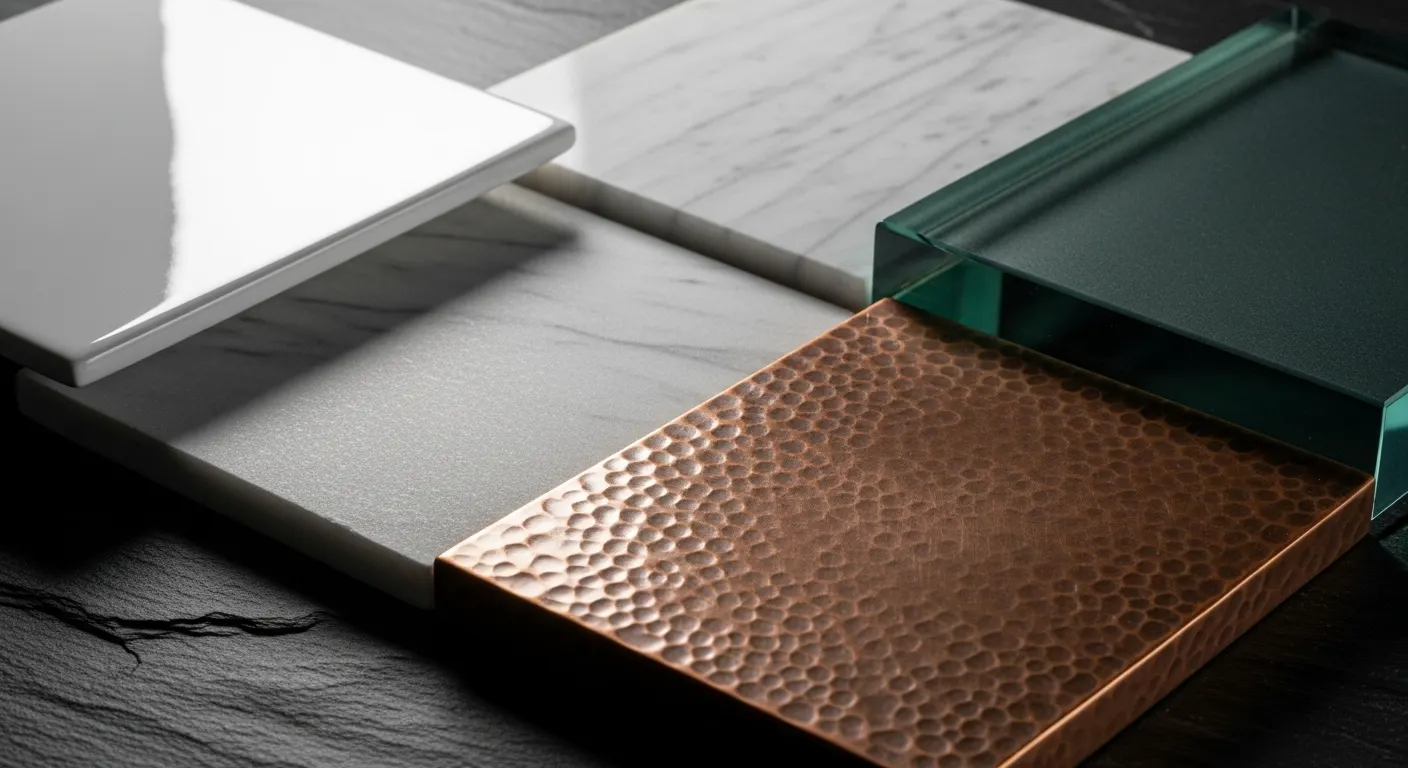
What the sink is made of matters. A lot. It affects how it looks, sure, but also how long it lasts and how much you have to baby it. I’ve seen shiny new sinks get stained or chipped inside of a year.
Ceramic, Porcelain, and Vitreous China
This is the normal stuff. The classic. Porcelain, ceramic… same difference to most people. Vitreous china is just a fancy name for ceramic with a really tough, glossy glaze baked onto it.
It’s good. It works. It’s affordable and easy to clean. For most houses, it’s the right call. But it’s not bulletproof. Drop a heavy wrench in there and it can chip or crack. And you can’t really fix a chip. It’ll just be there. Forever. Taunting you.
Natural Stone
Marble, granite, travertine sinks. They look incredible. Like something out of a magazine. Each one is totally unique.
But the reality is… they’re a headache. Most stone is porous, like a sponge. It has to be sealed, maybe once or twice a year, or it’ll stain from makeup or soap. They’re also heavy as hell. Your vanity better be built for it. And don’t even think about using the wrong cleaner on marble, it can eat right through the finish.
Glass
The glass bowls. Yeah. I see a lot of these in the vessel style. They look sleek and modern.
Everyone’s worried they’re going to shatter. They won’t. Modern tempered glass is incredibly strong. You’d have to try pretty hard to break one. The real problem is they look dirty five minutes after you clean them. Water spots, toothpaste, fingerprints. Everything shows. You’ll go crazy wiping it down all the time unless you just don’t care.
Metal
Copper and stainless steel. You don’t see them as much, but they make a big impression. Copper has that rustic, farmhouse vibe. Stainless is more of an industrial, restaurant-kitchen look.
The thing with copper is that the color changes. That’s the point. It develops a patina. Gets darker. Then maybe you spill some lemon juice on it and it leaves a bright, shiny spot… which will then slowly darken again over time. It’s a living finish, they call it. Not for everyone.
All those materials sound good in the brochure, but they behave differently in a real house. Here’s the no-nonsense breakdown.
| Material | How Tough Is It? | The Biggest Headache | The Bottom Line |
|---|---|---|---|
| Ceramic & Porcelain | Very tough and non-porous. Can chip if you hit it hard. | A bad chip is permanent. You can’t really repair it. | The reliable standard. It’s the right choice for most people. |
| Natural Stone | Depends on the stone. Can be scratched or etched by cleaners. | Needs to be sealed regularly to prevent stains. It’s porous. | High-maintenance beauty. Only get it if you’re committed to the upkeep. |
| Glass | Surprisingly strong. Not going to shatter easily. | Shows every single water spot and fingerprint. A nightmare to keep clean. | Looks sleek and modern, but you’ll be wiping it down constantly. |
| Metal | Very durable. Copper is soft and can dent. | Copper changes color over time, which some people don’t like. | A unique look for a specific style, but be ready for the living finish. |
Pro-Tip: Don’t get sold on looks alone. That beautiful stone sink might look great in the showroom, but are you really going to seal it every year? Be honest with yourself. For most folks, good old vitreous china is the smart, worry-free choice.
Modern Bathroom Sink Designs and Trends
Trends are trends. They come and go. But a few of the newer designs are sticking around because they actually make sense. The biggest one I’m seeing is the integrated sink.
That’s where the countertop and the sink are all one piece. Molded from the same stuff, like quartz or some solid surface material. The big advantage is there are no seams. No cracks. Nowhere for gunk to build up. It’s the easiest thing in the world to clean.
Trough sinks are getting popular, too. Long, wide sinks. Good for a master bathroom for two people. You can put one faucet on it or two. It’s a clean look.
Also seeing a lot of sinks with really thin edges now. Not the big, chunky ceramic sinks from 20 years ago. These newer materials let them make the sink walls thinner, so it looks a little lighter, more elegant. I guess.
A Guide to Bathroom Sink Size and Installation
You have to get the size right. This part isn’t optional. A sink that’s too big leaves you with no counter space. A sink that’s too small just looks weird and splashes everywhere.
First, measure the vanity. You want at least a few inches of counter on each side of the sink, just to set stuff down. Four to six inches is good. Same for the depth—leave some room at the back for the faucet and some at the front so you’re not bumping into it.
Then think about the faucet. They have to match. Sinks come with one hole, or three holes. The three-hole ones are for either a small centerset faucet or a big widespread one. A vessel sink might not have any holes at all. Buying the wrong combination is a classic, expensive mistake.
And for God’s sake, look under the cabinet first. Before you buy anything. Open the doors and look at the pipes. Make sure the drain on your new, deep, beautiful sink isn’t going to run smack into the plumbing in the wall or the drawer slides for your vanity.
Classic and Vintage Bathroom Sink Styles
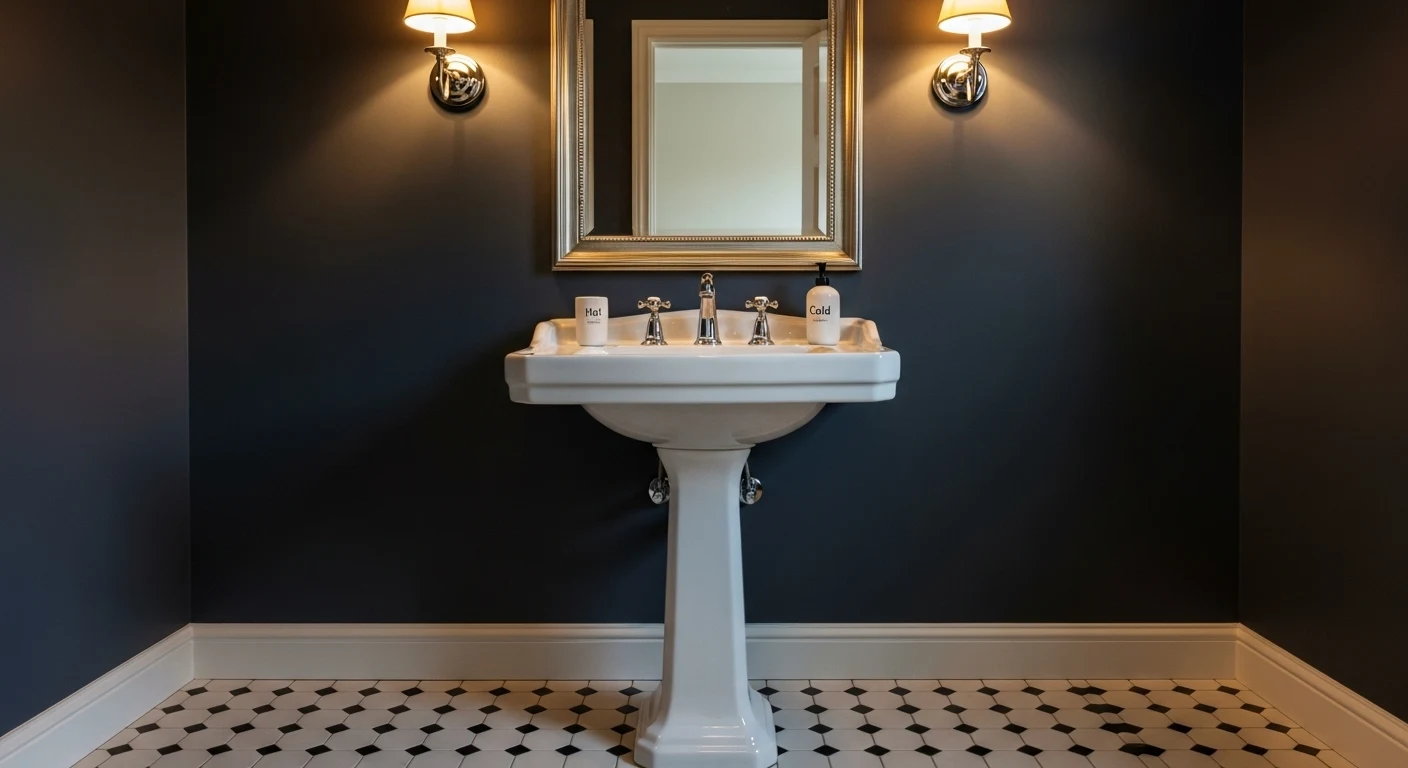
Some of the old styles never really go away. They just work. The pedestal sink is one. It’s just a basin on a stand. Looks elegant, makes a small bathroom feel bigger. The downside is obvious: zero storage. Zero counter space. Nowhere to even put your toothbrush.
Console sinks are sort of making a comeback. That’s a sink held up by legs, usually two or four of them made of chrome or brass. Gives you a little more counter space than a pedestal, and sometimes a little shelf underneath for towels. Still not much storage.
You even see apron-front or farmhouse sinks in bathrooms now, which used to just be for kitchens. They’re big and deep. But like the wall-mounted sinks, a lot of these vintage styles need really good support in the wall behind them. You gotta plan for it.
Finding the Right Bathroom Sink for You
Look, choosing a sink is about finding that spot where the look you want meets the reality of your life. Don’t just look at a picture in a magazine and say I want that.
Think about it. How are you going to clean it? What kind of faucet does it need? Will it work with your countertop? What’s the installation really going to be like? A sink that looks great but is a total pain in the neck is a choice you will regret. Every day.
Weigh the good and the bad of each type, and you’ll end up with something that works for you. Something you won’t want me to have to rip out in five years.
What is the most durable material for a bathroom sink?
Vitreous china. The standard stuff. It just lasts. It’s fired at a super high temperature with a glaze on it, so it’s hard to scratch, doesn’t stain. It’s what 90% of sinks are made of for a reason. If you want to get crazy, cast iron is tougher, but that’s overkill for a bathroom.
Are vessel sinks out of style?
No, not really. People are just smarter about how they use them now. It’s not the hot trend for every single bathroom anymore. They’re used as a statement piece, for a specific modern or rustic look. You see more of them in matte finishes or stone now instead of that clear glass that was everywhere for a while.
What is the easiest type of bathroom sink to install?
The drop-in. No contest. You just cut a hole, put down some silicone, and set it in. The lip covers any minor mistakes in your cut. It’s the most forgiving, for sure.
How do I know what size sink to get for my vanity?
Measure your countertop. Leave yourself some landing room on the sides—at least four inches on the left and right. You need a place to put your stuff. For depth, from front to back, make sure you have a couple of inches of clearance in the front and enough room for the faucet behind it.
What is the difference between porcelain and ceramic sinks?
People use the words for the same thing, but technically they’re a little different. Ceramic is the clay. Porcelain is made from a finer, denser clay that’s fired at a hotter temperature. That makes it stronger and less porous. Almost all the sinks you buy today are either porcelain or vitreous china, which is just porcelain with an extra-tough glaze.