





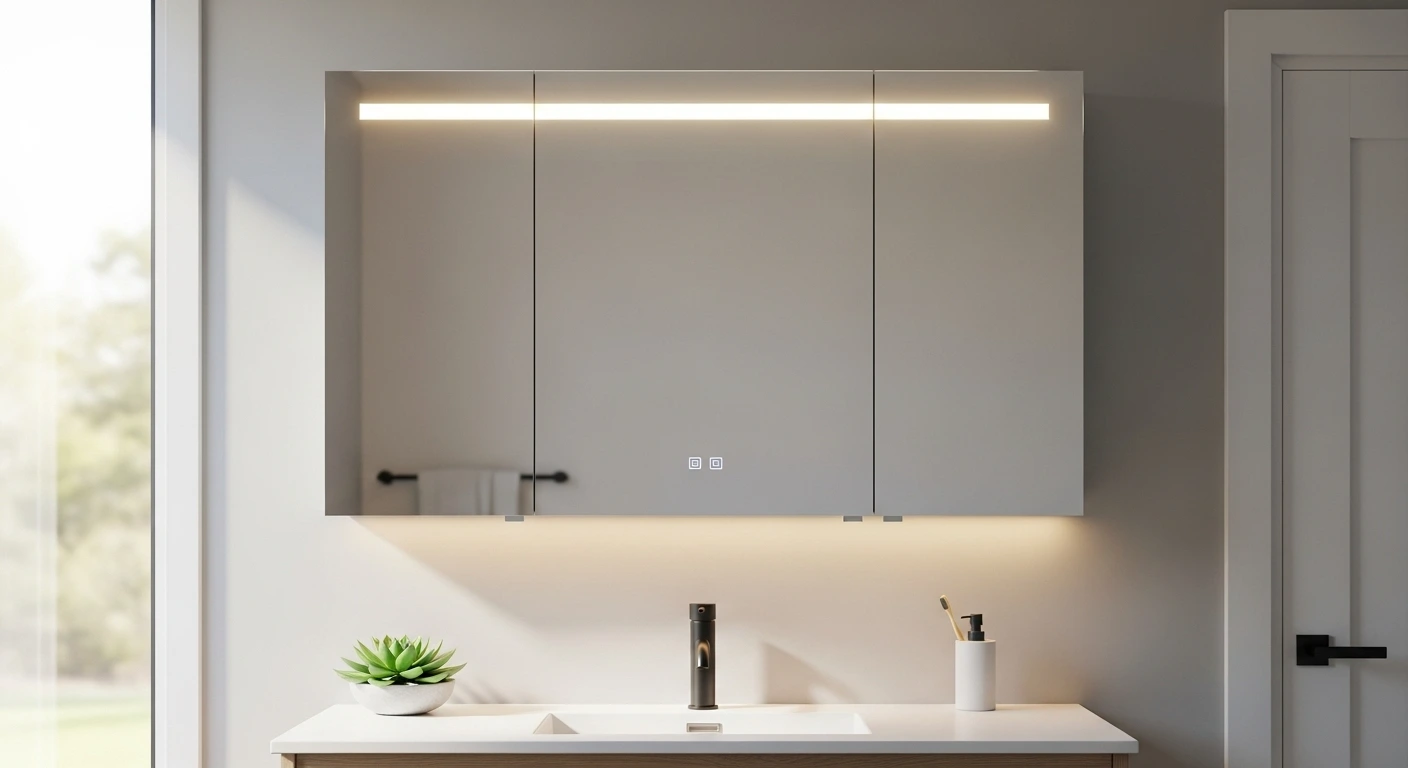

Alright. So you’re picking a cabinet with a light.
Seems simple. It’s not.
Used to be just a box with a mirror. A place for your aspirin and some toothpaste. Now they’ve got… circuits. Bluetooth. Who needs Bluetooth in their bathroom mirror? I don’t know.
I’ve been putting these things in since ’98, and I’ve seen it all. Had a woman over on Elmhurst Ave last year, her cabinet had a TV in the mirror. A TV. She was watching the news while brushing her teeth. Point is, the most expensive one with all the junk isn’t always the best one. It’s about what you’re actually gonna use day in and day out.
This is just what I’ve seen. Don’t listen to the marketing.
Understanding LED Lighting: Task vs. Ambient
First, the light. It’s the whole point.
Everything is LED these days. Which, fine. They don’t burn out every six months and they keep the electric bill down. But just because it says LED on the box doesn’t mean it’s good. There’s a lot of junk out there. You need to know what you’re looking at.
Essential Task Lighting
Task lighting. That’s the one that matters.
It’s the light for doing stuff. Shaving. All that. Usually it’s strips on the side of the mirror, sometimes the top. The idea is to hit your face evenly. No shadows. Simple.
But here’s where people get lost. The numbers. Look for color temperature, measured in Kelvins, or K. You want something in the 3000K to 4000K range. Anything more and it’s like an interrogation room. Just cold and awful.
The other one, and this is the one they don’t talk about enough, is the Color Rendering Index (CRI). Has to be 90 or higher. Has to. Anything less and colors look wrong. Your skin looks green. It’s a mess. I had to rip one out for a client once because she said it made her look sick every morning. And you know what? It did.
Look, the lighting specs can get confusing. Let’s put ’em side-by-side so you know what to look for on the box.
| Lighting Spec | What it Really Means | My Recommendation |
|---|---|---|
| Color Temperature (K) | How warm or cool the light feels. | 3000K to 4000K. This is a clean, natural light. |
| Color Rendering Index (CRI) | How accurately the light shows colors. | 90 or higher. No exceptions. |
My Take: Don’t skim past these numbers. The CRI, especially, is the difference between looking normal and looking like you have the flu every morning. Insist on 90 or higher.
Atmospheric Ambient Lighting
Then there’s the other light. The ambient one.
This is for mood. It’s the glow behind the cabinet that shines on the wall. Or maybe a little light that points down at the sink. It’s not for function, it’s for… atmosphere. I guess.
People like it for a nightlight, so you’re not blinded in the middle of the night. That makes sense. Some of the pricey ones let you dim it or whatever. It’s fine. It’s a frill.
Integrated Lighting Systems
And of course, some have both. The task lights and the mood lights. Gives you all the options. Bright in the morning, soft glow at night. Full control.
Honestly, out of all that, the single most useful thing is just having a dimmer on the main front lights. That’s it. That’s the one feature that isn’t just a gimmick.
Smart Features Explained: Anti-Fog, Sensors, and More
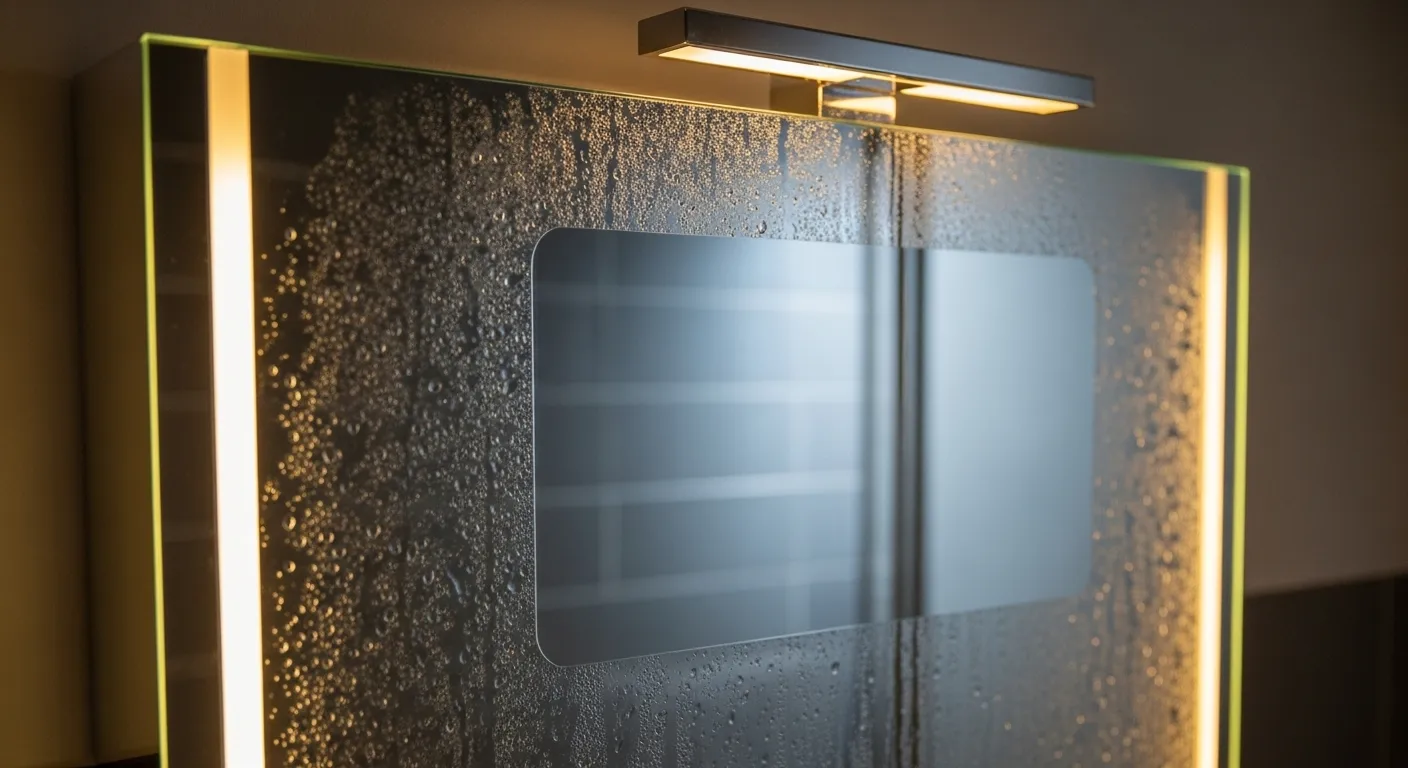
Okay, the smart stuff.
This word gets slapped on everything. For a cabinet, the one feature that’s actually smart is the anti-fog pad. The defogger.
It’s dead simple. A little heating pad on the back of the glass. Just warms it up a bit. And it works. No more wiping the mirror with a towel after a shower. If you got a small bathroom with a weak fan, and most people do, this thing is worth its weight in gold. It’s probably the the only ‘smart’ feature I’d pay extra for without thinking twice.
You’ll also see the little touch buttons on the mirror. Little glowing circles you poke. Turns on the light, the defogger, all that. Looks clean. I get it. Some have a motion sensor on the bottom. You walk up, a little light comes on underneath. Handy, I guess. So you don’t stub your toe.
But. And this is a big but. It’s more electronics. More things that can fail. And when that little touch sensor stops sensing, it’s not a simple fix. It’s not. You’re looking at a big repair bill, if you can even get the part. Something to consider.
And then there’s the other stuff. The pure nonsense. Built-in Bluetooth speakers. Digital clocks. I told you about the TV. I mean, come on. Do you really need to listen to a podcast through your bathroom cabinet?
Maybe you do. I don’t know your life.
Just worry about the light and the storage space first. That’s the cabinet’s job. All the other stuff is just fluff to get you to spend more money.
To make it real simple, here’s how I break down the ‘smart’ features for my clients—the good, the bad, and the just plain silly.
| ‘Smart’ Feature | What It Does | Is It Worth It? (My Opinion) |
|---|---|---|
| Anti-Fog Pad | Gently heats the mirror to prevent steam-up. | Yes. Absolutely. This is the number one useful feature. |
| Touch Sensors | Buttons on the mirror surface to control lights. | Maybe. Looks clean, but it’s another electronic part that can fail. |
| Motion Sensor | Turns on a small light when you approach. | It’s a gimmick. A nice little nightlight but not essential. |
| Bluetooth Speakers | Plays music from your phone through the cabinet. | No. The sound quality is never great. Just buy a real speaker. |
Pro-Tip: The anti-fog is the only one I tell people is a must-have, especially in older homes with tiny bathrooms. The rest are just bells and whistles that can break.
Choosing Your Mirrored Bathroom Cabinet with Light Installation
Now, the installation. This is where people mess up.
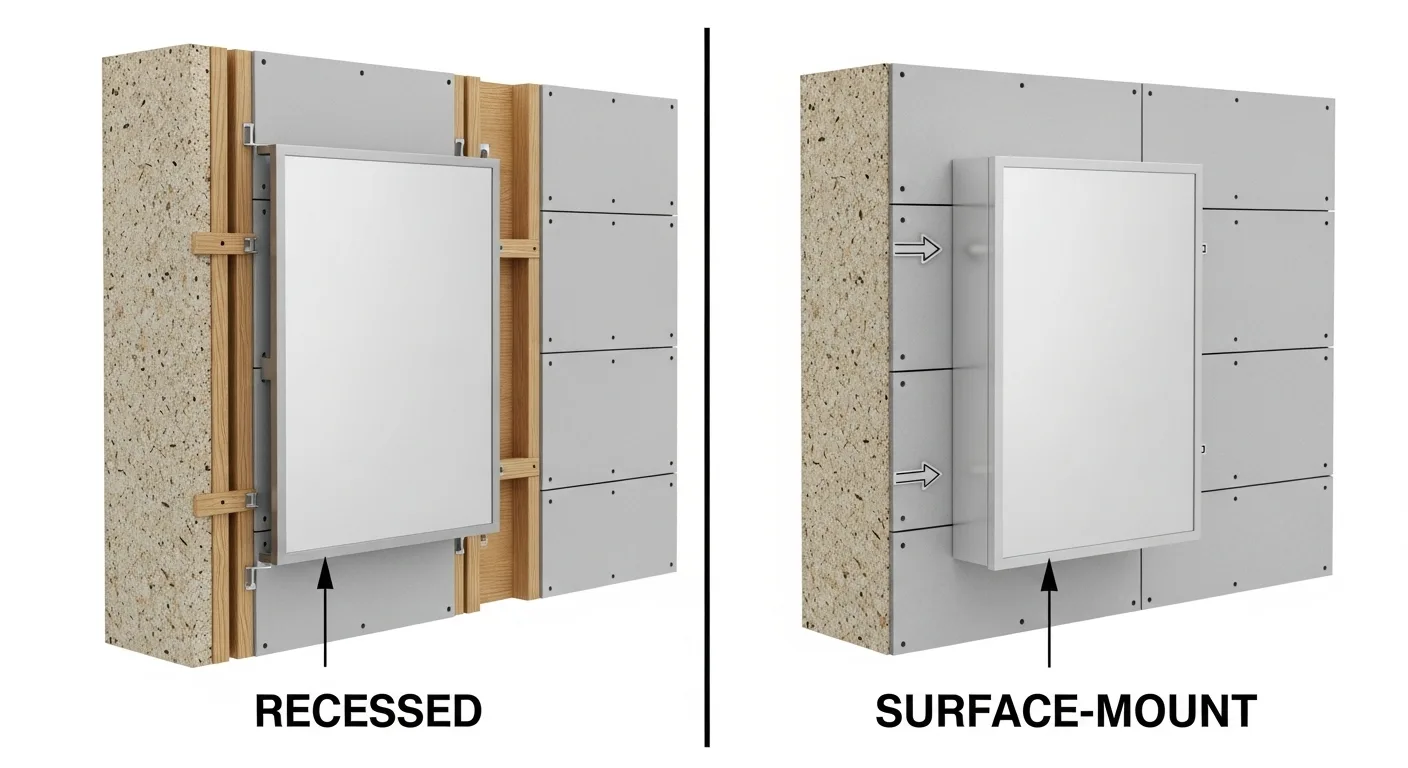
You absolutely have to know how you’re going to hang this thing before you buy it. It changes everything. There are two ways to do it: in the wall, or on the wall. Recessed or surface mount.
The Recessed Installation
A recessed installation. This is the one everybody wants. The cabinet box goes inside the wall. All you see is the mirror, flush with the drywall. Looks slick. Very clean. Saves space.
But it’s a whole thing.
Your wall isn’t empty. There’s stuff in there. Studs, usually 16 inches apart. Most cabinets are made to fit right between them. But there could also be plumbing. Wires. All sorts of fun surprises.
I had a job over on Stanton Place, the guy bought this beautiful recessed cabinet. We open the wall… and there’s a big ol’ bundle of ancient wiring running right through the middle. Just couldn’t do it. He had to return it and get a surface mount.
You, or your contractor, has to look inside that wall before a single dollar is spent. Don’t guess.
The Surface Mount Installation
The other way is a surface mount installation. It’s just what it sounds like. You hang the whole box on the surface of the wall.
Much, much easier. You just find some studs, drive in a few screws, and you’re done. No cutting big holes in the drywall. It’s the simple way.
The downside? It sticks out. Four, five, sometimes six inches from the wall. If you’ve got a tiny bathroom, you’ll be knocking your head on it every time you lean over to spit out toothpaste. It just… feels bulky. A lot of them have mirrored side panels now to try and make them disappear a little bit. It helps. Sort of.
Okay, recessed or surface mount. This is a big decision. Let’s break down the pros and cons of each so you can see it all in one place.
| Installation Type | The Good Part | The Bad Part | What You Need to Know |
|---|---|---|---|
| Recessed | Sits flush with the wall. Looks clean, saves space. | Harder to install. Requires cutting drywall. | You MUST check for pipes, wires, and studs in the wall first. |
| Surface Mount | Easy to install. Hangs on the wall like a picture. | Sticks out from the wall. Can feel bulky in a small room. | Make sure you have enough clearance over your faucet. |
My Take: Everyone wants recessed, but not every wall can handle it. Be honest about your space and your budget. A well-installed surface mount cabinet is a thousand times better than a botched recessed job.
Maximizing Storage: Interior Layout and Features
Don’t forget the whole reason you’re getting a cabinet is to store stuff. All the lights and defoggers are nice, but if it can’t hold your deodorant, what’s the point?
Think about depth. Most are about four inches deep inside. Fine for a bottle of pills. Not so great for one of those big electric toothbrushes or the giant shampoo bottles. If you buy in bulk, get a deeper model. Just remember a deeper box sticks out more if it’s a surface mount.
Inside, they all pretty much have adjustable glass shelves. Standard stuff.
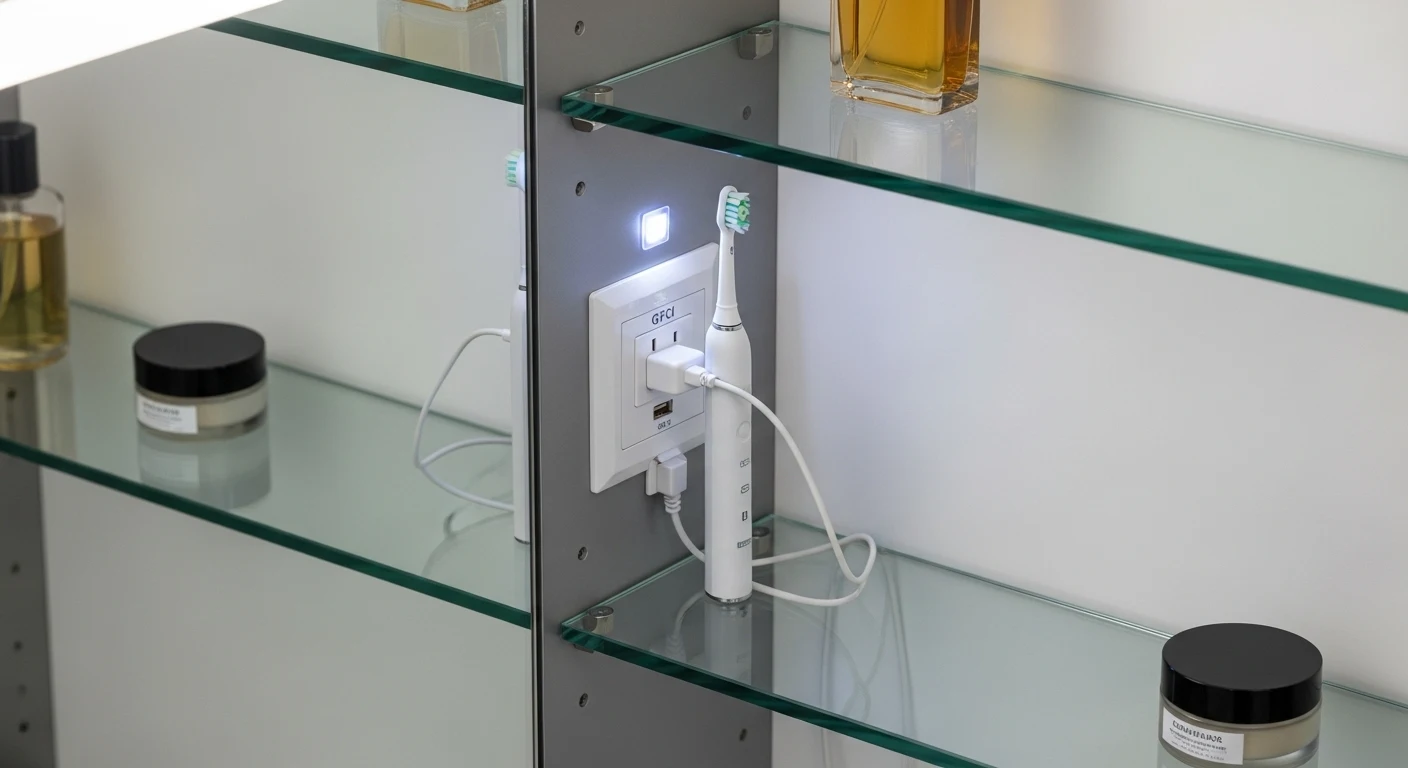
But here’s another feature that’s actually worth the money: electrical outlets and USB ports. Inside the cabinet. This is great. You can charge your toothbrush or your shaver in there, with the door closed. No more wires all over the counter. My electrician, Steve, he puts these in all the time. You do have to make sure the wiring is done right, it’s gotta be on a GFCI-protected circuit for safety because, you know, water. But it’s worth it.
Key Mirror Features: Quality, Magnification, and Style
Last thing. The mirror itself.
A bathroom is a wet place. Steam, splashes. Cheap mirrors die in there. You ever see that black crud that creeps in from the edges of an old mirror? That’s called black edge. It’s the backing failing. You want a copper-free mirror. They last way longer and don’t do that. It’ll say it on the box. If it doesn’t, assume it’s the cheap kind.
Then there’s the other little things. Some have a little magnification mirror built right into the main mirror. That can be handy. For the edge of the glass, you’ll see a beveled edge, which has that angled cut look, kind of traditional. Or a polished edge, which is just a flat, clean edge for a more modern look. That’s just looks. Pick what you like.
When it comes to the glass edge, it’s just about the look you’re going for. Here’s the simple difference:
| Edge Style | The Look | Best For… |
|---|---|---|
| Beveled Edge | Angled, decorative cut around the perimeter. | Traditional or classic bathroom styles. |
| Polished Edge | Flat, simple, and clean edge. | Modern or minimalist designs. |
My Take: This one is purely about looks. Don’t let a salesperson tell you one is ‘better’ than the other. Pick the one that matches your faucet and your tiles.
Conclusion
So, yeah. It’s a cabinet. With a light. It’s an important choice, though. It’s something you’re going to use every single day.
Just be smart about it. Think about the light quality first—that CRI number matters. Figure out if you can even do a recessed one before you fall in love with it. And pay for the features you’ll actually use, like the anti-fog system and the interior outlets. Not the Bluetooth.
Do that, and you’ll probably end up with something that doesn’t make you angry every morning. And that’s about the best you can hope for.
Can you replace the lights in an LED cabinet?
People ask this all the time. The short answer is no. Not really. The LEDs are built in. They’re supposed to last 50,000 hours or whatever crazy number the box says. But if one fails? You can’t just screw in a new bulb. You’re calling the manufacturer, hoping they have the part, and paying someone to take the whole door apart. It’s a reason to not buy the cheapest no-name brand you can find online. A good warranty is important here.
Do anti-fog mirrors use a lot of electricity?
No. It’s nothing. The heater pad pulls less power than your alarm clock. Most of them have a timer anyway so they shut off after an hour. You will not notice it on your bill. Don’t worry about it.
What is the ideal height to mount a medicine cabinet?
Where to hang it. The goal is to have the middle of the mirror at about eye level for whoever uses it most. A good starting point is to put the centerline of the cabinet maybe 60 to 65 inches off the floor. But it depends. Look at your faucet—you need to be able to open the door without hitting it. And look at the vanity. Does it look right? Put it on the wall and have someone hold it. Step back. Look at it. Then mark your holes. There’s no single magic number.
led bathroom cabinet, anti, fog medicine cabinet, recessed vs surface mount cabinet, bathroom lighting CRI, medicine cabinet with outlets, copper, free mirror, bathroom storage solutions, illuminated bathroom cabinet, bathroom vanity cabinet with lights
Understand LED Lighting
Focus on essential task lighting. Look for a color temperature between 3000K and 4000K and a Color Rendering Index, or CRI, of 90 or higher to ensure accurate color representation and avoid harsh, unflattering light.
Evaluate Key Smart Features
Prioritize the anti-fog or defogger feature, which is highly practical for steamy bathrooms. Be cautious with other electronics like touch sensors or Bluetooth speakers, as they add complexity and potential points of failure.
Determine Your Installation Type
Decide between a recessed installation, which sits flush inside the wall for a clean look, or a surface mount installation, which hangs on the wall and is easier to install. You must check for in-wall obstructions before choosing recessed.
Maximize Storage and Functionality
Consider the cabinet’s interior depth to ensure it fits your items. Look for valuable features like integrated electrical outlets and USB ports inside the cabinet to charge devices like toothbrushes and shavers discreetly.
Check the Mirror Quality and Style
Choose a high-quality, copper-free mirror to prevent “black edge” corrosion. Select a beveled edge for a traditional look or a polished edge for a modern aesthetic based on your bathroom’s style.