







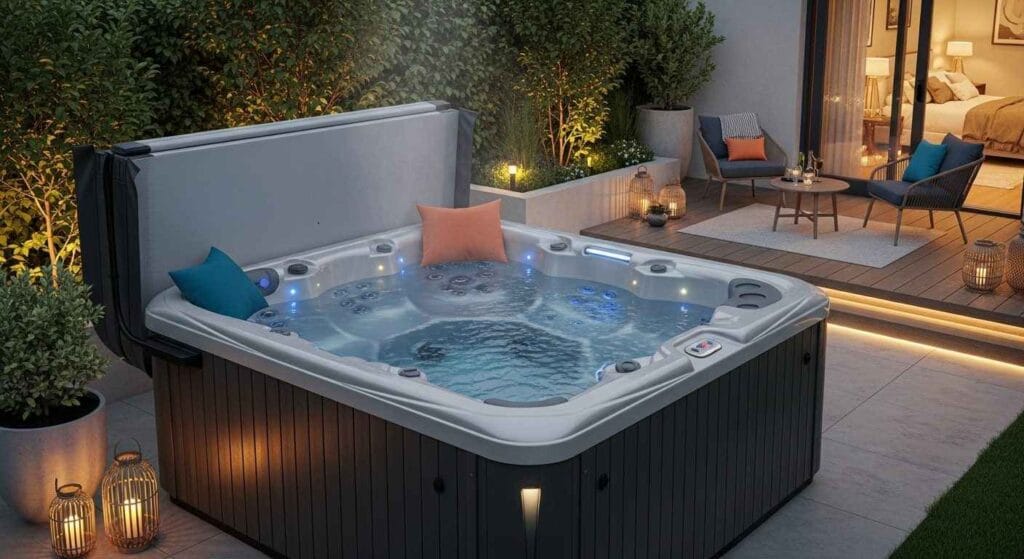
After years in this trade, I’ve seen countless homeowners dream of bringing the luxury of a hot tub into their outdoor spaces, only to be held back by the size of their yard or patio. That’s where small Jacuzzi hot tubs come into their own. They’re a fantastic solution for compact areas, offering all the benefits of hydrotherapy and relaxation without demanding a huge footprint.
- Choosing the Best Small Hot Tub for Your Compact Space
- Your Essential Buying Guide for Small Jacuzzi Hot Tubs
- Setting Up Your Small Jacuzzi: A Contractor’s Installation Guide
- Keeping Your Small Hot Tub Pristine: Essential Maintenance Advice
- Smart Savings: Making Your Small Hot Tub Energy Efficient
- Frequently Asked Questions About Small Jacuzzi Hot Tubs
- Conclusion
But choosing one, installing it right, and keeping it running smoothly? That takes a bit of know-how. I’m here to share what I’ve learned on the job, helping you avoid common pitfalls and get the most out of your compact spa. It’s all about making smart choices upfront for these incredible small hot tubs.
Choosing the Best Small Hot Tub for Your Compact Space
Finding the right small hot tub for a tight spot isn’t just about picking the smallest model; it’s about optimizing for your specific area and needs. When clients ask me, “What’s the smallest hot tub available?” I usually point them towards models designed for two to three people, which typically measure around 5.5 to 7 feet on each side. Brands like Jacuzzi offer excellent compact options, such as their J-315 or J-210 models, which are perfect examples of how much therapy can be packed into a smaller footprint. These are often round or square and are specifically engineered for intimate relaxation.
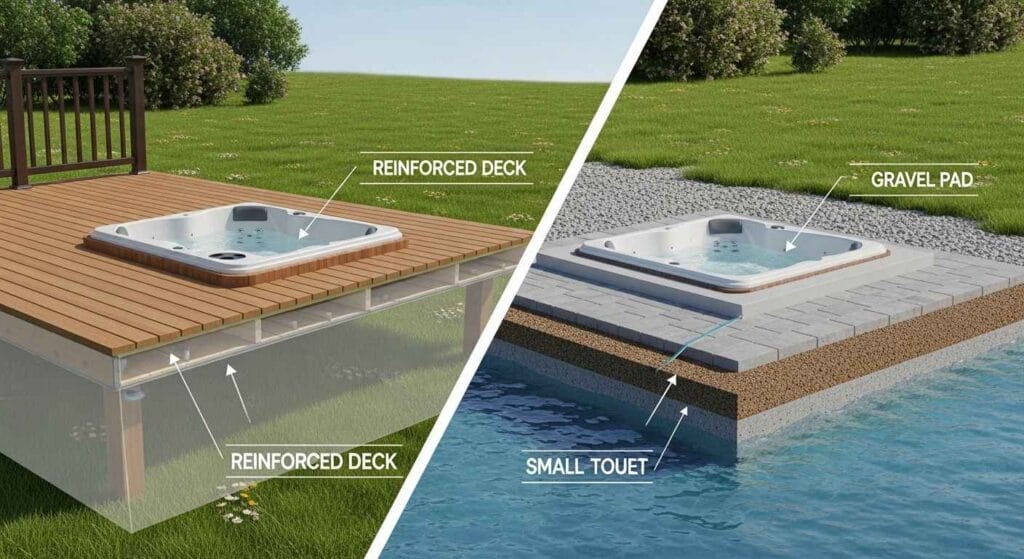
One of the biggest questions I get is about putting a hot tub on a deck. The answer is usually yes, a small hot tub can go on a deck, but there are crucial considerations. Most compact hot tubs, once filled with water and occupied by a couple of people, can easily weigh 3,000 to 4,000 pounds. This isn’t something to guess about; it demands careful planning.
You absolutely need to have a structural engineer confirm that your deck can handle that kind of concentrated load. I’ve seen folks try to skip this step, and it never ends well. Always prioritize safety and ensure the deck joists and supports are robust enough for your deck hot tub.
Sometimes, a reinforced concrete pad or a compacted gravel base directly on the ground is a much simpler and safer option for smaller yards, removing the need for deck reinforcement. It really comes down to the specifics of your site.
Your Essential Buying Guide for Small Jacuzzi Hot Tubs
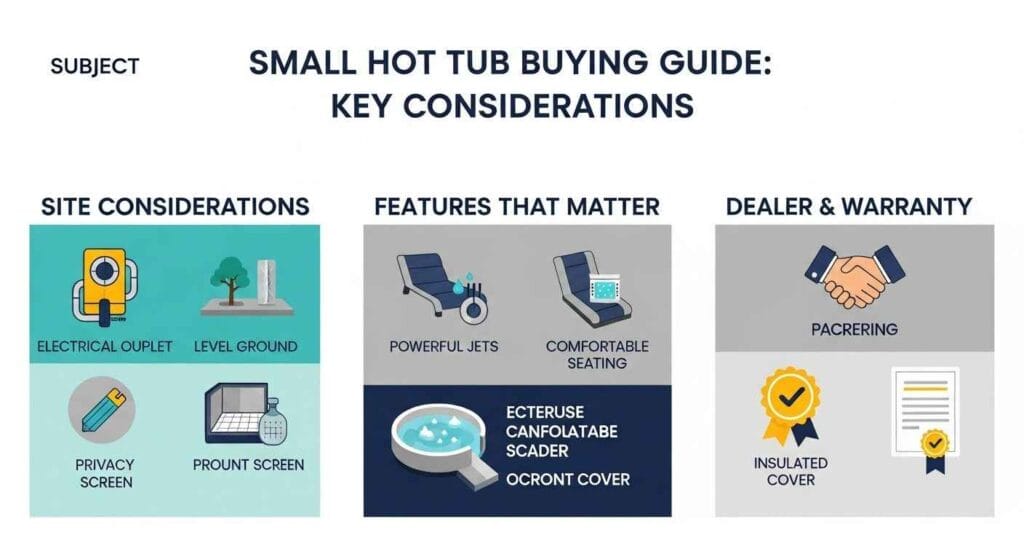
Purchasing a small Jacuzzi hot tub involves more than just liking the look of a model; it’s about understanding what truly matters for long-term enjoyment and hassle-free ownership. From my experience, thinking ahead about these points can save you a lot of grief down the line.
Site Considerations: Power, Placement, and Privacy
Before you even start looking at models, visualize your space. Where will the hot tub go? You need a level, stable surface – whether it’s a reinforced deck, a concrete slab, or a well-prepared gravel pad. Next, consider access to power. Many compact hot tubs operate on a 120V “plug-and-play” system, which is convenient for installation, but these often heat slower and can’t run the heater and jets simultaneously at full power. For a true Jacuzzi experience with consistent heating and powerful jets, a 240V dedicated electrical circuit is usually required.
This means a professional electrician will need to install a 50-amp or 60-amp GFCI breaker in your main service panel. Don’t underestimate this step; it’s non-negotiable for safety and performance. Finally, think about privacy. Will you be exposed to neighbors? Plan for screens, pergolas, or strategic landscaping to create your own secluded oasis.
Features That Matter in a Compact Spa
Even in a small hot tub, the right features make all the difference. Look for high-quality jets that offer varied hydromassage options – some for deep tissue, others for gentle relaxation. Jacuzzi is known for its specialized jets, so pay attention to the jet configurations in the models you’re considering. Seating comfort is also key; some small tubs have lounge seats, while others offer more upright options.
Consider your body type and how you’ll primarily use the tub. Don’t forget the hot tub cover – this is crucial for insulation and safety. A thick, well-insulated cover will save you money on energy bills and keep debris out. Integrated lighting and easy-to-use control panels are nice bonuses that enhance the experience.
Dealer and Warranty: Your Long-Term Partners
I always tell my clients that who you buy from is almost as important as what you buy. A reputable local dealer can offer invaluable advice on site prep, installation, and ongoing maintenance. They’ll also be your point of contact for any warranty issues. Jacuzzi, for instance, typically offers robust warranties, but understanding what’s covered (shell, equipment, labor) and for how long is essential.
Ask about their service department and how quickly they respond to issues. A cheap deal online might seem appealing, but if you have a problem, that distant seller won’t be showing up to help you fix a plumbing leak or an electrical fault.
Setting Up Your Small Jacuzzi: A Contractor’s Installation Guide
Getting your new small Jacuzzi hot tub set up correctly is crucial for both safety and longevity. This isn’t a step where you want to cut corners. Believe me, I’ve had to fix plenty of issues that could have been avoided with proper initial installation.
The Right Location and Base
First off, your chosen spot needs to be dead level. Water finds its own level, and if your hot tub isn’t perfectly flat, you’ll put undue stress on the shell and frame, potentially voiding warranties over time. For a ground-level installation, I typically recommend either a reinforced concrete slab (at least 4 inches thick with rebar) or a compacted crushed gravel base (6-8 inches deep) with a concrete paver or tamped sand top layer to ensure a smooth, level surface.
Ensure there’s enough clearance around the tub for future access to the equipment panel, usually about 18-24 inches. And remember that deck weight calculation I mentioned earlier? If it’s going on a deck, that professional structural sign-off is non-negotiable. Don’t just eyeball it and hope for the best.
Electrical Hook-up: Don’t Skimp Here
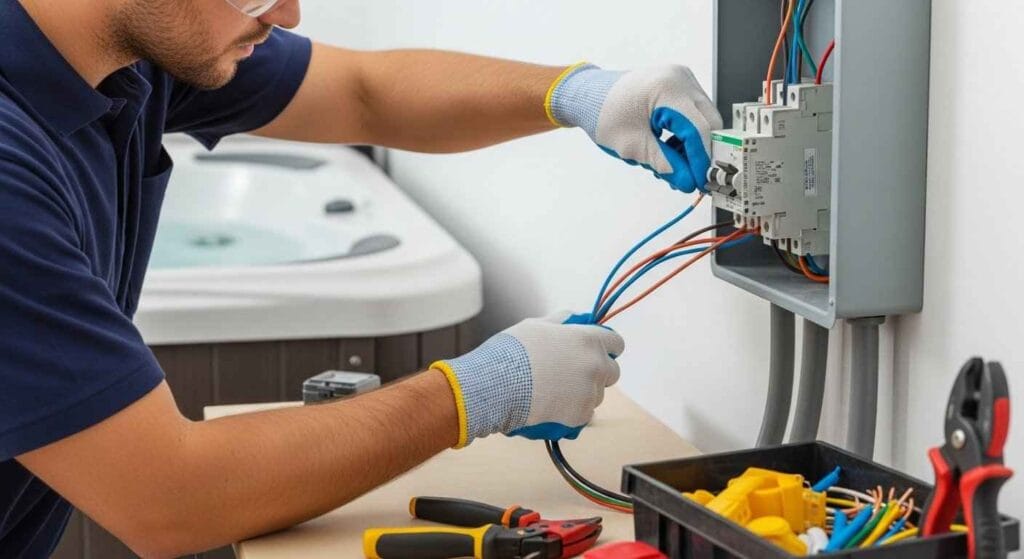
This is where things get serious. If you’re going with a 240V hot tub – which I highly recommend for performance – you absolutely need a licensed, qualified electrician. They’ll install a dedicated 240V circuit, typically 50 or 60 amps, with a ground-fault circuit interrupter (GFCI) breaker. This GFCI is your life-saver; it detects electrical faults and immediately cuts power, preventing electrocution.
Wiring must be run in appropriate conduit, adhering to all local electrical codes. Trying to DIY this is not only dangerous but illegal in most places and will definitely void your hot tub’s warranty. On a recent project, a homeowner tried to use an existing outdoor outlet for a 120V “plug-and-play” model that wasn’t properly rated, and it kept tripping their house’s main breaker. Spending the money upfront for professional electrical work is an investment in safety and reliability for your hot tub installation.
Water Fill and Initial Startup
Once the hot tub is in place and the electrical is hooked up and inspected, it’s time for water. Before filling, make sure all drain valves are closed. When you fill it, use a garden hose, but try to put the hose into the filter compartment or the main drain to help prevent airlocks in the pumps. Filling slowly also helps. Once it’s filled to the recommended level (usually just above the highest jets), turn on the power. Your hot tub might take a bit to prime the pumps; you might hear gurgling or see inconsistent jet action.
If this happens, briefly turn off the power, then turn it back on, or try quickly cycling the jet buttons on and off. Some hot tubs have specific air bleed valves or procedures, so always consult your owner’s manual. Check for any leaks around fittings and pipes before letting it run too long.
Keeping Your Small Hot Tub Pristine: Essential Maintenance Advice

Maintaining your small Jacuzzi hot tub is an ongoing commitment, but it’s straightforward once you get into a routine. Proper care ensures clean, safe water, extends the life of your equipment, and keeps that hydrotherapy feeling as good as new.
Water Chemistry Basics
This is the bedrock of hot tub maintenance. You’ll need a test kit or test strips to regularly check your water. The key parameters are keeping pH between 7.4 and 7.6 to ensure sanitizer effectiveness and prevent corrosion; maintaining Alkalinity at 80-120 ppm to buffer pH stability; ensuring Sanitizer levels (chlorine 1-3 ppm or bromine 3-5 ppm) for clean water; and setting Calcium Hardness at 150-250 ppm to prevent foaming and equipment scaling.
I usually recommend testing the water two to three times a week, especially with heavy use. Small hot tubs have less water volume, so their chemistry can fluctuate more rapidly than larger ones. Just a little bit of time each week can prevent bigger problems later.
Filter Care and Cleaning
Your filters are the lungs of your hot tub, trapping debris and contaminants. Rinse your filter cartridges with a hose weekly or after each heavy use. Every month or two, depending on usage, you’ll need to give them a deep chemical cleaning using a specialized filter cleaner.
This breaks down oils and lotions that rinsing alone can’t remove. A mistake I often see is folks neglecting their filters until water flow becomes poor, which puts strain on the pump and reduces jet performance. Having a spare set of filters allows you to rotate them, cleaning one while the other is in use.
Cover Maintenance
The hot tub cover isn’t just for looks; it’s a critical component for insulation and keeping out debris. Clean the top surface of your cover regularly with a mild soap and water solution, especially to remove leaves and dirt. Every few months, treat the cover with a UV protectant to prevent cracking and fading from sun exposure. Also, check the straps and clips for damage. A good seal is crucial for energy efficiency. When lifting the cover, use a cover lifter if you have one; it reduces strain on the cover and prevents damage.
Draining and Refilling
Even with excellent chemical maintenance, your hot tub water will eventually accumulate dissolved solids and become “tired.” I recommend draining and refilling your small hot tub every three to four months, or more frequently with very heavy use. Before draining, you might want to use a “flush” product to clean out the plumbing lines. Once drained, wipe down the shell with a non-abrasive cleaner. This fresh start ensures optimal water quality and prolongs the life of your tub.
Smart Savings: Making Your Small Hot Tub Energy Efficient
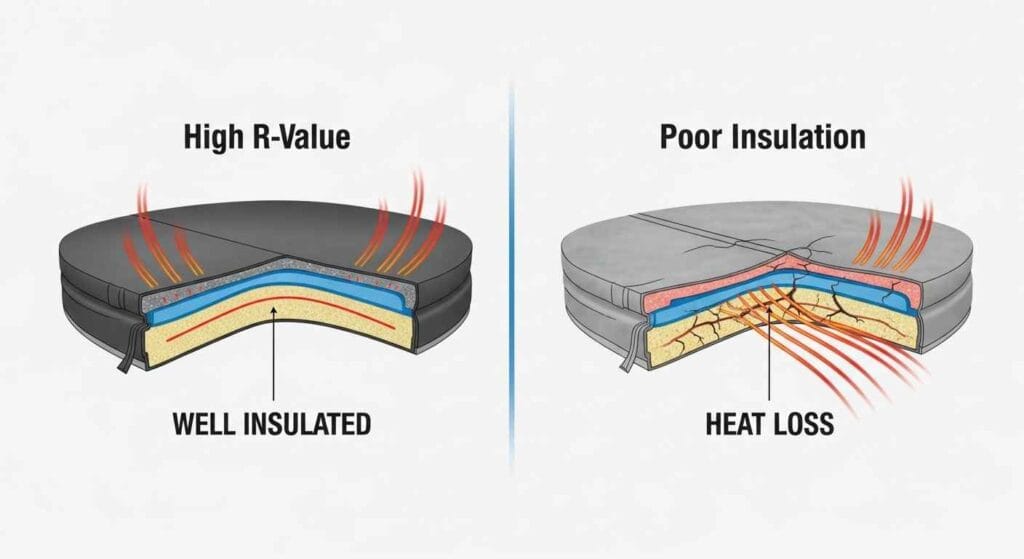
One of the big questions I always hear is, “How much does a small hot tub cost to run per month?” While exact figures vary wildly based on local electricity rates, usage, climate, and insulation, a well-maintained, energy-efficient small hot tub might add anywhere from $20 to $50 to your monthly electricity bill. Getting savvy about energy efficiency can make a real difference in those operating costs.
Insulation is Key
The better insulated your hot tub is, the less work its heater has to do. Look for models with full-foam insulation where the entire cabinet is filled with foam, rather than just perimeter insulation. This creates a thermal barrier that significantly reduces heat loss.
Some advanced models even feature multi-density foam or reflective barriers. A good manufacturer like Jacuzzi will invest heavily in this aspect. When I’m on a job site, I often emphasize that this isn’t just a comfort feature; it’s a long-term cost-saver.
High-Quality Covers
I can’t stress this enough: your hot tub cover is your primary barrier against heat loss. A thick, well-fitting cover with a high R-value is essential. Look for covers that are at least 4-5 inches thick at the center and taper towards the edges for rain runoff. A proper vapor barrier on the underside of the cover prevents water absorption, which can make a cover heavy and reduce its insulating properties over time.
Inspect your cover regularly for cracks, tears, or saturation. If your cover is old, waterlogged, or damaged, it’s essentially an open window for heat to escape, and replacing it is one of the best investments you can make for energy efficiency.
Smart Heater Use and Settings
While it might seem counterintuitive, keeping your hot tub at a consistent temperature, even when not in use, is often more energy-efficient than letting it cool down completely and reheating it. That’s because reheating takes a tremendous amount of energy.
However, if you’re going away for an extended period (more than a few days), lowering the temperature by 5-10 degrees or setting it to an “economy” or “sleep” mode (if your tub has one) can save energy. Many modern Jacuzzi models come with programmable controls that allow you to set filtration cycles and even heating schedules, optimizing energy use to off-peak hours if your utility company offers those rates.
Understanding Your Electrical Bill
To truly understand your operating costs, pay attention to your electricity bill. Your local utility company can often provide insights into energy consumption or even offer smart meter data. Factors like how often you use the tub, how many people are in it (which cools the water), and how exposed your tub is to wind and cold temperatures will all influence the final number. A sheltered location, perhaps partially enclosed or with windbreaks, can help reduce heat loss.
Frequently Asked Questions About Small Jacuzzi Hot Tubs
What is the smallest hot tub available?
Generally, the smallest hot tubs are designed for two to three people, measuring around 5.5 to 7 feet in length or diameter. Brands like Jacuzzi offer models such as the J-315 or J-210 that are specifically designed for compact spaces, delivering powerful hydrotherapy in a smaller footprint.
How much does a small hot tub cost to run per month?
The monthly operating cost for a small hot tub can range from $20 to $50, depending on factors like your local electricity rates, the hot tub’s insulation, climate, usage frequency, and the quality of your cover. Maintaining good water chemistry and a well-insulated tub can help minimize these costs.
Can a small hot tub go on a deck?
Yes, a small hot tub can often be placed on a deck, but it’s crucial to have a licensed structural engineer assess your deck’s load-bearing capacity first. Filled with water and occupants, even a small hot tub can weigh 3,000 to 4,000 pounds, requiring a robust, reinforced structure to ensure safety.
What chemicals do I need for a small hot tub?
For basic small hot tub maintenance, you’ll need test strips or a liquid test kit, a sanitizer (either chlorine or bromine), and products to adjust pH (up and down), alkalinity (total alkalinity increaser), and sometimes calcium hardness increaser. You’ll also want filter cleaner and a defoamer.
Conclusion
Choosing, installing, and maintaining a small Jacuzzi hot tub doesn’t have to be a headache. With the right information and a bit of practical planning, you can transform even a compact outdoor area into a personal retreat. My advice, honed over years of working with these setups, boils down to a few key points: don’t skimp on site preparation or electrical work, invest in quality insulation and a robust cover, and stick to a consistent maintenance routine.
Doing these things ensures you’ll enjoy years of trouble-free relaxation and therapeutic benefits, truly making the most of your investment. It’s all about creating that perfect little escape right in your backyard, no matter the size. Ready to explore the perfect small Jacuzzi hot tub for your home? Visit a reputable local dealer today to discuss your specific needs and take the first step towards your private backyard oasis.