






Look, your tub is probably a disaster. You’ve scrubbed it until your hands hurt and it still looks like a relic from a 1970s crime scene. Most people think they can just run down to the local hardware store, grab a new tub for three hundred bucks, and swap it out. Wrong. Dead wrong. I’m literally standing on Mockingbird Ln right now in Riverside, looking at a bathroom belonging to a client named Bertha.
- Understanding the Basics of Bathtub Refinishing
- Analyzing the Cost to Refinish Fiberglass vs Cast Iron Bathtub
- Breaking Down the Bathtub Refinishing Cost for Standard Projects
- Evaluating How Long Bathtub Refinishing Lasts and Total Lifecycle Cost
- Refinishing Savings vs Full Replacement Risks
- Projecting Local Quotes and Average Bathtub Reglazing Prices 2026
- Conclusion
She tried the simple swap and now she’s staring down a five thousand dollar bill because the subfloor was rotted and the tile didn’t line up. It’s a total mess. If we are going to talk about Bathtub Refinishing Cost, we have to talk about reality. This isn’t about making things look pretty; it’s about stopping your bank account from bleeding out over a bathroom project. Hooked? Good. Let’s get into the numbers.
Understanding the Basics of Bathtub Refinishing
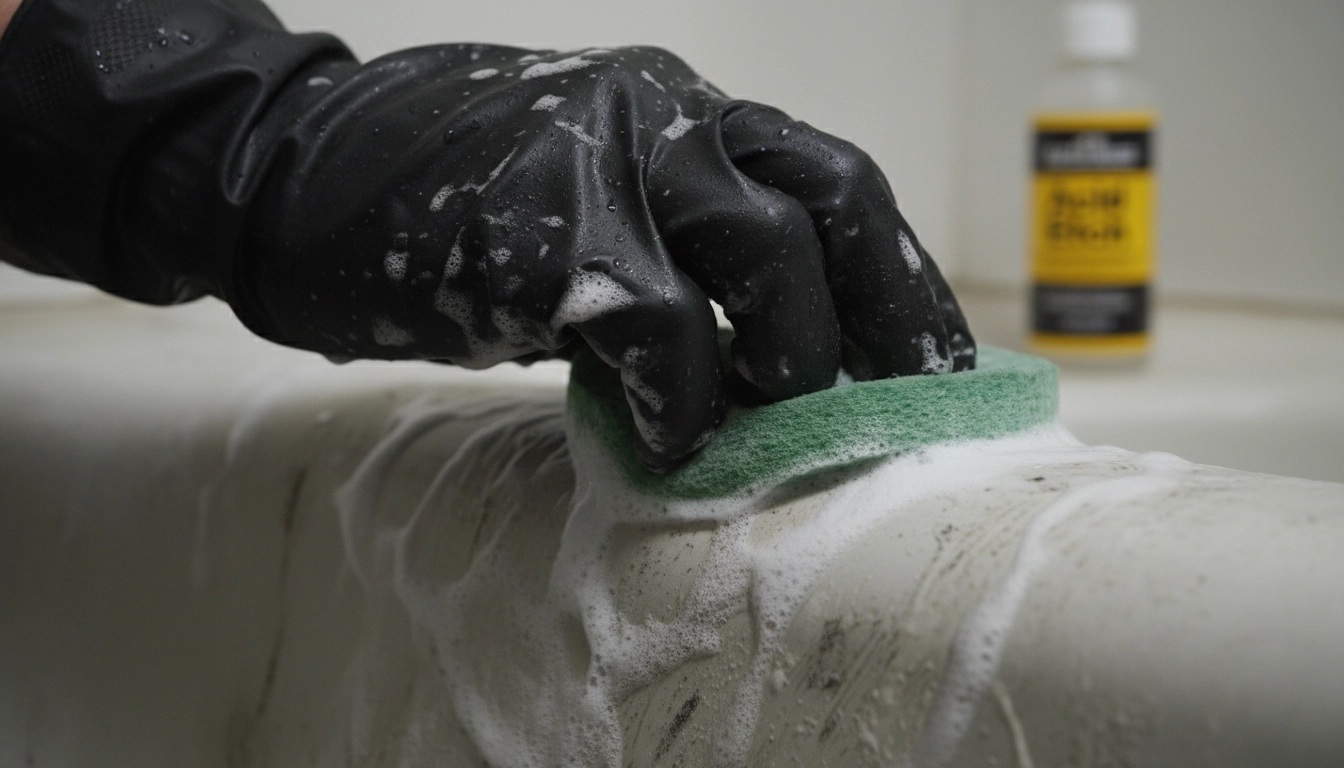
Before you start looking at price tags, you need to understand what this actually is. This isn’t a weekend DIY project. Professional refinishing—or reglazing, whatever you want to call it—is basically a high-stakes chemical bonding procedure. It’s not paint. Don’t ever call it paint in front of a pro.
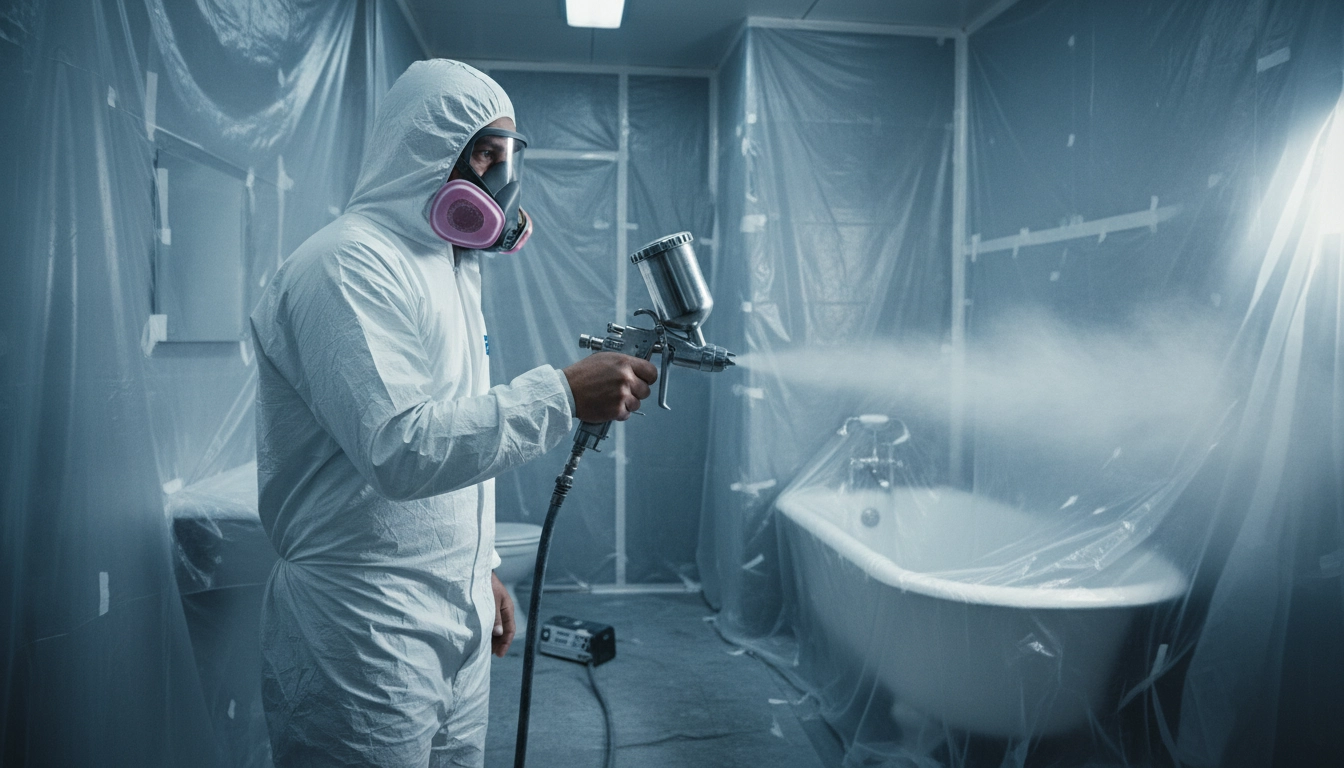
The process is intense. You start with a deep clean that would make a hospital look dirty, then you hit it with an acid etch. That acid is nasty stuff, but it’s the only way to make the surface porous enough for the new stuff to stick. Then you use specialized sprayers to apply high-performance resins.
The whole Market Volatility of chemicals right now is insane, so the Expert Ranges for materials are constantly shifting. If a guy shows up with a rattle can of epoxy from a big-box store, kick him out. You are paying for a chemical bond that mimics the original porcelain. If the technician skips the etching or uses garbage materials, the whole thing will peel off in six months. That is a total loss of your capital. No one wants that.
I’ve mapped out the technical workflow so you can see exactly where the labor hours are spent during a standard restoration.
| Phase of Work | Action Taken | Primary Purpose |
|---|---|---|
| Preparation | Industrial Deep Clean | Remove soap scum and body oils |
| Etching | Acid Application | Create a porous surface for bonding |
| Priming | Synthetic Undercoat | Ensure the resin sticks to the base |
| Finishing | High Performance Resin | Provide the final mirror finish |
My Take
The cleaning and etching phases are the most critical. If a tech tries to spray over a dirty surface, your ‘new’ tub will peel off faster than a cheap sticker.
The DIY Trap
Never mistake a retail ‘tub kit’ for professional refinishing. These consumer-grade epoxy paints lack the bonding agents required for long-term adhesion and usually peel within a single year of use.
Analyzing the Cost to Refinish Fiberglass vs Cast Iron Bathtub
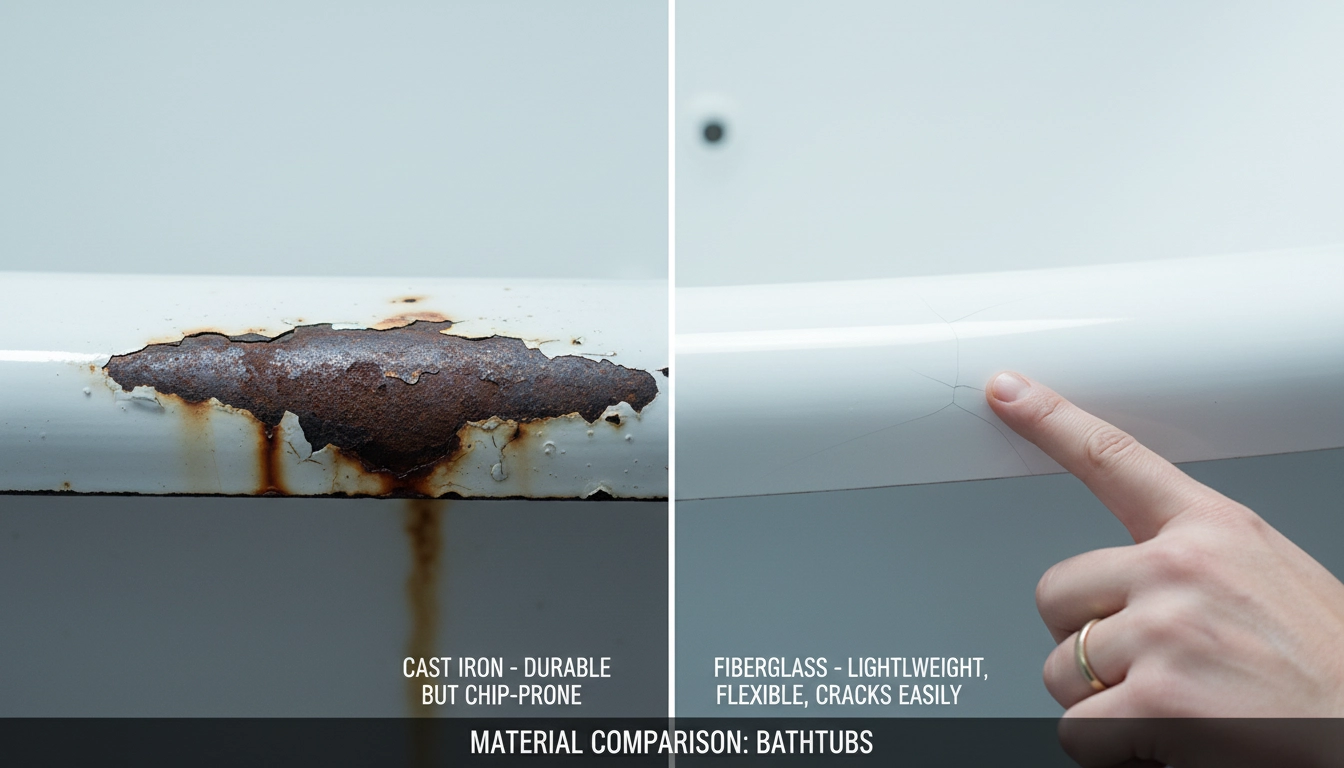
What your tub is made of changes everything. It’s the biggest driver of Market Volatility in your specific quote. Cast iron tubs are the heavyweights. They are built like tanks. But because they are so thick, they hold heat differently. This means the resin has to be tough enough to handle the tub expanding and shrinking every time you take a hot bath.
You should expect to pay a 20% premium for cast iron. Why? Because the prep work is a nightmare. Technicians have to use much stronger acid solutions to bite into that hard porcelain. It’s a lot of physical labor.
Fiberglass and acrylic are different animals. They flex. If you step into a fiberglass tub and the floor gives a little, your coating needs to be able to bend without cracking. Plus, fiberglass is famous for having little hairline cracks or spongy spots in the floor.
In my professional opinion, fiberglass usually has a lower starting price, but the hidden repair costs are way higher. You might start with a $500 quote and end up at $700 because the tech had to spend three hours fixing structural cracks before he could even start spraying.
Every material reacts differently to the bonding agents, which is why I always adjust my risk assessment based on what the tub is actually made of.
| Tub Material | Prep Difficulty | Price Factor | Structural Risk |
|---|---|---|---|
| Cast Iron | Extreme | 20 percent increase | Low |
| Fiberglass | Medium | Base rate plus repairs | High |
| Acrylic | Medium | Base rate | Moderate |
My Take
Don’t let a contractor give you a flat rate over the phone without knowing if you have cast iron or fiberglass; the prep work required is completely different.
Breaking Down the Bathtub Refinishing Cost for Standard Projects
Let’s talk about the Expert Ranges for a standard sixty-inch tub. That’s the basic one you see in every suburban house. For a unit in decent shape, you are looking at somewhere between four hundred and eight hundred dollars.
That price covers the basic prep, a standard color—usually white—and a basic warranty. But here’s the catch: if your tub has been painted before by some handyman, you have to pay a stripping fee. That’s going to add another hundred or two to the bill.
About seventy percent of what you pay is just pure labor. You are paying for the guy’s lungs, honestly. He’s handling hazardous stuff and making sure you get a finish that looks like a mirror without any dust or weird runs in the coating.
I always tell people to keep a 15% Buffer in their pocket. You never know what’s under the drain. You might have rust that needs to be ground out or deep chips that need waterproof filler. If you don’t fix those things properly during the prep phase, the new surface is going to fail. Period.
Color Selection
Standard white or almond finishes are usually included in the base price. Choosing a custom ‘designer color’ or a faux-stone finish can increase your material costs by thirty percent or more.
Evaluating How Long Bathtub Refinishing Lasts and Total Lifecycle Cost
This isn’t a permanent fix. Let’s be honest. But it’s a great way to buy yourself another ten years. If the job is done by a real pro, and you don’t treat it like a gravel pit, it should last eight to twelve years.
Do the math. A six hundred dollar job that lasts ten years is sixty bucks a year. That’s basically the cost of a couple of pizzas. It’s a massive Risk Mitigation strategy for your home’s value.
But you have to be careful. You can’t use bleach. You can’t use those abrasive blue scrubbers. If you do, you’ll eat right through the finish. If you drop a heavy wrench in the tub and chip the coating, water will get underneath and start lifting the whole thing up. From a budget perspective, the biggest threat to your investment is just being lazy with the cleaning. Use mild soap. That’s it.
Refinishing Savings vs Full Replacement Risks
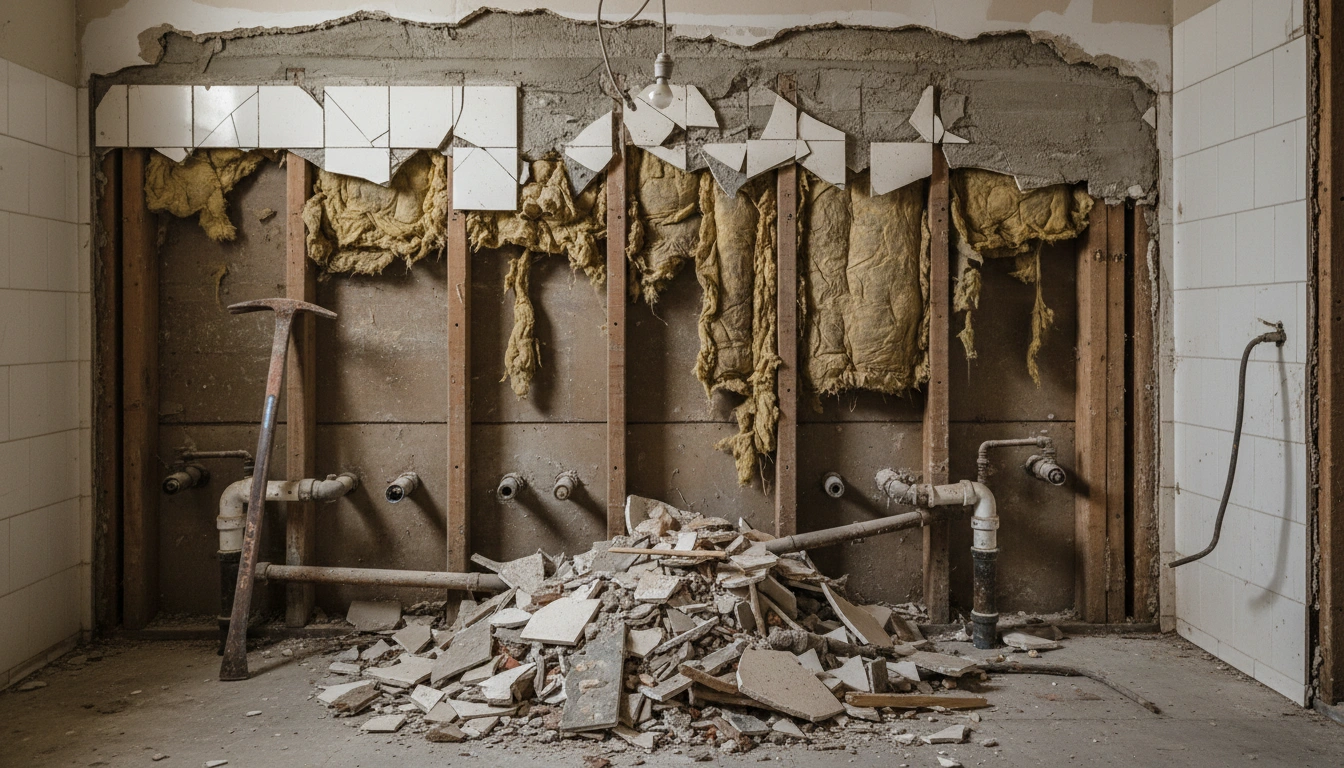
People see a new tub for $300 and think I’m crazy for suggesting a $600 refinish. This is the False Economy trap. The tub is $300. The plumber is $800. The tile guy is $1,500. The guy who hauls away the old heavy cast iron tub is $200.
Suddenly, your cheap tub costs $3,000.
Refinishing lets you skip the demolition disaster. You don’t have to touch the plumbing or the tile. Most importantly, you don’t find out that the wall studs are rotted out behind the shower. I’ve seen simple tub swaps turn into $10,000 full-scale financial crises in a heartbeat. By refinishing, you are locking in your cost and staying away from the mess behind the walls.
Most homeowners suffer from ‘sticker shock’ on refinishing until they see the hidden costs of a full-scale demolition.
| Expense Category | Professional Refinishing | Full Tub Replacement |
|---|---|---|
| Main Unit | Included | 300 to 800 dollars |
| Plumbing Labor | Zero | 800 to 1500 dollars |
| Tile and Wall Repair | Zero | 1000 to 3000 dollars |
| Disposal Fees | Zero | 200 to 500 dollars |
| Total Estimated Cost | 500 to 800 dollars | 2300 to 5800 dollars |
My Take
The ‘False Economy’ of a cheap new tub is the biggest trap in the industry because it ignores the massive secondary costs of plumbing and tile repair.
Market Volatility
The cost of chemical resins has increased by twelve percent over the last two years due to supply chain shifts. Locking in a quote now is often smarter than waiting for next season’s price adjustments.
Projecting Local Quotes and Average Bathtub Reglazing Prices 2026

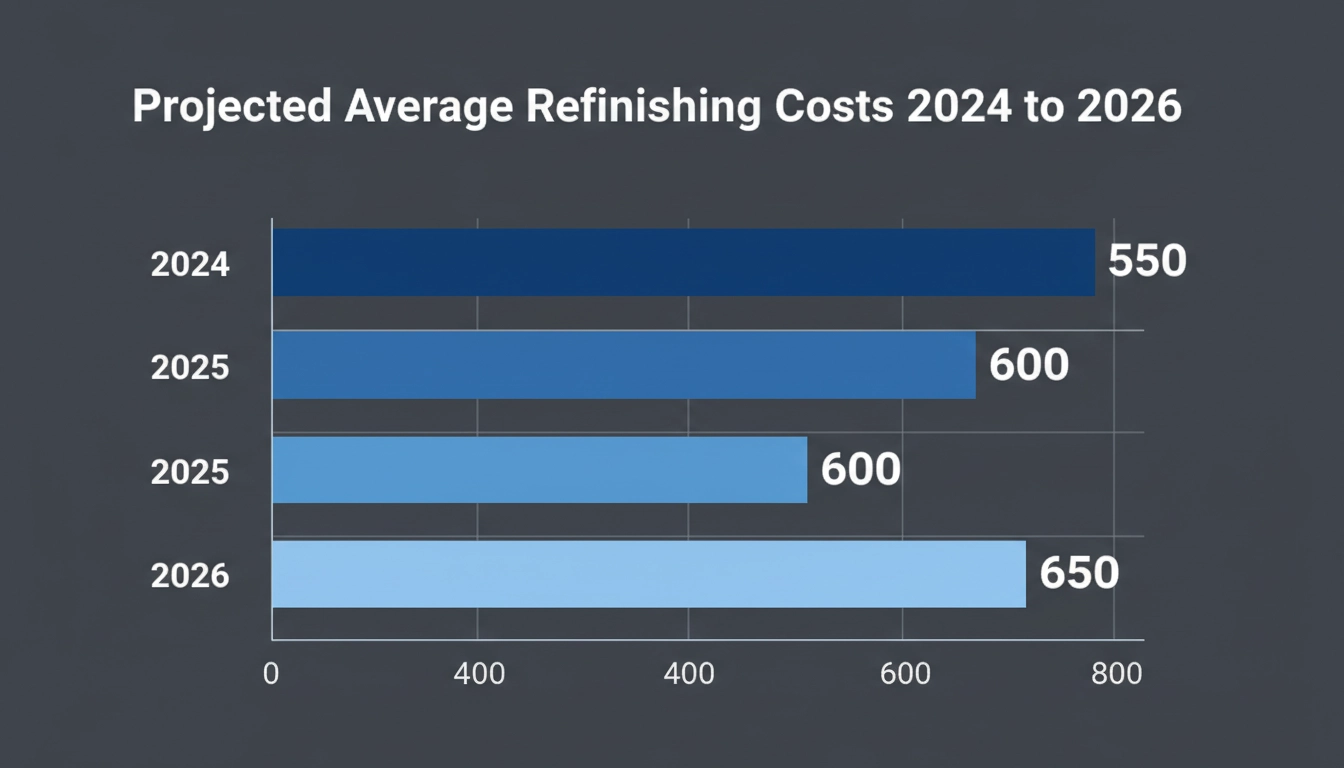
If we look at 2026, the price isn’t going down. Labor is getting more expensive, and the government is getting stricter about the chemicals (VOCs) we can use. Right now, the national average is around five hundred and fifty dollars. I fully expect the floor for professional work to hit six hundred and fifty very soon.
Where you live matters. If you’re in a big city, expect to pay more. Insurance and overhead for contractors in those areas are brutal.
When you call for a quote, don’t just ask how much? Send them pictures. Good ones. Show them the drain and any rust. Ask them if they use a silane coupling agent. If they don’t know what that is, hang up the phone. A good contractor will explain their pricing and won’t be the cheapest guy in town. You want quality workmanship over a bargain.
Looking at the data from the last few years, it is clear that waiting to fix your bathroom is only going to cost you more in the long run.
My Take
Material costs for high-end resins are tied to global supply chains, so the ‘Market Volatility’ we are seeing is likely to stick around for a while.
Conclusion
Getting a handle on Bathtub Refinishing Cost is about being smart. Don’t go with the guy who gives you a budget quote that sounds too good to be true. It usually is. The cost of stripping a failed coating and doing it over is double what you would have paid to do it right the first time.
Think about the materials. Think about the labor. And for heaven’s sake, think about the 15% Buffer. If you take care of the new surface, it’ll look great for a decade. Drop a comment if you’ve had a project go sideways—I’d love to hear how you handled the budget.