





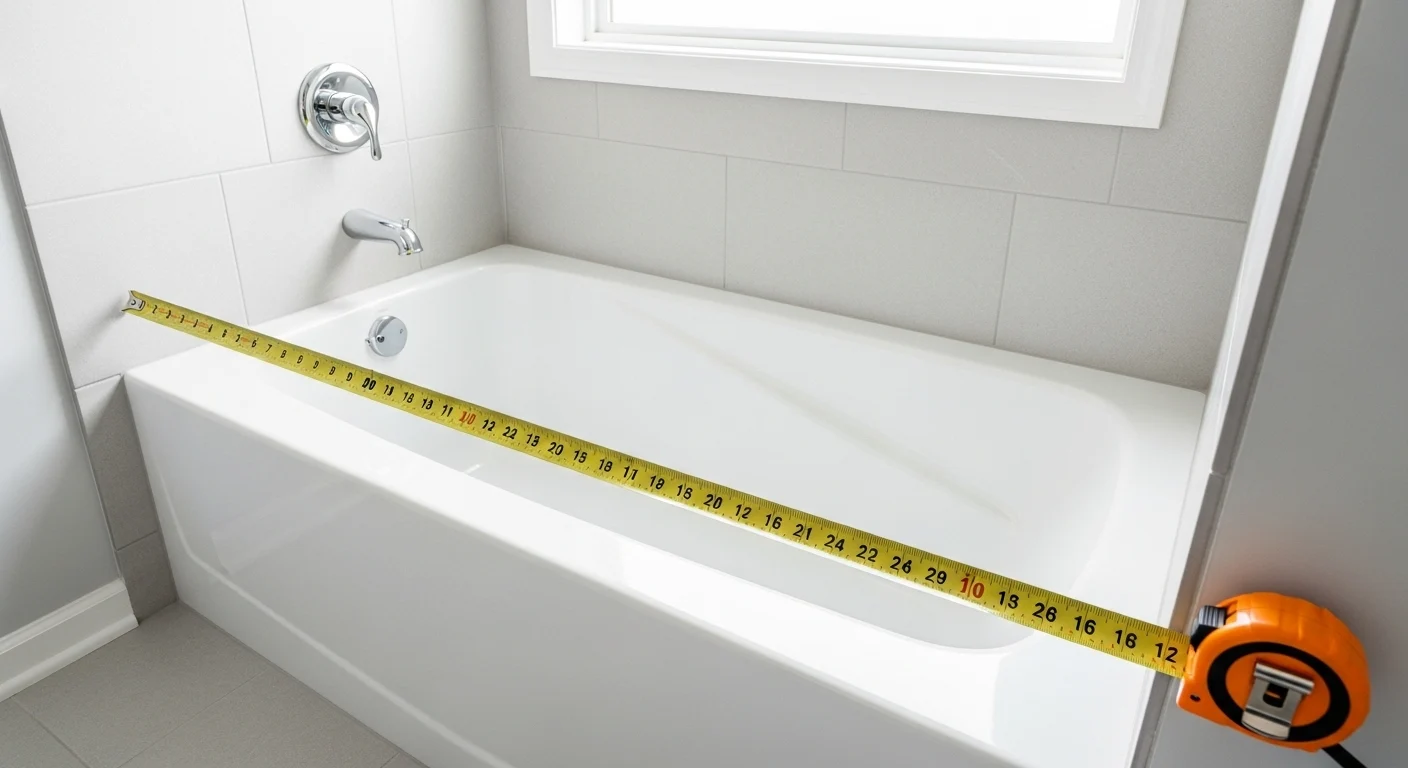

So you’re redoing a bathroom. And you start with the tub. Has to be the tub. It’s the big one, the whole room kinda revolves around it, and if you screw up the size… well, the whole job gets derailed. Seen it a hundred times.
People go to a big box store, see some giant, fancy tub and fall in love. They don’t measure the doorway. They don’t measure the hallway. Had this one client, Jenny, sweet lady, but she bought this huge tub that we literally could not get up the stairs. Had to send it back. Wasted a week. So yeah, understanding the standard bathtub size isn’t just about numbers on a page. It’s about what actually fits in your house. What you can live with.
It’s the foundation. Mess it up, and you’re just throwing money away. Let’s get into it.
What Are the Standard Bathtub Dimensions?
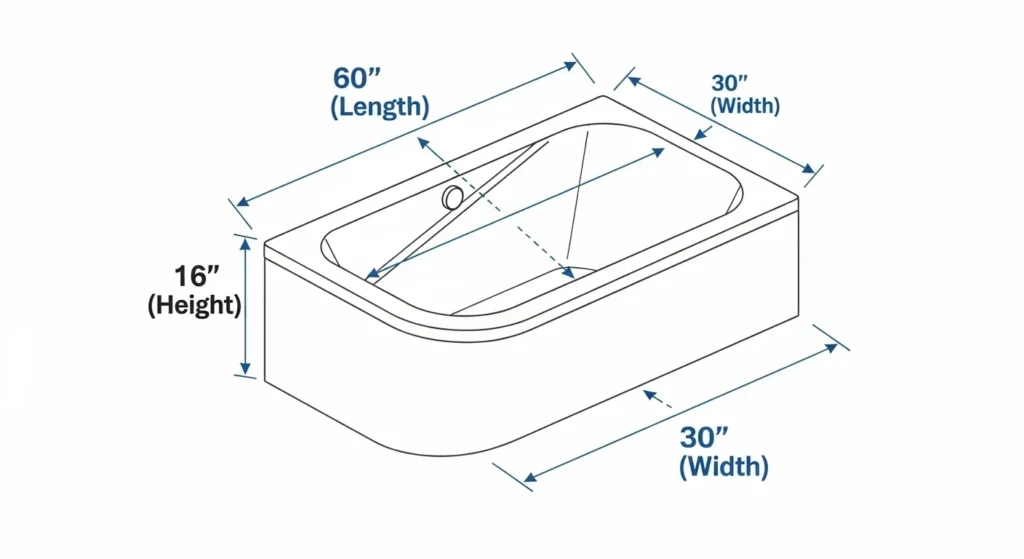
When anyone says “standard tub,” they’re talking about an alcove tub. It’s the kind you see everywhere, crammed into a three-wall opening. The number that’s been drilled into my head since ’98 is 60 inches long, 30 inches wide, and about 14 to 16 inches high. It’s standard because old houses were built with five-foot bathrooms. Simple as that. It left just enough room for the toilet and a sink without anyone feeling like they were in a closet.
But here’s the part that gets people. That 60 inches is the finished size. The space between the studs, your rough opening, needs to be perfect. Like, 60 and a quarter inches. Gives you that little bit of wiggle room to get the tub in and get the flange sitting right before the backer board goes up.
To put it simply, here’s what you need to tell your framer versus what the tub box says:
| Dimension | Standard Tub Size (Finished) | What Your Wall Opening Should Be (Rough-in) |
|---|---|---|
| Length | 60 inches | 60.25 inches |
| Width (Standard) | 30 inches | 30.25 inches |
| Width (Wider) | 32 inches | 32.25 inches |
My Take: That little bit of wiggle room for the rough-in is non-negotiable. If your opening is too tight, you’re going to be cutting studs, and that’s a whole other can of worms.
If that opening is 59 and a half inches… you’re gonna have a bad day. A very bad day. I always tell people, if you can, measure from the wood stud to the other wood stud. Not just the drywall.
Width is a little easier. Yeah, 30 inches is the old standby. But 32 is pretty common now, gives you a bit more room for your elbows. Feels a lot bigger than two inches sounds, trust me. Just watch out. You go wider, you might start crowding the toilet. The code inspectors, they love to get out their tape measures for that. They need their minimum clearance on each side of the toilet, and they will fail you for a half-inch.
Navigating Small Spaces: Common Small Bathtub Sizes
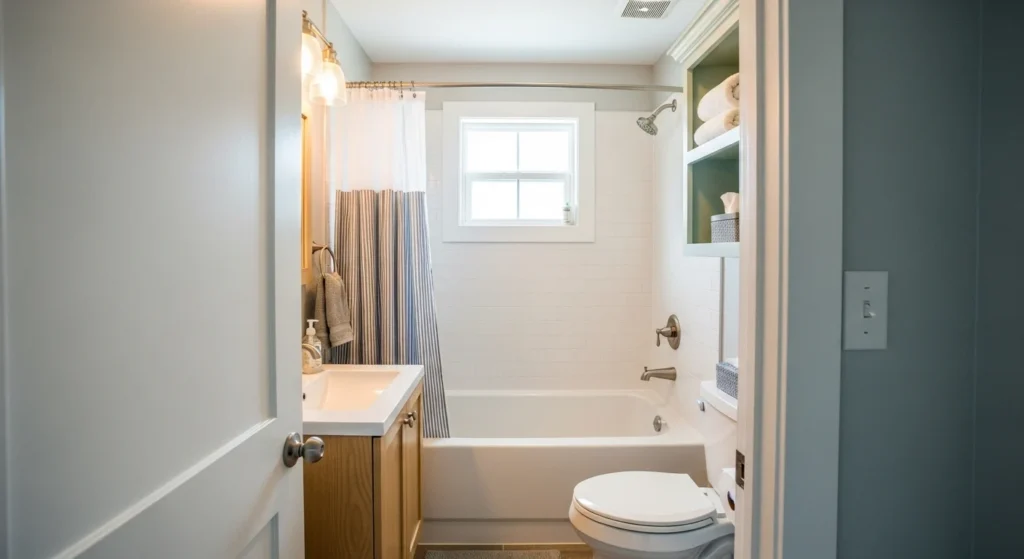
Of course, not every bathroom is a perfect five-foot box. Far from it. Especially in older homes, city apartments, those little basement bathrooms people try to cram in. You just don’t have the space. So, what do you do?
The most common small tub you’ll find is 54 inches long. It’s a real problem-solver. That six inches makes all the difference when you’re trying to fit everything in. They’re usually still 30 inches wide, so you don’t feel like you’re in a coffin. We use them all the time for people turning a big closet into a second bathroom or whatever. Works great.
Then you get the really small ones. 48 inches. Four feet.
They try to sell these as “soaking tubs” because they make them deeper, but let’s be honest. You’re not stretching out in a four-foot tub. It’s for bathing the kids. Or sitting straight up with your knees to your chin.
Look, when you’re tight on space, every inch counts. Here’s a quick side-by-side of your main options:
| Tub Length | Who It’s Really For | My Honest Opinion |
|---|---|---|
| 54 inches (4.5 feet) | Small bathrooms where a standard 60-inch won’t fit. | The best compromise. Still feels like a real tub for an average adult. |
| 48 inches (4.0 feet) | Kids’ bathrooms, tiny apartments, or as a last resort. | It’s a utility tub. Not for relaxing soaks. Test one out before you buy. |
Pro-Tip: Don’t let the marketing fool you. The 48-inch is a specialty item. For 9 out of 10 small bathroom jobs, the 54-inch is the one that actually works as a functional tub for adults.
Before you buy one of these, for the love of God, go to a showroom and get in it. Just sit down in the thing. See how it feels to stand up. If it works for you, great. But don’t just order it off the internet thinking it’s a real bathtub. It’s not.
Understanding the Alcove Bathtub: The Most Common Type
So yeah, let’s talk more about the alcove tub. Since that’s what most of you are going to be stuck with. Like I said, the 60-inch by 30-inch or 60-inch by 32-inch is the king. The the main thing with these is the tile flange. It’s this lip, this upturned edge on the three sides that go against the wall. It tucks in behind your cement board and your tile. It’s the whole waterproofing system. All the water that gets back there is supposed to hit that board and drain right back into the tub. It’s why you can’t just shove any tub you find into a three-wall space. It has to be built for it.
Material makes a huge difference, too. Most tubs these days are acrylic or fiberglass. They’re light. One guy, maybe two, can haul it into place. Easy.
But cast iron… oh, man. Cast iron is a whole different animal. Heavy doesn’t begin to describe it. We did a second-floor job a few years ago, an old Victorian. Homeowner wanted a classic Kohler cast iron tub. Weighed over 300 pounds. Took four of us, and a lot of swearing, to get that monster up a narrow flight of stairs. You don’t just have to worry if it fits in the bathroom. You have to worry if your floor joists can even hold it once it’s full of water and a person. And can you even get it in the house? Measure your halls. Measure your stairs. Before you even look at a cast iron tub. Seriously.
The material you choose changes the whole job. It’s not just about looks. Here’s the breakdown of what you’re getting into:
| Material | Weight & Installation | Feel & Durability | The Bottom Line |
|---|---|---|---|
| Acrylic / Fiberglass | Lightweight (75 lbs). Easy for two people to carry and install. | Feels warmer to the touch. Can scratch but is repairable. | The modern standard. Practical, affordable, and gets the job done. |
| Cast Iron | Extremely heavy (300+ lbs). Needs a crew and maybe reinforced floors. | Rock solid. Holds heat well once it’s warm. Enamel can chip. | A classic for a reason, but the installation is a major project. |
My Take: I love the solid feel of cast iron, but for a DIY job or a second-floor bathroom, just go with acrylic. It’ll save you a world of hurt and a call to a structural engineer.
Beyond the Alcove: A Guide to Freestanding Tub Sizes
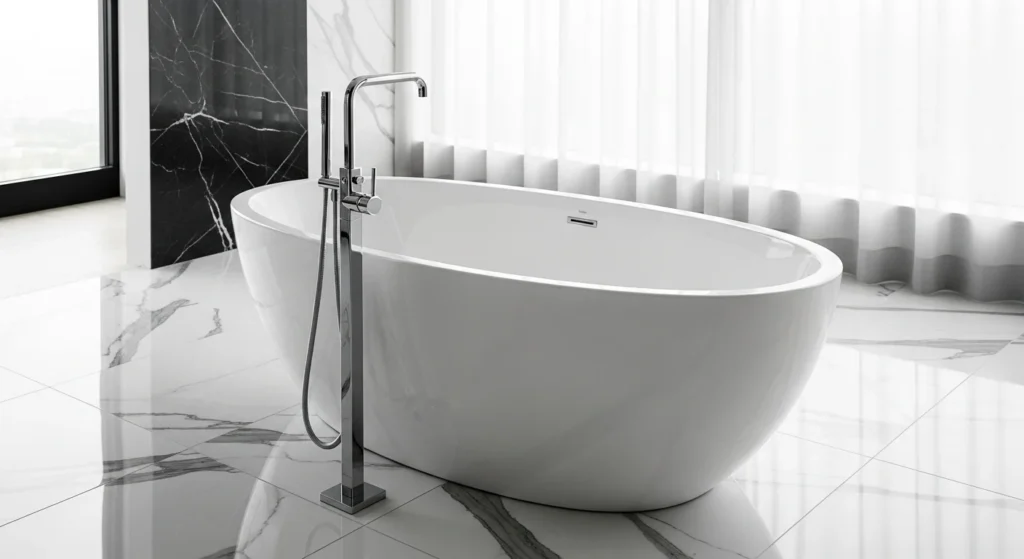
Then you’ve got the freestanding tubs. Every home design show has one. They look great, sitting in the middle of a bathroom the size of my first apartment. But they’re a whole other world of planning. There’s no such thing as a “standard” size for these. Forget it.
They can be anywhere from 55 inches to 72 inches long, sometimes more. Widths from 27 to 34 inches. It’s all over the map. The big thing isn’t fitting it between walls, it’s leaving enough room around it. I tell people you need at least six inches on every side. Minimum. Why? Cleaning. You think it’s fun trying to get a mop into a three-inch gap behind a tub? It’s not. It just becomes a permanent home for dust bunnies and dead spiders.
And the plumbing. Oh, the plumbing. It’s the real headache. With a normal tub, everything’s in the wall. Simple. With a freestanding, the drain has to come right up out of the floor in one exact spot. The faucet is usually one of those floor-mounted things. That means my plumber, Bob, has to either jackhammer the concrete slab or cut a giant hole in the ceiling from the floor below.
People see these freestanding tubs on TV and don’t realize they’re a completely different beast from a regular tub. Let’s line up the real-world differences:
| Factor | Alcove Tub (The Standard) | Freestanding Tub (The Showpiece) |
|---|---|---|
| Plumbing | Hidden in the wall, simple hookup. | Exposed, requires floor-mounted faucet and precise drain placement. |
| Space Needed | Fits exactly in a 5-foot alcove. | Needs at least 6 inches of clear space on all sides for cleaning. |
| Installation Cost | Standard plumbing rates. | Often requires subfloor work, adding thousands to the plumbing bill. |
My Take: Freestanding tubs are a luxury item, and you pay a luxury price for the installation, not just the tub itself. Be sure that extra cost is in your budget before you fall in love with one.
It adds thousands to the job, sometimes. So that pretty tub you saw online? Its real cost is the tub, plus the floor filler, plus the plumbing nightmare underneath it. Think about that.
How Is Bathtub Depth Measured? A Guide to Soaking Depth
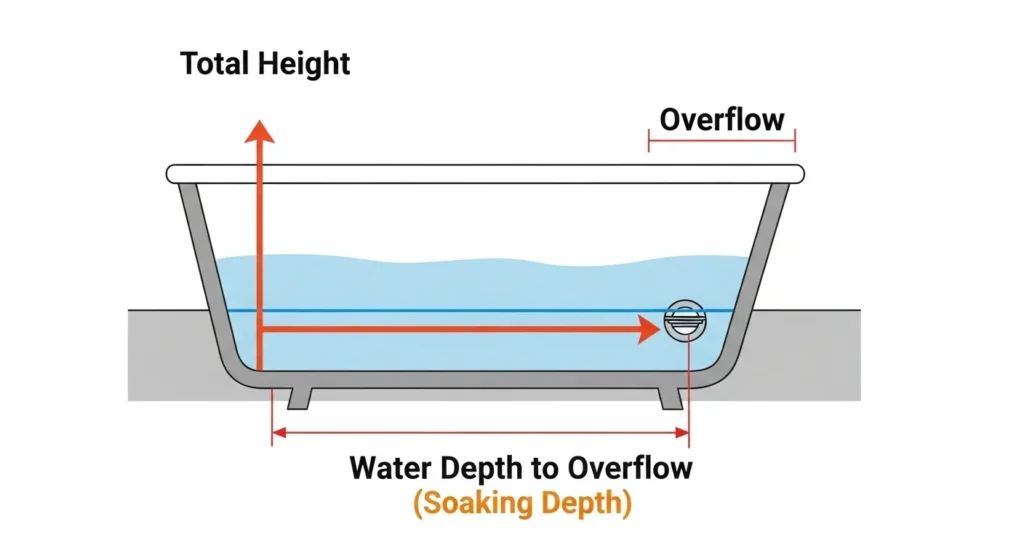
Alright, last thing, and people mess this up constantly. Depth. You look at a spec sheet and it says the tub is 18 inches high. You think, great, that’s deep.
No. That’s not how much water it holds. That’s just how high it is off the floor.
The only number you should care about is the water depth to the overflow. You know that little round silver plate a few inches from the top of the tub? That’s the overflow drain. It’s there so you don’t flood the place when you forget the water is running. The water can only get as high as the bottom of that drain. That’s your real water depth.
A cheap, standard tub might be 15 inches tall on the outside, but the water depth is only 9 inches. That barely covers your legs. It’s basically a puddle.
This is where the marketing folks can really trick you. Let’s make it real clear what the numbers on the box mean versus what you actually get.
| Tub Type | Listed Height (What they advertise) | Water Depth to Overflow (What you actually get) |
|---|---|---|
| Standard Builder-Grade Tub | 14 to 15 inches | 8 to 10 inches |
| Decent Soaking Tub | 17 to 20 inches | 13 to 15 inches |
| Deep Freestanding Tub | 22+ inches | 16+ inches |
Pro-Tip: Always, always ask for the ‘water depth to overflow’ or ‘soaking depth’ spec sheet. It’s the only number that matters if you actually plan on taking a bath.
If you actually want to take a bath, you need what they call a “soaking tub.” Those are built with the overflow drain much higher up. A decent one will give you at least 14 inches of water. Some of the fancy ones go up to 18 inches or more. So don’t just look at the outside height. Dig into the spec sheet and find that “soaking depth” or “water depth to overflow” number. It’s the whole point of having a tub in the first place.
So that’s it. It’s all a balancing act. What your room can physically handle, what your wallet can handle, and what you actually want. And for God’s sake, don’t forget how you’re getting it in the house. I’m serious. Measure the tub, measure the room, measure the hallways and the doorways. Measure twice, cut once… or in this case, measure three times so you only have to buy one tub.
It’s a lot to think about for a simple box you fill with water. But getting it wrong is a real expensive kind of headache.