





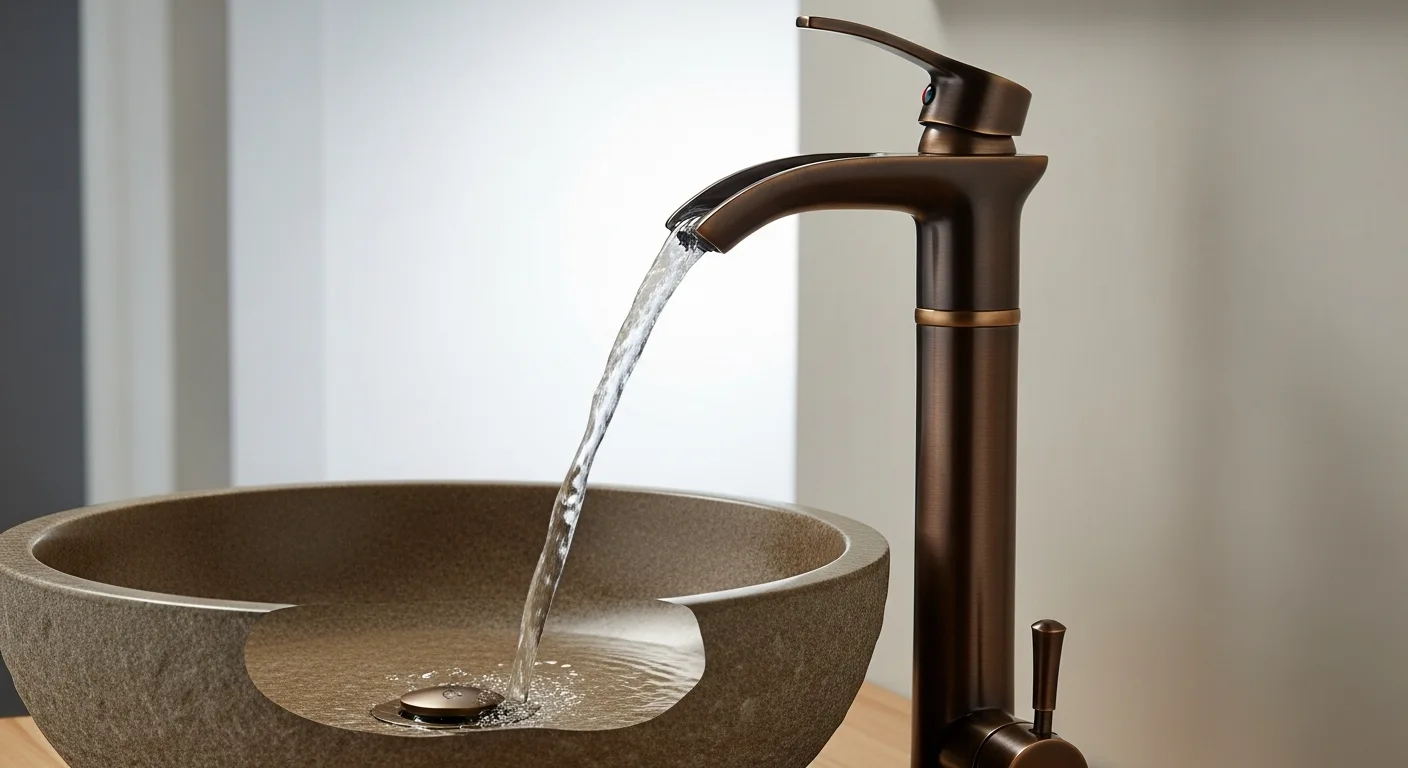

Alright, so you’re thinking about a vessel sink. I get it. They look sharp. People see them in a magazine or on some TV show and decide they absolutely have to have one. Had a woman last year, Linda I think, over in that new subdivision they’re putting up by the old paper mill. She saw one and that was that. Had to be a vessel sink.
- What is a Bathroom Vanity With a Vessel Sink?
- The Pros and Cons of Choosing a Vessel Sink
- Popular Styles to Complement Your Bathroom Decor
- How to Choose the Right Size and Height
- Material Matters: Selecting the Best Vanity Top and Base
- Finding the Perfect Faucet for Your Vessel Sink
- Installation Guide: What You Need to Know
- Cleaning and Maintenance Tips for Lasting Beauty
- Is a Bathroom Vanity With Vessel Sink Right for You?
And yeah, they can turn a boring little half-bath into something… interesting.
But I’ve also seen the other side. The side where people don’t think about the practical stuff. A bathroom vanity with vessel sink isn’t just a sink. It’s a whole different way of setting up your counter, your faucet, everything. It’s not just a drop-in replacement. You have to think. So I’m here to walk you through it, the good and the bad. So you can decide if this thing is actually for you.
What is a Bathroom Vanity With a Vessel Sink?
Look, it’s simple. It’s a bowl that sits on top of your counter. That’s it.
It’s not an undermount, where the sink is glued underneath. And it’s not a drop-in that has that lip sitting on the counter. The whole entire bowl is just… there. On top. A freestanding bowl.
The vanity part—the cabinet underneath—can be pretty much anything. A floating shelf, a normal cabinet, whatever. Had a client over on Palmer Street who wanted to use an old dresser. Looked great in the end, but we spent a whole morning just making sure it was level and sturdy enough. The the main thing is it has to be a solid, flat surface. Because the sink is just sitting there, it becomes this big feature. And that means you have to think harder about the faucet height and the drain. Everything’s different.
The Pros and Cons of Choosing a Vessel Sink
Don’t just look at the pretty pictures. You gotta know what you’re getting into. The people who actually like these things a year later are the ones who knew the good and the bad going in.
So, the good stuff. The look. You can find these sinks in anything. Glass, stone, copper, you name it. They’re a big statement. And because the bowl just sits on top, you do get a little more usable counter space around it. And they say it’s easier to swap out if you want to change your style later. I guess. I mean, how often are you really changing your sink?
Now for the part everyone complains about. Cleaning.
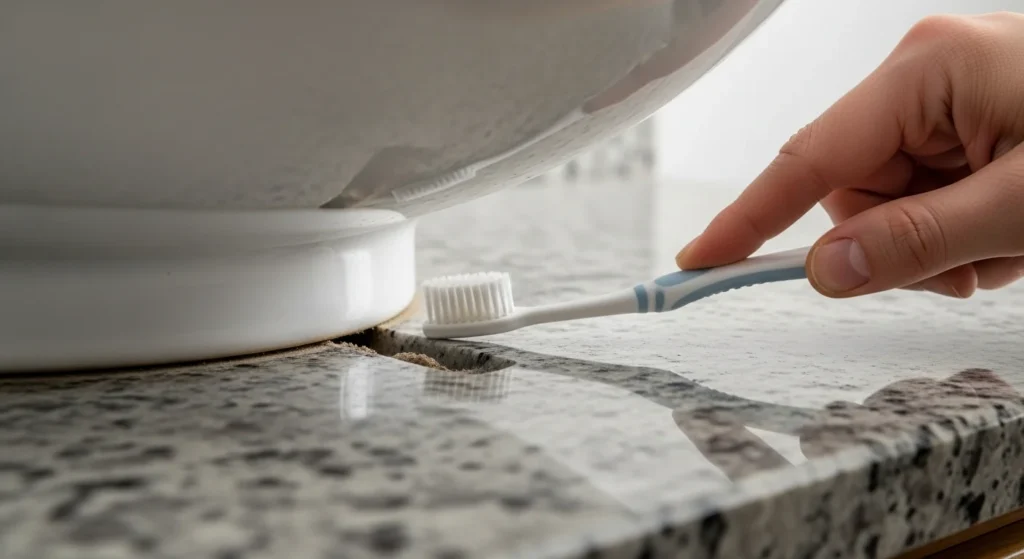
You have to clean *around* the base of the sink. And that little gap, that’s where everything collects. Dust, hair, toothpaste gunk. It’s a pain. I hear about it all the time. Splashing can also be a real problem if you don’t get the faucet exactly right for the bowl. We’ll get to that.
And the height. The rim of that bowl is sitting way up high. Great if you’re tall, but not so great for kids. You have to account for that when you choose the vanity cabinet itself. It’s a real consideration.
To make it real simple, let’s just lay it all out side-by-side.
| The Good Stuff (Pros) | The Headaches (Cons) |
|---|---|
| Big style statement | Annoying to clean around the base |
| Lots of material options | Splashing is a risk if faucet is wrong |
| More usable counter space | Can be too high for kids or shorter adults |
| Easy to swap out later | Requires a non-standard vanity height |
My Take: The cleaning issue is the one I hear about the most. If you’re a neat freak, you might be fine. If not, that little gap at the bottom will drive you nuts.
Popular Styles to Complement Your Bathroom Decor
Sure, they can fit into any style you want. If you’ve got one of those super modern, sterile-looking bathrooms, a plain white rectangle bowl on a floating slab of wood looks right. Pair it with a faucet coming out of the wall and you’ve got your magazine photo.
If you’re more into the farmhouse thing, you can put a stone bowl on a beat-up piece of wood. Did one like that for a guy named Dave out in the country. He wanted a hammered copper sink on a vanity made from an old barn beam. Looked pretty good, actually. Bronze faucet. The whole deal.
And then you see the artsy ones. Hand-painted bowls and all that. I put one in a powder room once in this old Victorian on Linden Court. It looked like a fancy wash basin from a hundred years ago. It can work. You can do whatever you want, really.
How to Choose the Right Size and Height
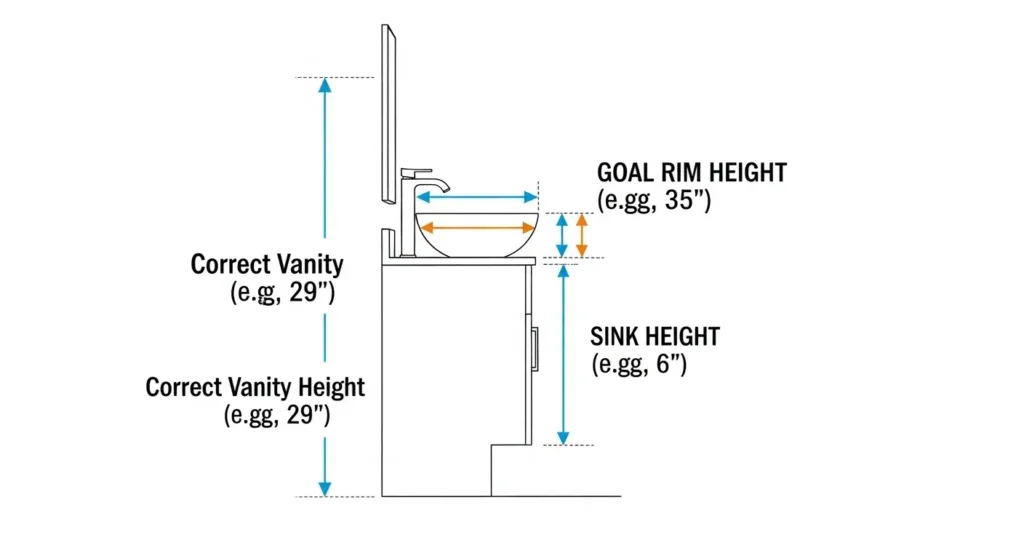
This is it. This is the part everyone gets wrong, and it makes the whole bathroom annoying to use. The top edge of a normal sink should be about 34 to 36 inches off the floor. To get that with a vessel, you gotta do some math.
Here’s the simple version I tell people: Take the height you want the rim to be (say, 35 inches), and subtract the height of the sink itself. So if your pretty bowl is 6 inches tall, your vanity cabinet can only be 29 inches high. That’s a lot lower than a standard vanity. A lot. People buy a standard 34-inch vanity, put a 5-inch sink on it, and the rim is way up at their chest. I’ve seen it. Had to tell a guy his brand-new cabinet wouldn’t work. He wasn’t happy.
Don’t forget depth, either. You need room behind the sink for the faucet and to get your hand back there to clean. A huge bowl on a skinny vanity just looks ridiculous and you’ll hate it. Measure everything. Twice.
This math seems to trip people up, so I made a little chart to show you what I mean.
| Your Goal Rim Height | Height of Your Sink Bowl | Correct Vanity Height |
|---|---|---|
| 35 inches (Standard) | 5 inches | 30 inches |
| 35 inches (Standard) | 6 inches | 29 inches |
| 35 inches (Standard) | 7 inches | 28 inches |
Pro-Tip: Always buy the sink before you buy the vanity. That way you know exactly what height you’re shooting for. Don’t guess.
Material Matters: Selecting the Best Vanity Top and Base
Listen to me on this one. For the countertop, just get quartz. It’s basically bulletproof. No stains, no sealing, no worrying about water. Granite’s fine too, I guess, but it has to be sealed right.
What you don’t want is something soft. I’ve had people ask for marble, and sure, it’s beautiful for about a week. Then someone leaves a wet glass on it or drips some soap and now you’ve got a permanent ring. A wood countertop can work if it’s sealed with about ten coats of marine varnish, but it’s still a risk. Water always finds a way.
For the sink bowl itself, the normal white porcelain or vitreous china is the workhorse. Boring, but it lasts forever and it’s easy to clean. Glass looks incredible when it’s perfectly clean, which is never. It shows every single water spot. Stone sinks are heavy and look amazing but you have to seal them or they’ll stain. It’s always a trade-off.
Let’s break down the most common sink materials so you know what you’re really signing up for.
| Sink Material | The Good | The Bad | My Verdict |
|---|---|---|---|
| Porcelain/China | Tough as nails, easy to clean | Can look a bit plain | The safest, most practical choice. Can’t go wrong. |
| Glass | Looks amazing, very modern | Shows every single water spot | Only for people who enjoy cleaning. Seriously. |
| Natural Stone | Beautiful, unique, high-end look | Heavy, needs to be sealed, can stain | A great look, but it’s a commitment. Not for a high-traffic kids’ bath. |
My Take: For 90 percent of people, just stick with the porcelain. It’s boring but it’s bulletproof. The other materials are for people who value a specific look over everyday practicality.
Finding the Perfect Faucet for Your Vessel Sink
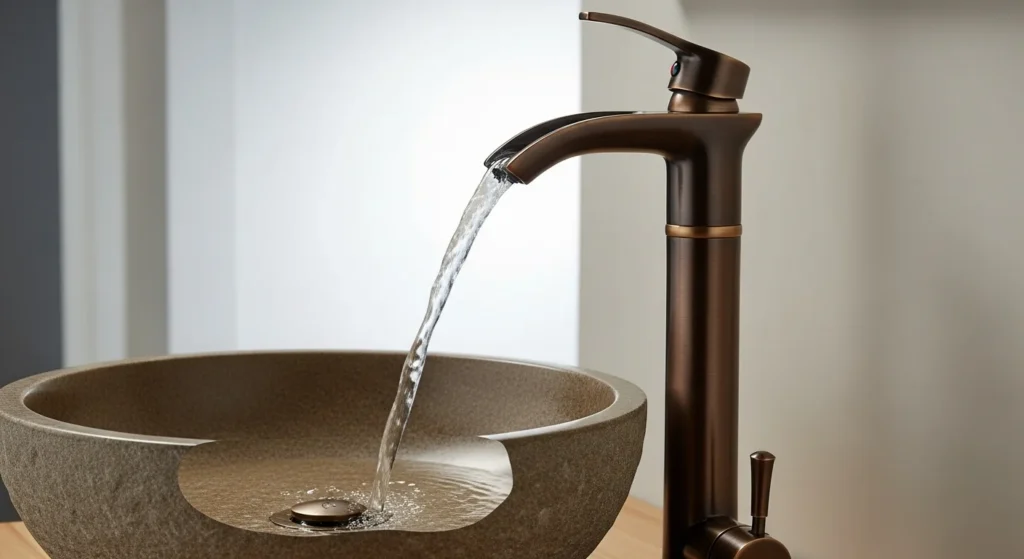
This is probably the second biggest mistake people make. The faucet choice is what determines if you’re going to be splashing water all over the county every time you wash your hands.
You have two basic choices. The first is a tall faucet that mounts on the counter. The key is that the spout has to be high enough to get over the edge of the bowl, and—this is the important part—it has to stick out far enough so the water hits the drain. Not the side of the sink. I had a client, she bought this gorgeous faucet from Italy online. It was too short. The water hit the curved side of the bowl and sprayed straight out onto the floor. Every. Single. Time. We had to change it.
The other way is a wall-mounted faucet. Gives you a really clean look, makes wiping the counter easy. But your plumber, let’s call him Frank, needs to know exactly where that thing is going *before* the drywall goes up. It takes a lot more planning.
Okay, let’s put the two faucet types head-to-head. It’s a pretty clear choice once you see it laid out.
| Faucet Type | Why You’d Want It | What to Watch Out For |
|---|---|---|
| Tall Counter-Mount | Easier to install, tons of styles | Must be tall enough AND have enough reach to hit the drain |
| Wall-Mount | Super clean look, easy to wipe counter | Much harder to install, plumbing is inside the wall, needs planning |
Pro-Tip: If you’re remodeling and the walls are already closed up, just go with the counter-mount faucet. A wall-mount is a great option for a new build or a gut job, but it’s a huge pain to add later.
Installation Guide: What You Need to Know
Putting one of these in isn’t rocket science, but there are a few places to screw it up. First, you’ve got to drill holes in your brand new countertop. One for the drain, and one for the faucet if it’s not on the wall. You need the right tool for this, a diamond hole saw, especially if you listened to me and got quartz.
The sink itself just sits on a bead of silicone to keep it from sliding around and to seal the bottom. What really holds it down is the drain assembly. You put the drain through the sink and the counter and tighten it from underneath.
But here’s a warning from a guy who’s seen it happen: do not overtighten the drain nut. People get in there with a big wrench and just crank on it. That’s how you hear a sickening little *crack* and find out you’ve just broken your brand-new sink. Snug is all you need. Just snug.
Cleaning and Maintenance Tips for Lasting Beauty
So, like I said, cleaning that little crevice around the base of the sink is the annoying part. There’s no magic trick. An old toothbrush works best to get in there and scrub out the grime that builds up. Or one of those fluffy duster things. You just have to do it.
The bowl is easy. Wipe it out with whatever. If you got a glass sink, you should probably just keep a microfiber cloth sitting right there on the counter, because you’re going to be wiping off water spots all day if you want it to look good.
And if you have a stone sink, use the special pH-neutral cleaner they sell. Regular bathroom cleaner can eat away at the sealant and wreck the stone. It’s just one more thing to think about.
Is a Bathroom Vanity With Vessel Sink Right for You?
Look, I don’t know your life. Is it right for you? Maybe.
If you care more about getting a very specific, dramatic look than you do about a little extra cleaning, then sure, go for it. They can look fantastic. When they’re done right, they’re great.
If you’ve got three kids sharing the bathroom and toothpaste ends up on the ceiling, maybe think twice. All I can tell you is do your homework, measure everything, and for the love of god don’t cheap out on the faucet. That’s my advice.