





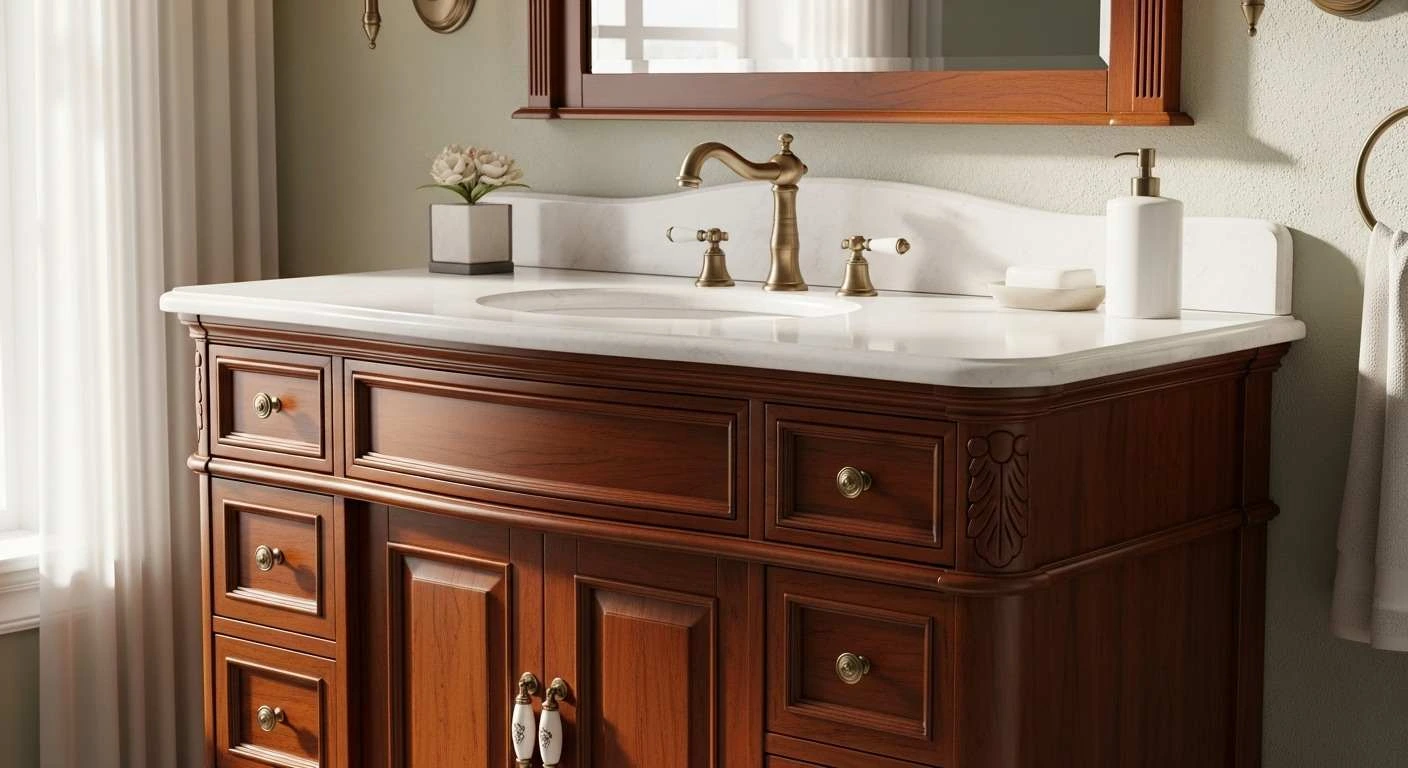

When homeowners seek character, I often recommend an antique style bathroom vanity. It’s a true centerpiece, setting the room’s tone. I’ve seen many trends come and go, but the timeless appeal of a well-chosen vintage-inspired vanity endures. It brings warmth, history, and an elegance that modern designs often miss. Success requires understanding its unique qualities, durability, and seamless integration. Let’s explore the practicalities for your home.
- Understanding the Defining Features of an Antique Style Bathroom Vanity
- Choosing the Right Wood for Your Antique Style Bathroom Vanity: Durability Meets Design
- The Details Matter: Hardware and Finish for True Antique Authenticity
- Beyond the Vanity: Styling Your Antique-Inspired Bathroom
- Sourcing Your Antique Style Bathroom Vanity: What to Look For and Where to Buy
Understanding the Defining Features of an Antique Style Bathroom Vanity
What defines an “antique style” vanity? It evokes history, drawing inspiration from specific design periods. Details like intricate carving, substantial lines, or aged patina tell a story. It’s about craftsmanship and design intent mirroring past eras, not just age. A mass-produced modern piece lacks that authentic character and presence crucial for a truly vintage bathroom space.
Common Design Eras and Their Hallmarks
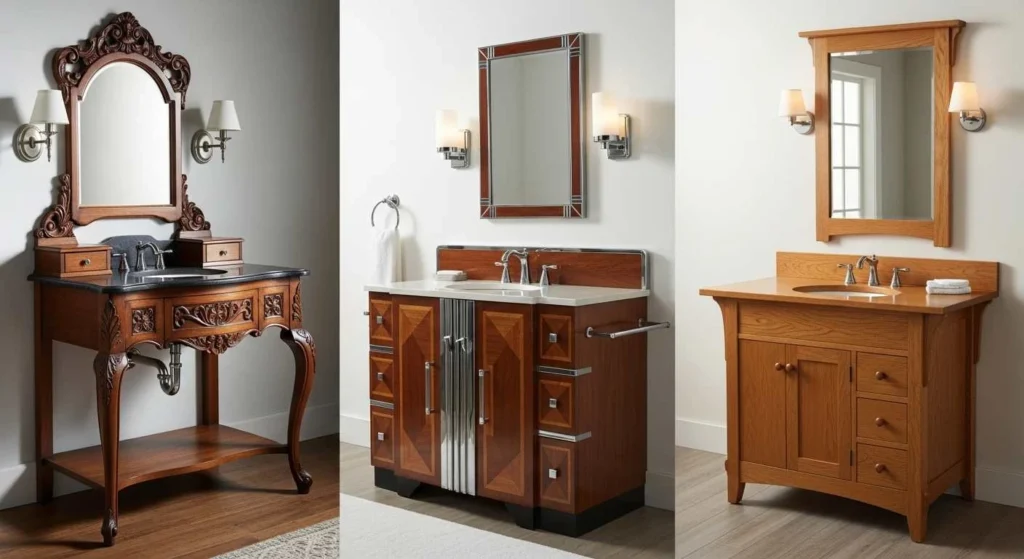
Different periods offer distinct styles. Victorian-era vanities feature ornate details, dark woods like mahogany, and curved legs. Art Deco pieces boast geometric patterns, sleek lines, often with chrome accents. For a simpler feel, Arts and Crafts or Shaker-style vanities emphasize honest materials, typically oak or cherry. Knowing these eras helps refine your aesthetic vision for your home.
| Design Era | Key Features | Typical Woods | Notable Accents |
|---|---|---|---|
| Victorian | Ornate details, heavy, curved legs | Mahogany, Walnut | Dark finishes, intricate carvings |
| Art Deco | Geometric patterns, sleek lines, luxurious | Exotic veneers, Lacquered | Chrome, polished brass, glass |
| Arts and Crafts | Simple, honest, handcrafted, functional | Oak, Cherry | Exposed joinery, hammered metals |
| Shaker | Minimalist, clean lines, utilitarian | Maple, Pine, Cherry | Unadorned, natural wood finishes |
The Role of Materials in Authenticity
Materials are paramount. An authentic antique style bathroom vanity uses solid hardwoods such as oak, cherry, or maple, not merely veneers. Countertops often feature marble, granite, or soapstone, which age beautifully and develop unique patinas.
Hardware must be period-appropriate: brass, iron, or porcelain. These materials contribute significantly to durability and longevity, a key factor I always emphasize to my clients.
| Material Type | Examples | Role in Authenticity |
|---|---|---|
| Solid Hardwoods | Oak, Cherry, Maple, Walnut | Foundation of durability and period-specific aesthetics. |
| Countertops | Marble, Granite, Soapstone | Develop beautiful patinas, classic and enduring surfaces. |
| Hardware | Brass, Iron, Porcelain | Essential for period-appropriate detail and overall charm. |
Choosing the Right Wood for Your Antique Style Bathroom Vanity: Durability Meets Design
Choosing wood for your vintage-inspired vanity isn’t just about aesthetics; it’s about longevity, especially in a moisture-rich bathroom environment. I’ve seen many beautiful pieces ruined when the wood couldn’t handle the humidity.
Hardwoods are my consistent recommendation for their inherent resilience and ability to withstand daily wear and tear. They resist dents and scratches far better than softer woods, which is crucial for high-use items like vanities.
Hardwoods vs. Softwoods for Longevity
For a truly durable antique style bathroom vanity, prioritize hardwoods like oak, cherry, maple, or walnut. Oak, with its pronounced grain, is incredibly strong and hides minor imperfections well. Cherry offers rich, warm tones that deepen beautifully with age. Maple is dense and has a finer grain, perfect for smoother finishes.
While pine can offer a rustic look, it’s softer and more prone to damage. If softwoods are chosen, I always advise rigorous sealing protocols.
| Wood Type | Characteristics | Durability (Bathroom) | Common Uses |
|---|---|---|---|
| Oak | Pronounced grain, strong | Excellent | Traditional, Mission, Arts & Crafts styles |
| Cherry | Rich, warm tones, fine grain | Excellent | Formal, elegant, ages beautifully |
| Maple | Dense, fine grain, takes finish well | Excellent | Modern, contemporary, smooth finishes |
| Walnut | Dark, rich, luxurious, durable | Excellent | High-end, classic, distinctive pieces |
| Pine | Softer, lighter, visible knots | Fair (requires rigorous sealing) | Rustic, farmhouse styles |
Protecting Wood in a Bathroom Environment
Even tough hardwoods need bathroom protection. Proper sealing is non-negotiable. I typically recommend a marine-grade varnish or multiple coats of polyurethane for excellent water resistance.
On a recent project, involving a salvaged antique dresser, we applied extensive sealant coats, especially around the sink cutout, preventing moisture penetration. Neglecting this crucial step often leads to warping or water damage within just a few years.
The Details Matter: Hardware and Finish for True Antique Authenticity
The hardware and finish choices are where an antique style bathroom vanity truly comes alive. These aren’t just functional elements; they’re the jewelry of the piece, capable of elevating a simple design or undermining an otherwise perfect selection.
Getting these details right is crucial for an authentic, period-appropriate look. It’s about ensuring every element works in harmony, creating a cohesive aesthetic that feels genuinely vintage and timeless.
Selecting Period-Appropriate Hardware
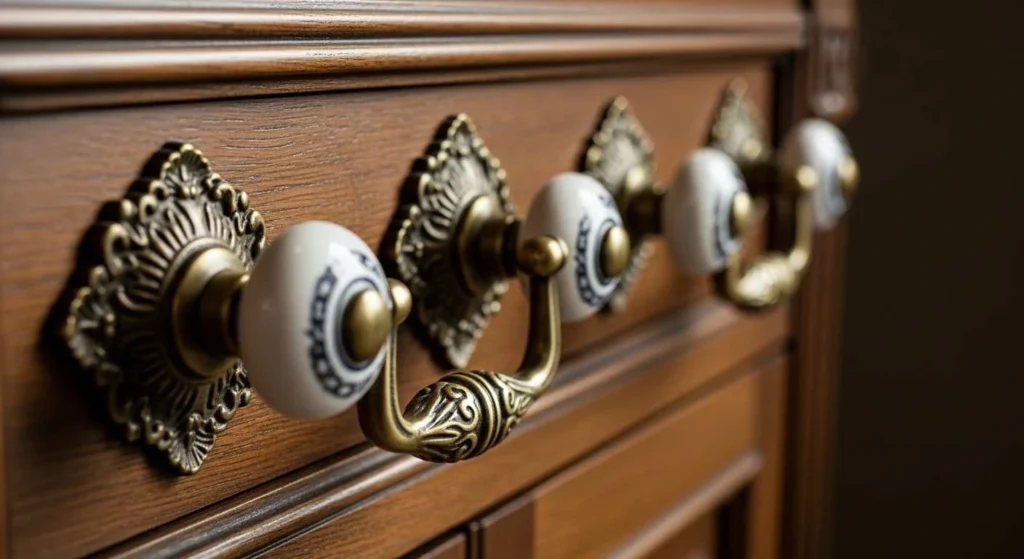
When sourcing hardware, match the era you’re trying to evoke. For Victorian or Edwardian styles, look for ornate brass pulls, ceramic knobs, or even cast iron handles. Mission or Arts and Crafts vanities often feature simple, hammered copper or iron. Reproduction hardware from reputable suppliers offers authentic style with modern durability. Inconsistent finishes or styles here can quickly make a vanity look disjointed, so choose carefully.
| Design Era | Recommended Hardware | Key Characteristics |
|---|---|---|
| Victorian/Edwardian | Ornate brass pulls, ceramic knobs, cast iron handles | Decorative, intricate, often polished |
| Mission/Arts & Crafts | Simple hammered copper or iron, dark bronze | Substantial, unadorned, functional, matte |
| Art Deco | Chrome, polished nickel, geometric pulls | Sleek, angular, highly reflective |
Faucets and Finishes: A Cohesive Look
Matching your faucet and other fixtures to your vanity’s era and hardware finish is vital. Oil-rubbed bronze, brushed nickel, and polished brass are common choices for antique styles. For a truly classic feel, I recommend widespread faucets with separate hot and cold handles, rather than single-lever modern designs. Ensure the finish complements your chosen hardware and any existing shower or tub fixtures. A mismatched chrome faucet on an otherwise perfect antique style bathroom vanity truly detracts from the overall design.
| Faucet Finish | Aesthetic | Best Paired With |
|---|---|---|
| Oil-Rubbed Bronze | Rustic, traditional, aged, warm | Dark woods, earthy tones, cast iron, antique brass |
| Brushed Nickel | Subtly contemporary, versatile, understated | Lighter woods, grays, cool tones, brushed steel/pewter |
| Polished Brass | Classic, luxurious, bright, historically accurate | Dark woods, deep colors, polished metals |
Beyond the Vanity: Styling Your Antique-Inspired Bathroom
An antique style bathroom vanity is a fantastic starting point, but it’s just one piece of the puzzle. To truly transform your bathroom into a vintage sanctuary, you need to consider all surrounding elements. It’s about creating an entire authentic aesthetic that feels cohesive, rather than just inserting an old piece. Every choice, from the lighting to the floor tiles, contributes to the overall narrative and feel you’re aiming for.
Creating a Harmonious Aesthetic
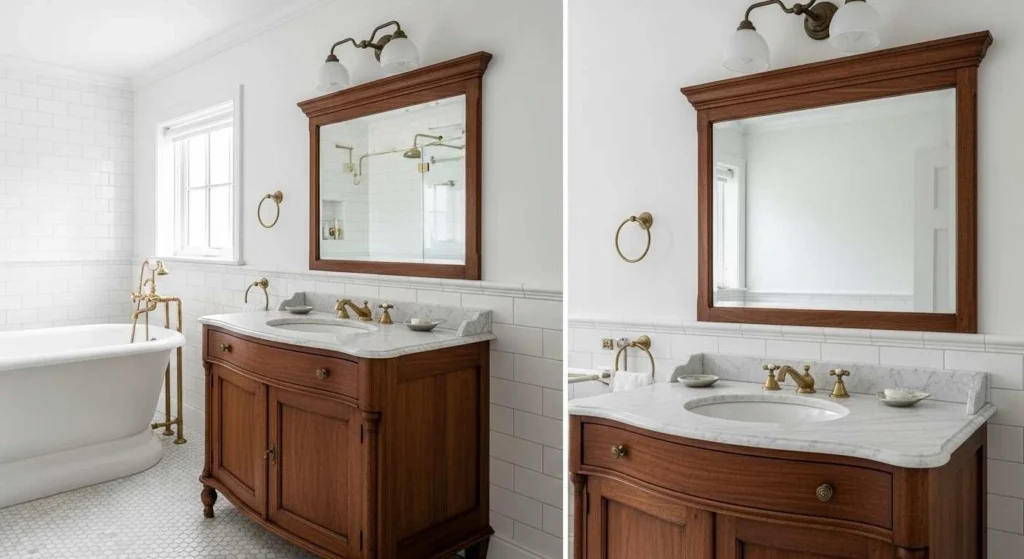
Think about complementary elements. Subway tiles are a classic choice for walls or shower surrounds in a vintage bathroom; consider penny or hex tiles for the floor. Paint colors should favor classic palettes: soft whites, muted greens, deep blues, or even a subtle floral wallpaper. Avoid stark, modern colors that clash with the vanity’s historical feel. A clawfoot tub or a vintage-style toilet can further solidify the period look you desire.
| Element | Antique Style Recommendations | Modern Elements to Avoid |
|---|---|---|
| Wall Tiles | Subway tiles, white or muted tones | Large format, glossy, highly textured tiles |
| Floor Tiles | Penny tiles, hexagonal tiles, mosaic | Polished concrete, stark solid color tiles |
| Paint Colors/Wallpaper | Soft whites, muted greens, deep blues, subtle florals | Bright primary colors, neon, minimalist stark white |
| Other Fixtures | Clawfoot tub, vintage-style toilet, pedestal sink | Built-in jetted tubs, ultra-modern wall-hung toilets |
Lighting and Mirrors to Complement Your Vanity
Don’t underestimate the impact of lighting and mirrors. For lighting, consider sconces with opal glass shades or period-style fixtures in brass or bronze. A large, ornate mirror, perhaps with a gold or dark wood frame, positioned above your antique style bathroom vanity, is both functional and decorative. On several projects, we’ve sourced antique mirrors from salvage yards and had them re-silvered, adding an incredible layer of authenticity that new reproductions just can’t quite match.
Sourcing Your Antique Style Bathroom Vanity: What to Look For and Where to Buy
Finding the perfect antique style bathroom vanity can be an adventure. You have options ranging from genuine antiques to high-quality reproductions, and each route has its pros and cons.
My advice is always to prioritize quality and condition, regardless of where you’re looking. A poorly constructed reproduction or a severely damaged antique will just lead to headaches down the road. Proper vetting prevents disappointment and costly repairs, ensuring your investment truly enhances your space.
New Reproductions vs. Refurbished Originals
New reproductions offer the benefit of modern plumbing compatibility, often coming pre-drilled for sinks and faucets, and built with contemporary finishes that withstand bathroom conditions. While convenient, they might lack the unique character and history of a refurbished original.
Salvaged antique dressers, buffets, or washstands can be stunning, but they often require professional modification for plumbing and sealing. In my experience, the extra effort for an original piece often yields unparalleled charm and historical depth.
| Feature | New Reproductions | Refurbished Originals (e.g., dressers) |
|---|---|---|
| Plumbing Compatibility | Often pre-drilled, designed for modern plumbing | Requires professional modification for plumbing |
| Character & History | Lacks unique historical character | Unparalleled charm and historical depth |
| Modification Needs | Minimal; ready for installation | Significant; needs cuts, reinforcement, sealing |
| Effort Involved | Generally lower | Higher, often requires professional conversion |
| Durability | Built with contemporary, moisture-resistant finishes | Original wood requires rigorous sealing protection |
Crucial Checks Before You Buy
Whether new or old, inspect your chosen antique style bathroom vanity thoroughly. For originals, check for structural integrity: Are the joints solid? Are there any signs of rot or serious water damage? I always look at the drawers – do they slide smoothly?
For reproductions, verify the materials; is it solid wood or veneer? Always measure your space carefully, including the vanity’s depth, to ensure it won’t impede movement or door swings. And don’t forget to account for plumbing clearances behind the unit; a fundamental step that often gets overlooked.
| Check Item | Refurbished Originals | New Reproductions | General for All Vanities |
|---|---|---|---|
| Structural Integrity | Inspect joints, legs, and overall stability for looseness. | Check for solid construction, not flimsy. | N/A |
| Damage/Rot | Look for signs of water damage, rot, or active pests. | N/A | N/A |
| Drawers/Doors | Ensure they slide smoothly and close properly. | Ensure smooth operation and alignment. | N/A |
| Materials | N/A | Verify solid wood vs. veneer; check finish quality. | N/A |
| Measurements | N/A | N/A | Measure space (width, depth, height) and vanity. |
| Plumbing Clearance | N/A | N/A | Account for pipes behind and below the unit. |
Can I use a regular dresser as a bathroom vanity?
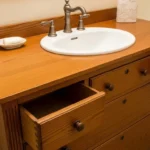
Yes, you absolutely can, and it’s a popular way to get a truly unique antique style bathroom vanity. However, it requires careful planning and professional modification. You’ll need to cut holes for the sink basin and faucet, reinforce the top for a countertop (if adding one), and ensure the wood is thoroughly sealed to protect against moisture, as these pieces weren’t originally designed for bathroom environments. Professional help for this conversion is often a wise investment.
How do you protect a wooden vanity from water?
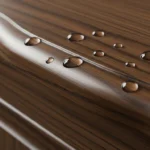
Protection from water is critical. I always recommend using a high-quality, moisture-resistant sealant – a marine-grade varnish or multiple coats of polyurethane are excellent choices. Apply it generously to all surfaces, especially inside cabinets, around the sink cutout, and on the legs. Regular wiping down of spills is also essential. For added protection, consider a small bead of silicone caulk where the countertop meets the sink, just to prevent any water ingress.
What maintenance is required for an antique style bathroom vanity?
Maintaining your antique style bathroom vanity involves regular gentle cleaning with a damp cloth and mild soap. Avoid harsh chemical cleaners, as they can damage the finish. Periodically inspect the sealant for any signs of wear or peeling, especially around the sink, and reapply as needed. For genuine antique wood, a good quality wood polish or wax can help preserve its luster and prevent drying. Being proactive with maintenance will significantly extend its life.