





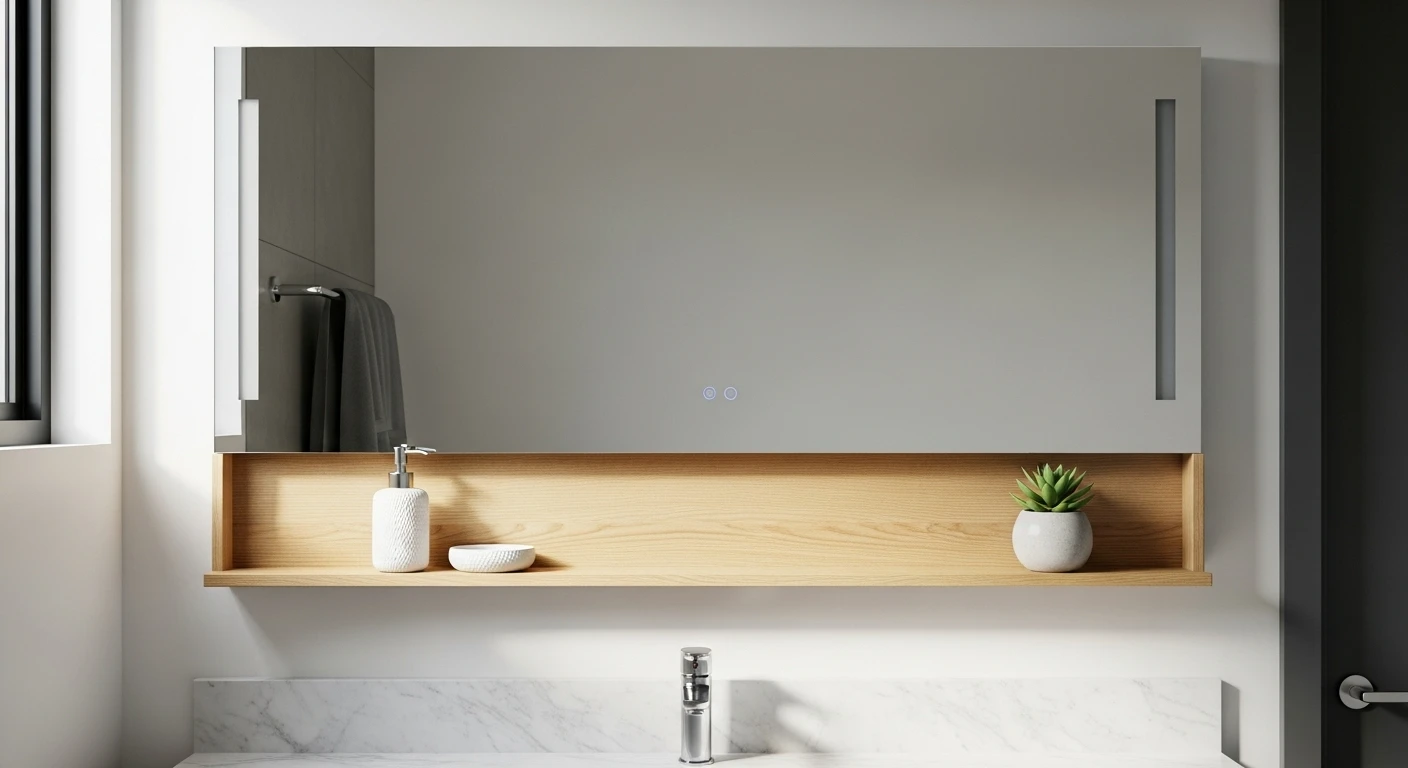
- Embrace Minimalism with Modern Floating Styles
- Add Character with Vintage and Industrial Mirror Shelves
- Upgrade Your Routine: Smart Mirrors with Lights and Defoggers
- How to Choose the Right Size and Placement
- DIY vs. Buying: Which Mirror Shelf Is Right for You?
- Find Your Perfect Bathroom Mirror with Shelf


Look at your bathroom counter. Go on, look. All that stuff. Bottles, tubes, that electric toothbrush charger. It’s a mess. The fix is usually staring you right in the face, literally. A good mirror with a shelf. It’s not a new invention, but people get it wrong all the time.
Choosing one isn’t just about looks. You have to think about the steam from the shower, what the thing is made of, and if it’s actually big enough for your junk. I did a job for a woman, Caroline, and her vanity was just… covered. We put in a simple mirrored cabinet and it changed the whole room. Get the right one, you’ve got a solution. Get the wrong one, you’ve got a rusty, wobbly thing you hate looking at every morning. So let’s talk about the options. What works and what really, really doesn’t.
Embrace Minimalism with Modern Floating Styles
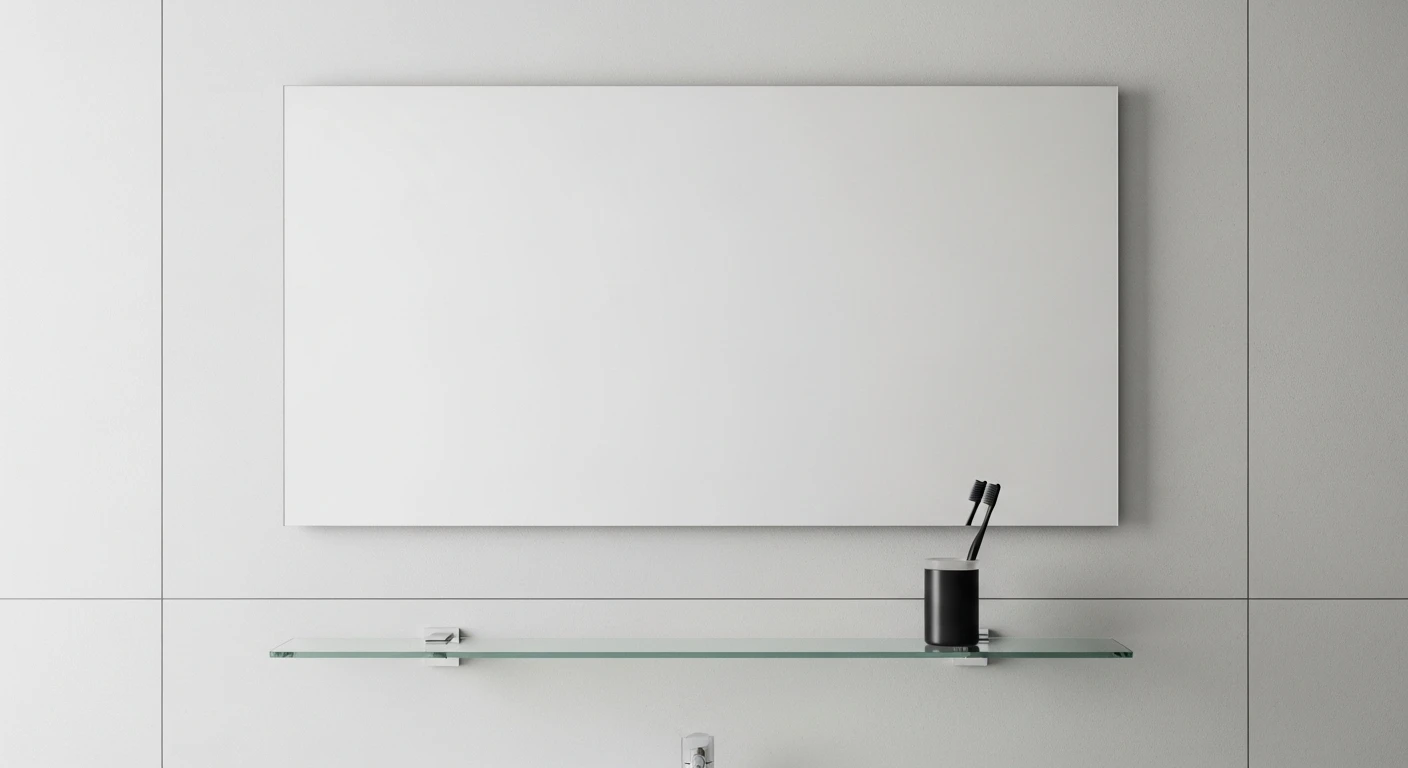
Everyone wants that “modern” look. Clean lines. Nothing on the counter. Fine. A floating shelf mirror is what you’re looking for. Usually a plain, frameless mirror and a shelf that just kind of… sticks out of the wall. Simple. Makes a small bathroom feel less like a closet.
But the materials are what matter. A lot of these come with a tempered glass shelf. It’s strong, you can wipe it clean, and it doesn’t make the wall feel heavy. Fine. The other option is metal, usually stainless steel or aluminum with a powder coat. That coating is the important part. It’s basically baked-on paint, tough as nails. Keeps the rust off. You buy some cheap thing with regular paint, and I guarantee it’s flaking and showing orange spots in a year. I’ve seen it a hundred times.
To make this a bit clearer, here’s how I break down the common materials for my clients:
| Material Type | The Good Part | The Bad Part |
|---|---|---|
| Tempered Glass | Looks clean, totally waterproof, easy to clean. | Shows water spots and fingerprints like crazy. |
| Powder-Coated Metal | Very durable, won’t rust if the coat is good. | A cheap one can chip, and then it’s rust city. |
| Regular Painted Metal | It’s cheap. | It will peel and rust. Don’t do it. |
My Take: Honestly, both tempered glass and a good quality powder-coated metal shelf will serve you well. Just steer clear of the bargain-bin painted stuff. You’ll be replacing it in a year.
The hardware they give you is the real test, though. If it comes with a bag of flimsy plastic drywall anchors, just throw them out. Seriously. You need a solid mount. A real cleat system or long screws that go right into the studs. I remember a house over on Cranbrook where the previous owner used drywall screws for everything. Towel bars, cabinets… it was a disaster. A shelf loaded with glass bottles is heavy. You need to anchor it right, or you’ll be cleaning up a huge, expensive mess.
Add Character with Vintage and Industrial Mirror Shelves
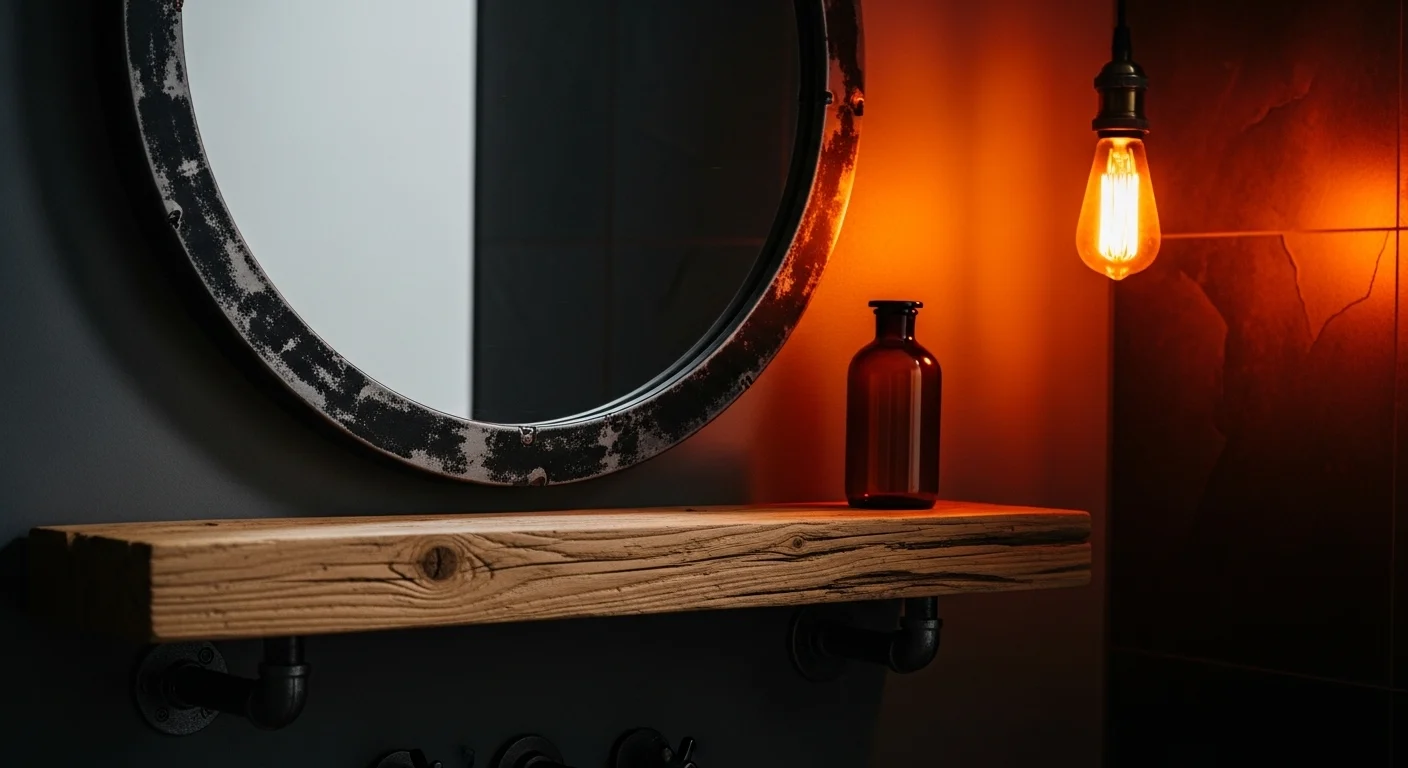
So you don’t want the sterile, modern look. Good for you. There’s a lot of other stuff out there. Industrial, vintage, whatever you want to call it. Pieces that actually have some texture. Black pipe frames, shelves made out of some big chunk of wood. Or a fancy brass frame with a little marble shelf. They can look great.
But you have to be careful in a bathroom. Wood and water are not friends. People put in these beautiful raw wood shelves, and six months later they’re warped and splitting from the steam. If you’re gonna use wood, it has to be sealed. And not with one cheap coat. You need multiple coats of a marine varnish, the kind they use on boats. Every side. Or just use teak, it’s got natural oils that resist water. That works too.
Let’s put these character materials side-by-side so you know what you’re getting into.
| Material | How It Looks | Bathroom Reality Check |
|---|---|---|
| Wood (Sealed) | Warm, natural, unique. | Must be sealed perfectly or it will warp and rot. |
| Teak Wood | Also warm and natural. | Naturally water-resistant. A much safer bet. |
| Brass | Elegant, classic, ages well. | Will develop a green patina. Some love it, some hate it. |
| Black Iron/Pipe | Industrial, tough-looking. | Has to be powder-coated or it’s a rust magnet. |
Pro-Tip: If you love the wood look, spend the extra money on teak or make absolutely sure the piece you buy is sealed with a marine-grade varnish. Don’t just take the seller’s word for it; look for specifics.
And the metals. Unfinished iron is just asking for rust. Look for powder-coated steel. Brass is okay, it’ll get that aged, green patina over time, which some people like. We built one for a guy using copper pipe and a sealed walnut shelf. He loved it. The point of these is the imperfection, the texture. But that’s not an excuse for it to fall apart. Has to be durable.
Upgrade Your Routine: Smart Mirrors with Lights and Defoggers
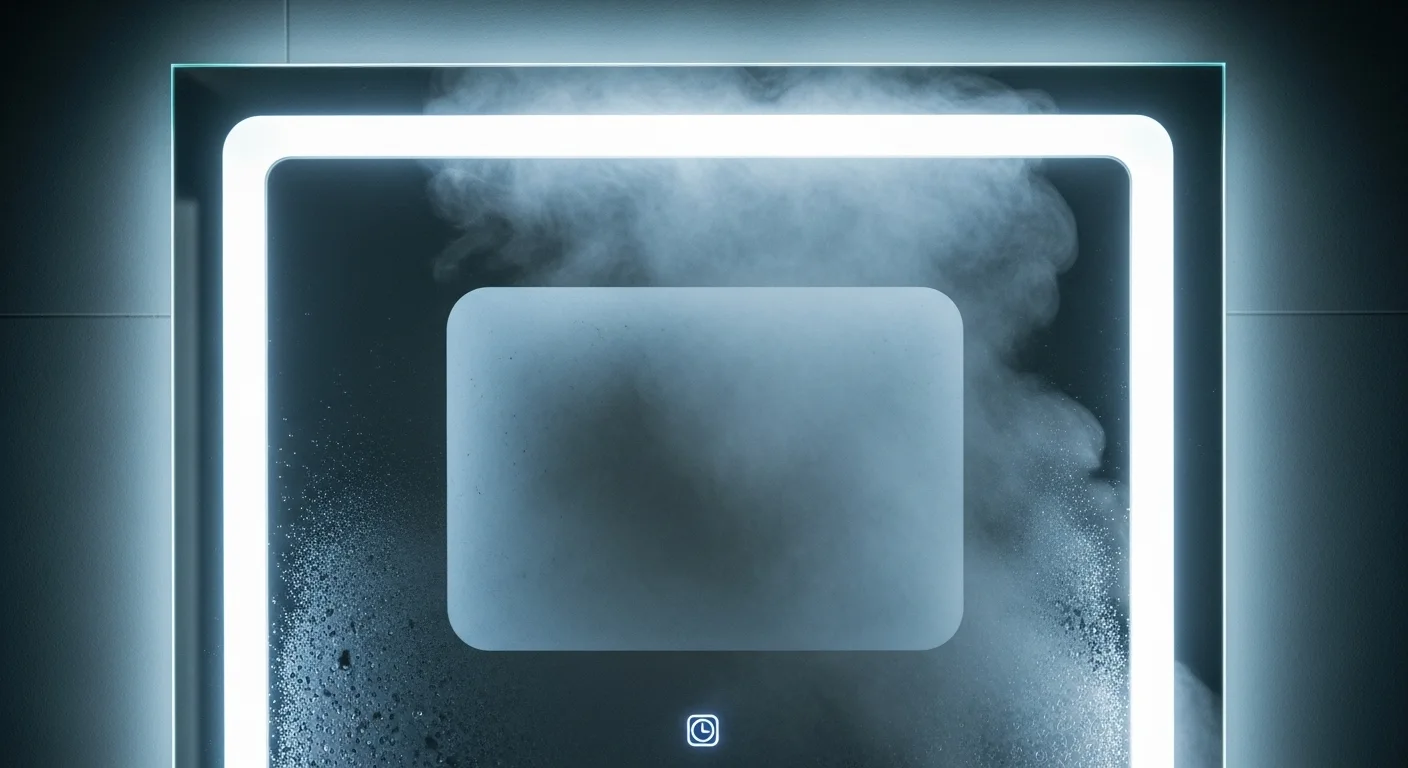
Then you’ve got the techy stuff. The smart mirrors. The most practical thing here is the built-in LED lighting. It’s way better than those old light bars that cast shadows down your face. You can get them front-lit, which is what you want for shaving or makeup, or back-lit, which just gives off a soft glow.
And the best feature, hands down, is the defogger. It’s a little heater on the back of the glass that keeps a spot clear after a hot shower. Seems silly until you have one. Then you can’t go back. Some have clocks, weather, Bluetooth speakers… all that.
All these features can get confusing. Here’s a simple breakdown of what’s actually useful.
| Feature | What It Really Does | Is It Worth It? |
|---|---|---|
| Built-in LED Lights | Gives you even, shadow-free light on your face. | Yes. This is a huge upgrade over old vanity lights. |
| Defogger Pad | Heats the mirror so it doesn’t fog up. | Absolutely. You’ll use this every single day. |
| Clock/Weather Display | Shows the time or forecast right on the mirror. | It’s a nice-to-have, but not essential. |
| Bluetooth Speakers | Plays music from your phone. | The sound quality is usually just okay. Your call. |
My Take: The two features that really matter are the LEDs and the defogger. The rest is just bells and whistles. Focus on getting a mirror that does those two things well and has a decent warranty.
Here’s the thing, though. The more gadgets they cram in there, the more things there are to break. Before you buy one, you have to ask about the LEDs. Can they be replaced? Almost always, the answer is no. So if the lights die in five years, you’re buying a whole new, expensive mirror. Just… be aware of that. Stick with a brand that has a real warranty. The wiring isn’t a joke, either. This isn’t like plugging in a lamp. It needs to be hardwired into your house by an electrician. Don’t try to DIY that part. Please.
How to Choose the Right Size and Placement
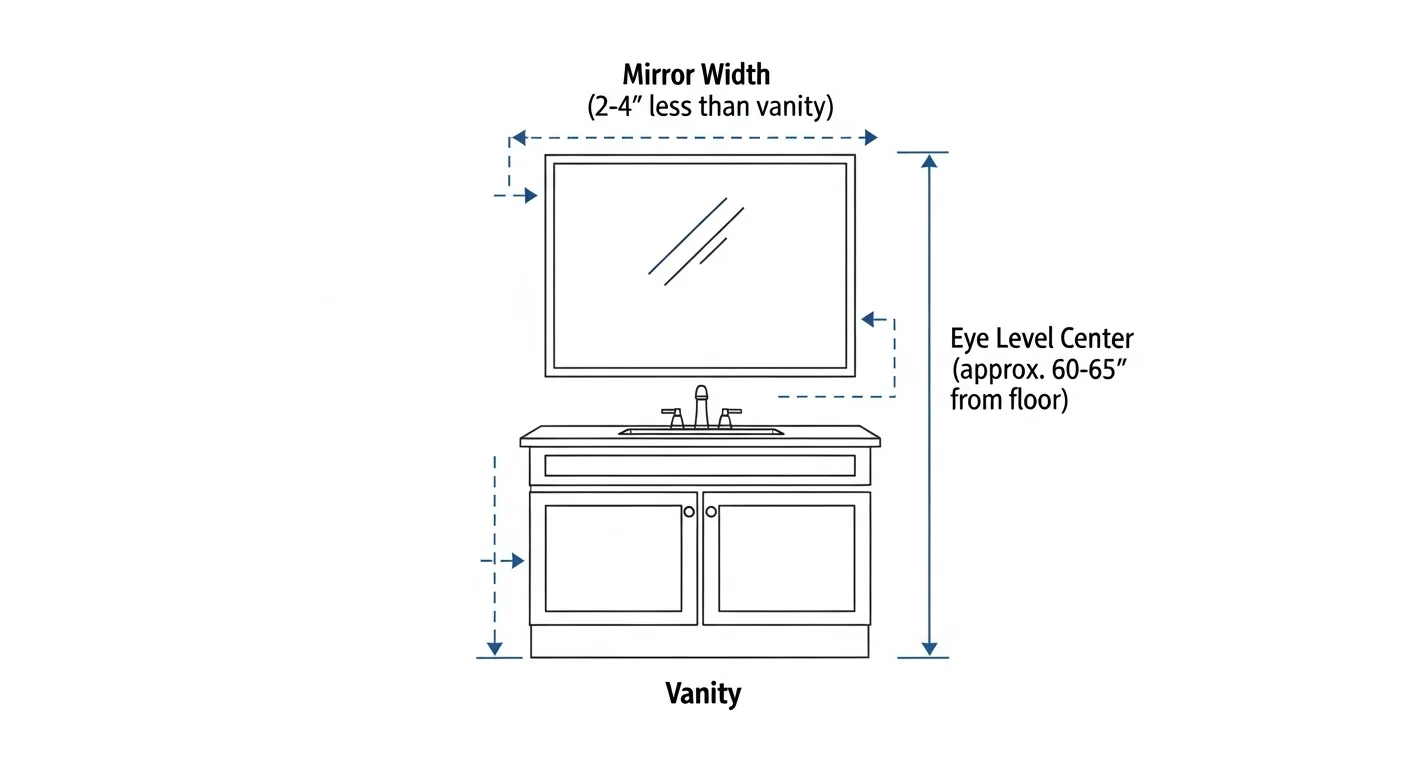
It can be the nicest mirror in the store, but if it’s too big or too small for your vanity, the whole room just looks… wrong.
The width is easy. Rule of thumb is the mirror should be a few inches narrower than your vanity cabinet. Got a 48-inch vanity, get a 44-inch mirror. Something like that. It just looks balanced. If you have two sinks, you can do two smaller mirrors, one over each.
Height is what people mess up. The center of the mirror should be at eye level. For most people, that means the center point is about 60, maybe 65 inches off the floor. You might need to adjust, but that’s a good start. And the the shelf has to be in a usable spot. You need to be able to get your toothbrush without knocking over your faucet.
Here’s a quick cheat sheet for placement so you get it right the first time.
| Measurement | The Rule of Thumb | Why It Matters |
|---|---|---|
| Mirror Width | 2-4 inches narrower than your vanity. | Creates a pleasing visual frame and balance. |
| Mirror Height | Center of mirror at eye level (approx. 60-65″ from floor). | You can actually see your whole face in it. |
| Shelf Height | High enough to clear the faucet, low enough to reach easily. | Has to be functional, not just decorative. |
Pro-Tip: That cardboard cutout trick I mentioned? Do it. It sounds silly, but it’s the single best way to avoid making a mistake with placement. It takes five minutes and can save you a world of regret.
Here’s a trick. Cut out a piece of cardboard the size of the mirror you’re thinking about. Tape it to the wall. Live with it for a day. See how it feels. It saves a lot of headaches and extra holes in the wall. And for God’s sake, find the studs. Always find the studs.
DIY vs. Buying: Which Mirror Shelf Is Right for You?
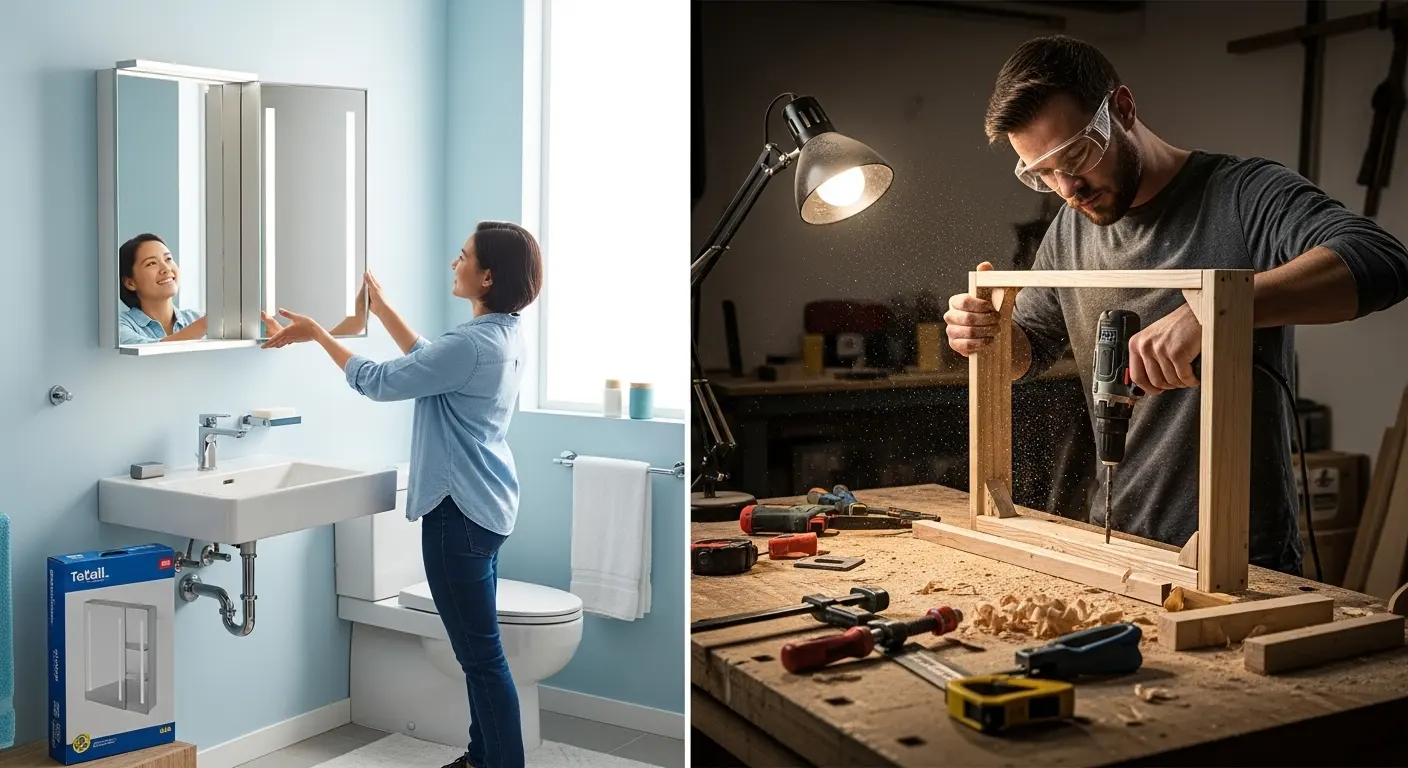
So, do you buy one or build your own?
Buying one is easy. It’s all designed to fit together, it comes with the hardware (even if you have to replace it), and there’s a warranty. You can find decent ones everywhere. The problem is, you’re stuck with their sizes and their styles. If you have a weird space, it might not work.
The DIY route gives you total freedom. You can pick any mirror, any wood, any brackets you want. It can save you money, if you already have the tools and the know-how. But this is not a project for a beginner. You gotta make precise cuts, you gotta make sure it’s all square and strong, and you have to mount it so it doesn’t kill someone. And if you’re making a wood shelf, you have to seal it. I mean *really* seal it. Every surface, every edge, the back that touches the wall. Moisture gets everywhere. If you’re not up for that, just buy one. It’s safer.
If you’re on the fence, maybe this will help you decide.
| Approach | The Upside | The Downside |
|---|---|---|
| Buying Pre-Made | Easy, fast, comes with a warranty. | Limited sizes and styles, might have cheap hardware. |
| Building It Yourself (DIY) | Total creative control, can save money, custom fit. | Needs tools and skill, time-consuming, no warranty. |
My Take: If you have to ask yourself if you’re skilled enough to build one, you should probably just buy one. A failed DIY project in a bathroom can be a dangerous, expensive mistake. There’s no shame in buying a solid, pre-made unit.
Find Your Perfect Bathroom Mirror with Shelf
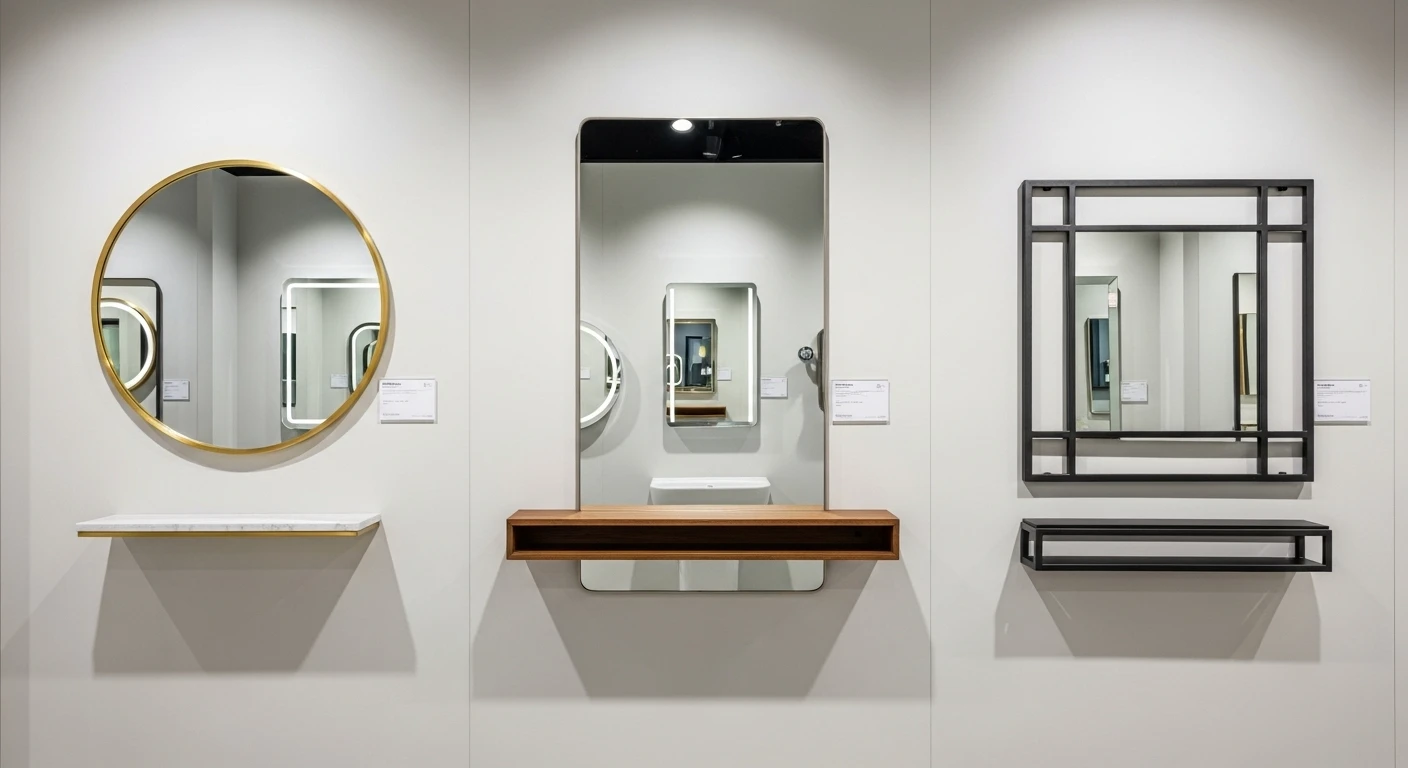
Look, it comes down to this: find something that holds your stuff and doesn’t fall apart from the steam. Whether it’s a simple slab of glass or some fancy thing that tells you the weather, just make sure it’s made of the right materials. And install it properly. That’s pretty much it.