





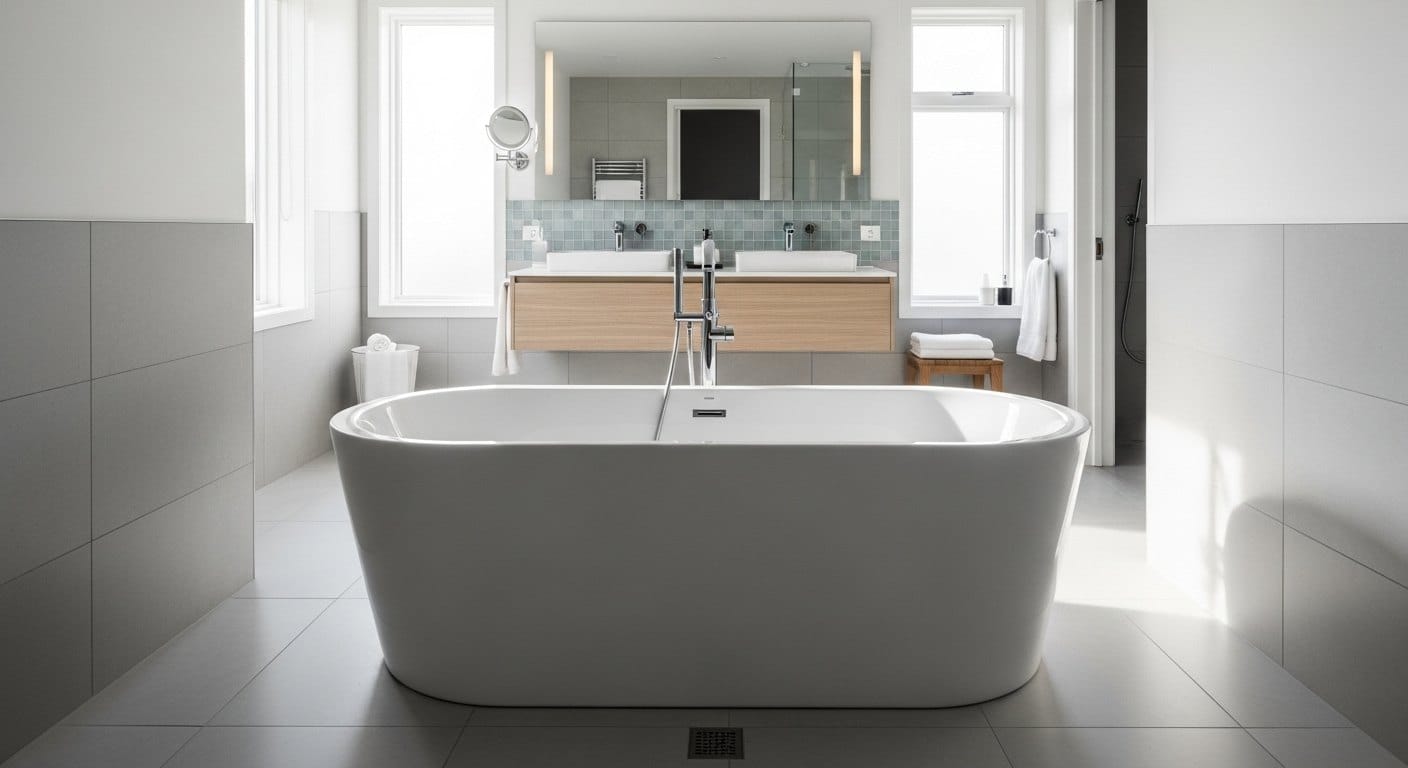

Alright, homeowners, let’s talk about bathtubs. A successful bathroom renovation hinges on getting the measurements right, and choosing the perfect tub is no exception. While it sounds straightforward – just measure and pick – in my experience as a contractor, ‘standard’ can be quite misleading. The actual fit depends on more than just the rough opening; it encompasses plumbing, access, and importantly, how it feels to you.
- Why Accurate Bathtub Measurements Are Non-Negotiable
- Standard Alcove Bathtub Dimensions: The Most Common Bathtub Size
- Navigating Freestanding Tub Sizes: Elegance and Space Considerations
- Compact Solutions: Finding the Right Bathtub for Small Bathrooms
- The Practicality of Corner Bathtubs: Space-Saving Angles
- Drop-In and Undermount Tubs: Seamless Integration and Customization
- Beyond the Tape Measure: Other Critical Bathtub Considerations
- Frequently Asked Questions About Bathtub Sizes
This guide will break down the various standard bathtub measurements you’ll encounter for different tub types. We’ll explore what those numbers truly mean for your project, helping you avoid common and costly mistakes.
Why Accurate Bathtub Measurements Are Non-Negotiable
Your bathroom is a complex space, not just an empty box. It contains studs, existing plumbing lines, and often a doorframe that significantly restricts movement when bringing in large items. Therefore, accurate bathtub measurements are paramount for any bathroom renovation.
Proper bathtub sizing isn’t solely about the tub’s length and width. It’s about ensuring it can physically get *into* the room, clear existing fixtures, and connect to drainage without requiring extensive overhauls. I’ve witnessed projects stall because an expensive new tub wouldn’t clear a hallway corner or a tight doorway.
Such delays are not only frustrating but also incredibly costly. Always measure twice, and critically, measure your entire entry path to the bathroom.
Standard Alcove Bathtub Dimensions: The Most Common Bathtub Size
Most people picture an alcove tub when thinking ‘bathtub’. These workhorses are designed to fit into a three-walled enclosure, making them incredibly popular and efficient for many bathrooms.
What is an Alcove Bathtub?
An alcove tub is typically installed against three existing walls, with a fourth side open, often featuring a shower combination or a tiled surround. They are a practical and common choice due to their space-saving design and ease of installation.
Common Alcove Tub Sizes
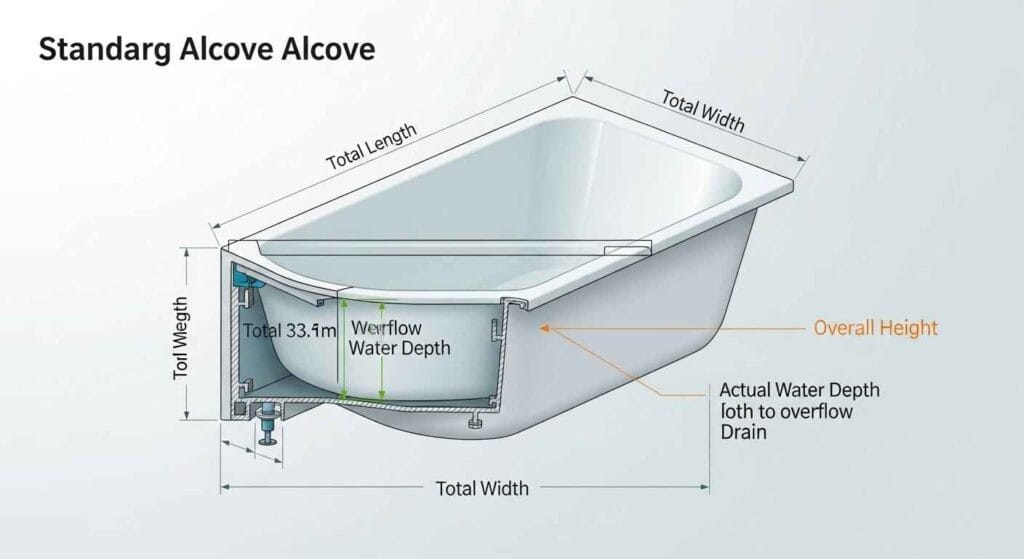
The most common standard bathtub measurements for alcove tubs I deal with are 60 inches long by 30 or 32 inches wide. Depths typically range from 14 to 16 inches. That 60-inch length usually refers to the stud-to-stud rough opening; the actual tub might be slightly less. Manufacturers like Kohler or American Standard consistently adhere to these dimensions.
Remember, the stated depth is the overall height of the tub; actual water depth will be less, as it’s dictated by the overflow drain. This difference is crucial for those who enjoy a deep, full-body soak.
Navigating Freestanding Tub Sizes: Elegance and Space Considerations
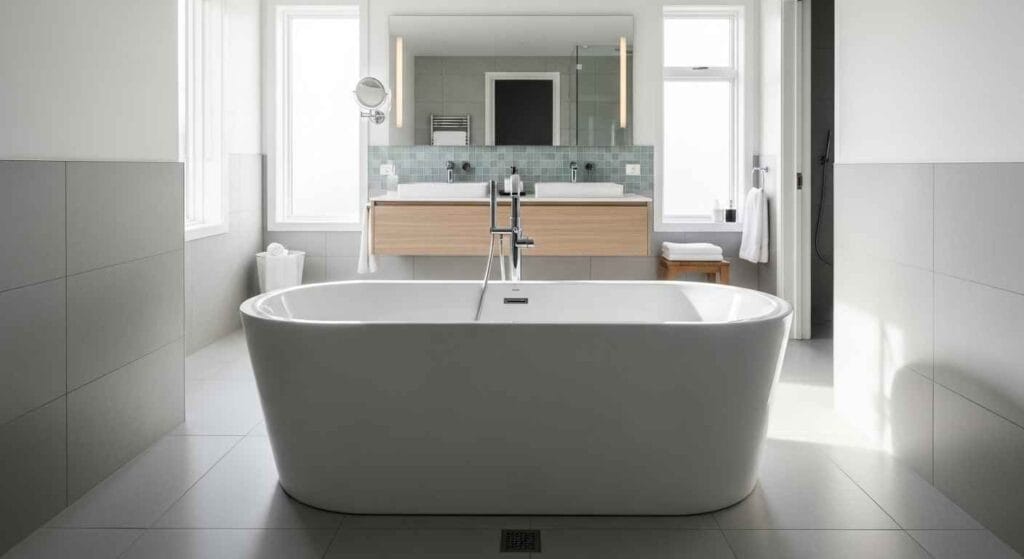
Freestanding tubs instantly add a ‘wow’ factor and a luxurious focal point to any bathroom. However, their installation demands particularly careful planning and consideration for the surrounding space.
Typical Freestanding Bathtub Dimensions
These elegant tubs typically range from 55 to 72 inches long, 27 to 32 inches wide, and 20 to 30 inches high. As they stand alone, you need ample clearance around them. I recommend at least 3 to 4 inches on all sides for comfortable cleaning and access.
Plumbing for drains and water supply must come from the floor rather than through a wall. Furthermore, the weight of a large cast iron freestanding tub, especially when filled with water, can be immense, requiring verified floor support to prevent structural issues. Always check your floor’s weight capacity.
Compact Solutions: Finding the Right Bathtub for Small Bathrooms
Even with a cozy bathroom, you don’t have to forgo the luxury of a tub. Several smaller bathtub dimensions are designed specifically for tighter spaces.
Options for Smaller Bathrooms: Short Tubs and Soaking Tubs
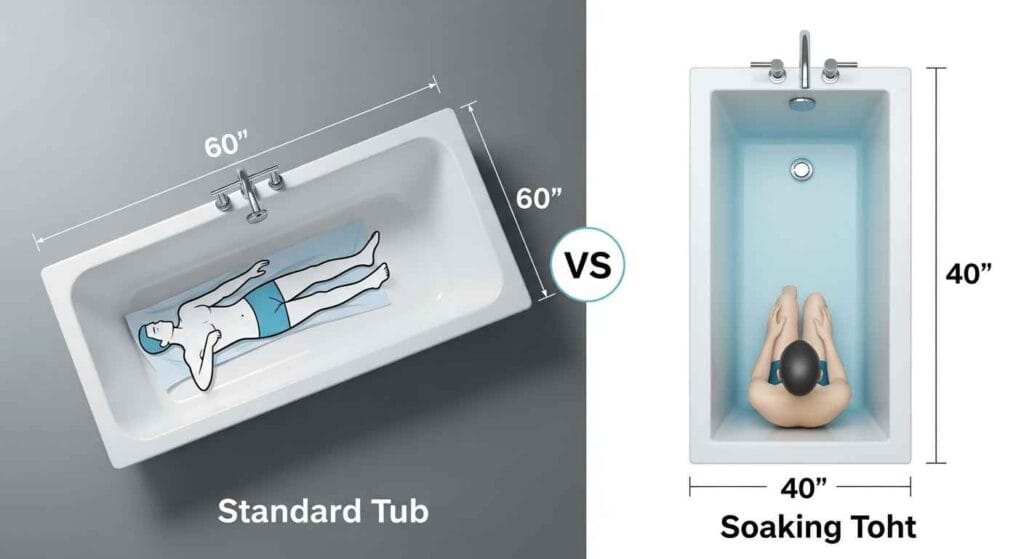
Smaller tubs, often called ‘short tubs,’ typically measure 48 to 54 inches long and 28 to 30 inches wide. While they might not allow for a full stretch-out soak, they are highly functional for children or for a refreshing dip.
Japanese-style soaking tubs offer another excellent option for compact bathrooms. These tubs are deeper but significantly shorter, allowing an upright, full-body soak. They can be quite compact, around 40 inches by 40 inches, but require consideration for your hot water heater’s capacity due to their increased depth.
The Practicality of Corner Bathtubs: Space-Saving Angles
Corner bathtubs are excellent for maximizing space in certain layouts or for creating unique and appealing bathroom designs. They efficiently utilize an otherwise underused corner, opening up central floor space to make a room feel bigger.
The ‘standard’ bathtub measurements for these are often around 60 inches by 60 inches, forming a square or an asymmetrical design. Depths typically fall between 18 and 22 inches.
Installation can be more involved than an alcove tub, frequently requiring custom tiling surrounds and careful faucet placement to match the angular design. Always account for the extra framing and waterproofing needed for the surrounding deck or enclosure.
Drop-In and Undermount Tubs: Seamless Integration and Customization
For clients seeking a sleek, custom-built appearance, drop-in or undermount bathtubs are ideal. These tubs are installed within a custom-built, tiled deck or platform, creating a seamless and integrated look.
With these types of installations, the tub’s internal dimensions truly matter, as the exterior structure is built around them. Expect internal lengths from 45 to 72 inches and widths typically from 30 to 32 inches. The height of the tub itself is variable, as its rim sits on or under the custom deck.
This flexibility allows tailoring the deck height to your preference, but it demands precise framing, robust waterproofing, and careful planning of the surrounding deck materials.
Beyond the Tape Measure: Other Critical Bathtub Considerations
Getting the standard bathtub measurements right is merely the first step in a successful bathtub installation. Several other factors play a crucial role in the overall functionality and longevity of your new tub.
Plumbing and Drain Placement
Always consider drain placement – will it be on the left, right, or in the center? This directly impacts your rough-in plumbing and can determine which specific tub models are compatible with your existing setup or planned modifications. Misalignments here can lead to significant rework.
Bathtub Material Matters
The material of your bathtub is a significant factor. Acrylic tubs are generally lighter, more affordable, and offer good heat retention. Enameled cast iron, conversely, is incredibly durable and retains heat exceptionally well, but it’s much heavier, often requiring reinforced flooring to support its weight, especially when filled. Each material has implications for installation, cost, and long-term maintenance.
The All-Important Delivery Path
Crucially, measure the delivery path! Will your new tub fit through your front door, navigate hallways, and clear the bathroom opening without damaging walls or the tub itself? I always advise measuring *all* these clearances before purchasing. A tape measure is vital, but common sense and a good, detailed plan are absolutely indispensable for a smooth bathtub installation.