






Look, moisture is a parasite. It doesn’t care about your aesthetic or what color you saw on Pinterest. I was standing in a bathroom with Daniel over on Mcgowen St in Oxnard last Tuesday and the guy thought he just needed a quick freshening up. Wrong. Total delusion. We peeled back one strip of bubbling latex and found a five thousand dollar mold remediation disaster eating the drywall. People treat the cost to repaint a bathroom like it’s a cosmetic hobby.
It isn’t. It’s your house’s primary defense system. If you see yellow streaks or that weird alligator skin texture on your walls, you’re already drowning in maintenance debt. I’m writing this fast because people keep making the same stupid financial mistakes with cheap paint.
I have seen enough rotting drywall to know that a visual check of bathroom wall ideas is your first line of defense against a total structural failure.
| Visual Warning Sign | Root Cause of Failure | Risk Level to Your Budget |
|---|---|---|
| Yellow Streaks | Surfactant leaching or moisture penetration | Moderate |
| Alligator Skin Texture | Layer adhesion failure or poor curing | High |
| Visible Bubbling | Hydrostatic vapor pressure buildup | Critical |
My Take
If you see ‘bubbling’ on your walls, you are already behind the curve. Stop looking at paint chips and start looking for hidden leaks before the drywall turns to mush.
Moisture is a patient enemy. It sits there and waits. It finds every microscopic gap in a lazy paint job. It turns your structural studs into mulch while you’re busy picking out the perfect bathroom paint colors. If you are noticing yellow streaks on your walls, you are failing. This guide is about the cold math and the technical reality of keeping your walls from rotting.
Understanding the Basics of High-Moisture Coatings
We need to define what a real bathroom paint system looks like before we talk about dollars. Most people think they can just use leftovers from the hallway. You can’t. A bathroom is a high-stress zone. It deals with massive temperature jumps and hydrostatic pressure from steam every single morning. A standard repaint isn’t just rolling color. It is a chemical seal.
People think one coat of bathroom paint is a magic wand, but a real protective system requires a specific sequence of chemical barriers.
| Layer Application | Component Name | Technical Purpose |
|---|---|---|
| First Layer | Bonding Primer | Creates a mechanical grip on old surfaces |
| Second Layer | Vapor-Barrier Mid-Coat | Prevents steam from reaching the substrate |
| Third Layer | Antimicrobial Topcoat | Fights mildew and provides the final seal |
My Take
Skip the primer and you are basically ‘throwing money into a damp hole’. The bond between the wall and the paint is the only thing keeping your house from smelling like a swamp.
You need a specialized moisture-resistant coating, much like when you paint bathroom tile. These formulas have higher levels of solids. They use antimicrobial additives. These prevent mildew from living in your porous drywall. It’s about layers. Usually three of them.
First is the bonding primer. This is the glue. It makes sure the new stuff actually sticks to the old stuff, especially if you have that nasty old oil-based paint underneath. Second, you might need a vapor-barrier mid-coat. This is vital if your fan is weak and the room stays foggy for an hour after a shower. It stops water from soaking into the wall itself.
Third is the topcoat. That’s the pretty part. When homeowners ask about the cost to repaint a bathroom, they only think about this one gallon of paint. That is a massive financial error. It leads to project creep. You find the rot later. Then you pay double.
The Analyst’s Definition
A true bathroom repaint is a ‘multi-stage protective seal’ rather than a visual change. It must include surface decontanimation, mechanical bonding, and a semi-gloss or satin moisture-resistant finish.
Average Cost to Repaint a Bathroom in 2025 and 2026
The market for 2025 and 2026 is weird. Raw material prices for titanium dioxide and acrylic resins finally stopped spiking, but labor is still at a massive premium. Right now, the cost to repaint a bathroom sits between four hundred and twelve hundred dollars for a pro job.
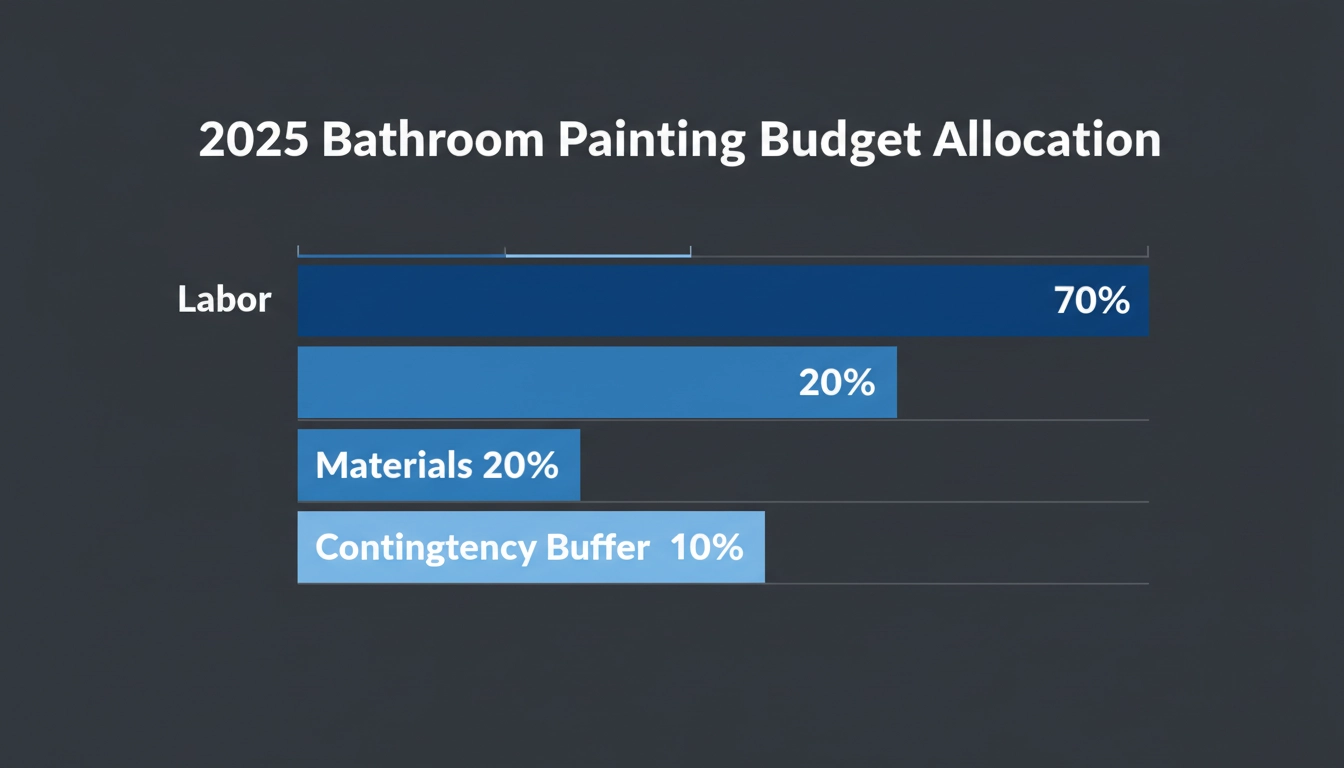
I have crunched the numbers on labor and materials for the upcoming cycle, and the financial weight is heavily skewed toward the person holding the brush.
My Take
Labor is the ‘heavy lifter’ in this budget. You are paying for a technician’s precision and patience, not just a guy with a bucket and a roller.
This range exists because of geographic price variance. If you live in a big city, expect the high end. If you’re rural, maybe the low end. But you’re paying for at least a full day of labor. Always. Even if the room is tiny. Why? Drying intervals. A painter can’t just slap three coats on in an hour. They have to wait for the chemistry to work.
Premium paint is now seventy to a hundred bucks a gallon. That hurts. I get it. But the cost-per-year of a high-end finish is much lower. Cheap paint fails in two years. Good paint lasts ten. Do the math.
For a normal full bathroom, budget one hundred fifty for materials and six hundred for labor. That’s the floor. Then, add my 15% buffer. Always. You need that cash for unforeseen substrate repairs. Maybe there’s a deep gouge behind the towel rack. Maybe there’s a mildew colony that needs professional killing. If you don’t have that buffer, you’re gambling.
Bathroom Repainting Cost per Square Foot and Size
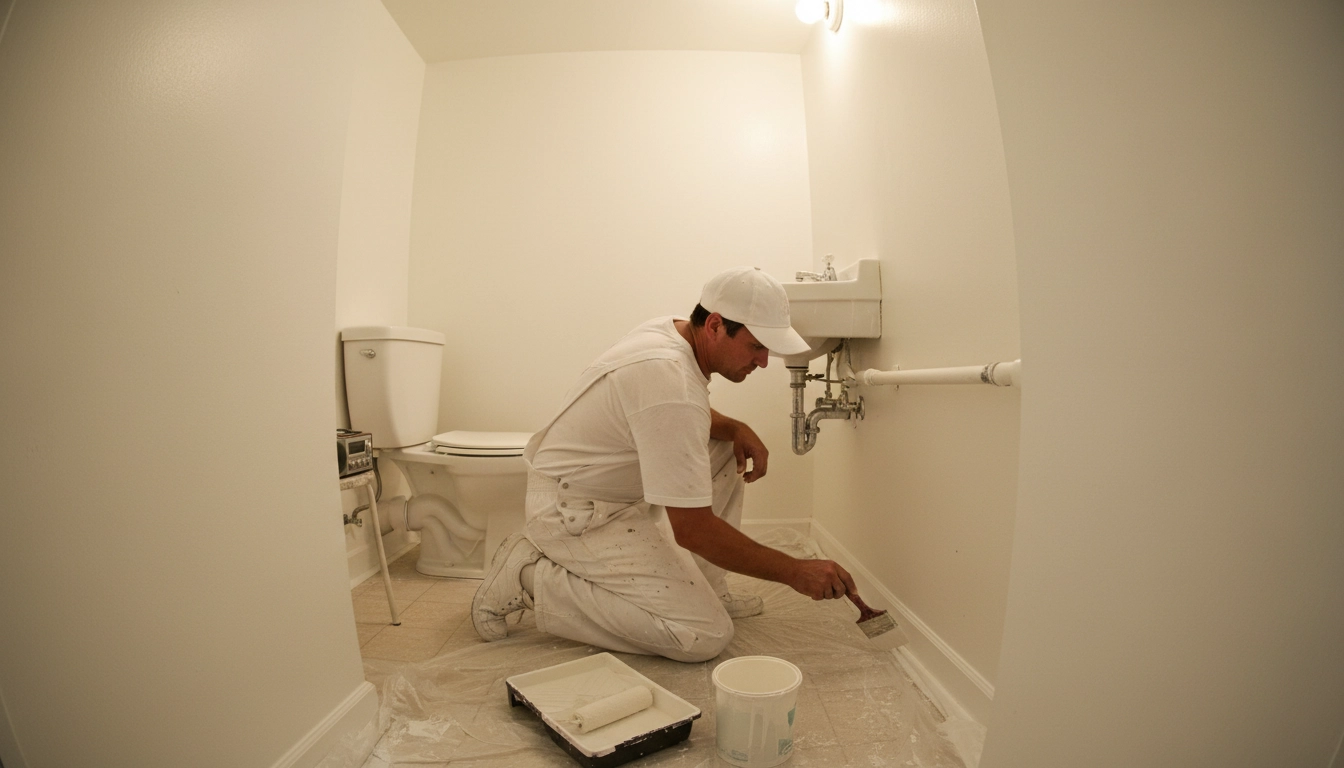
The square foot math is usually two to six dollars. But bathrooms are liars. The floor space doesn’t matter. It’s the linear footage of the trim and the vanity surrounds. Those are the time-suckers.
Do not let the small floor footprint fool you; the real cost is in the obstacles per square foot that slow down the professional.
| Bathroom Style | Typical Wall Surface Area | Complexity Level | Estimated Labor Time |
|---|---|---|---|
| Powder Room | 60 to 100 sq ft | High (Tight Spaces) | 6 to 8 hours |
| Full Guest Bath | 150 to 250 sq ft | Moderate | 10 to 14 hours |
| Master Suite | 300 plus sq ft | Very High (Fixtures) | 16 to 24 hours |
My Take
A master bath is a ‘marathon of masking’. The more fixtures you have, the more you pay for the painter to ‘not’ paint things.
A tiny powder room with complex small bathroom designs might only have sixty square feet of wall. Sounds cheap, right? It’s not. You have to do precision cutting around a toilet and a pedestal sink. You’re paying for technical dexterity. It’s hard to move in there. It takes time. Time is money.
For a mid-sized room of about a hundred square feet, the paint cost is low. One gallon covers four hundred square feet. You’ll have plenty left over. The real cost driver is the surface-to-fixture ratio. How much masking tape does the guy have to use?
If you have tile halfway up the wall, you have less wall to paint. Good. But if you have high ceilings or fancy crown molding, the labor intensity spikes. I track these micro-variables because they determine if you get a budget refresh or a high-end restoration. Don’t be fooled by the floor size. Look at the walls.
The Square Foot Myth
Do not calculate your budget based solely on floor area. Walls and ceilings in bathrooms often require ‘double the estimated time’ due to fixture obstructions and humidity-related drying delays.
Cost to Repaint a Small vs Master Bathroom
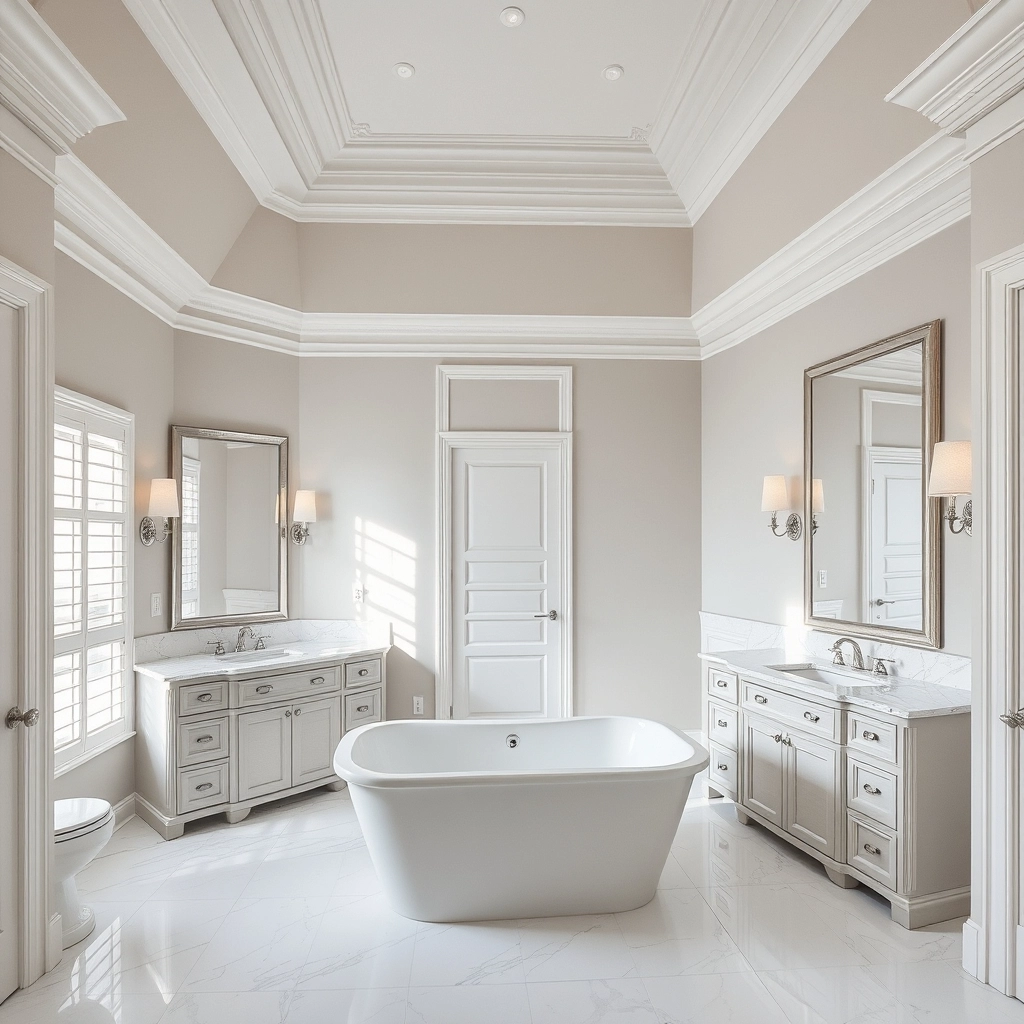
The price gap between a half-bath and a master bathroom remodel cost is huge. A small bathroom is usually three hundred to five hundred bucks. Contractors use these as filler jobs. They pop in, do a coat, go do another job, and come back.
The struggle is the workspace. It’s cramped. You can’t use big rollers. It’s all hand-brushing. This manual labor keeps the price from dropping too low. Complexity, not size, is the king of the quote here.
A master bathroom is a different beast. Those hit fifteen hundred dollars fast. They have water closets. They have big tubs with specific surrounds. They have massive vanities. If you want the vanity painted too? Tack on another five to eight hundred. That requires specialized enamel.
Master suites also have integrated lighting and vents. All that has to be taped off perfectly. The prep-work phase takes forever. In a master bath, the painter spends four hours taping before they even open a can of paint. That’s what you’re paying for.
DIY vs Professional Bathroom Repainting Costs
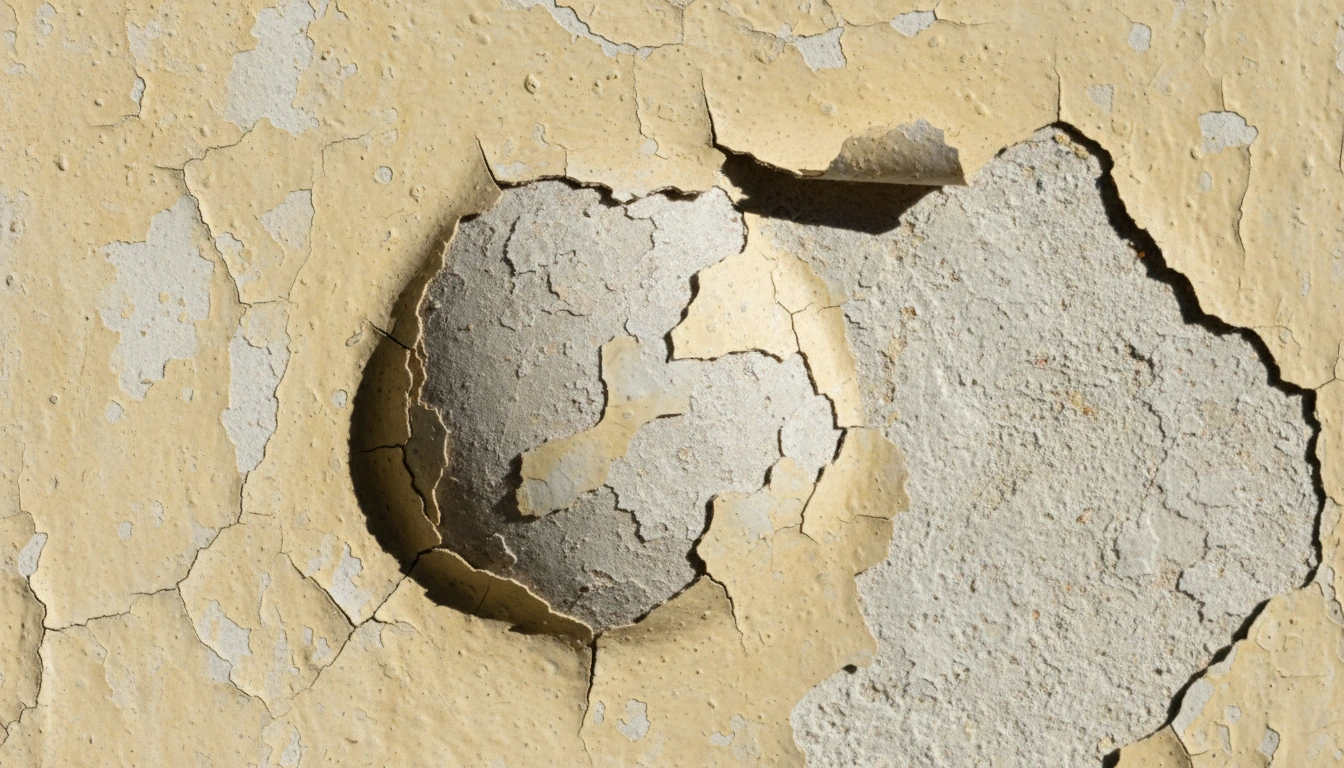
This is a risk-reward calculation. Sweat equity is real. A DIY job, like a DIY bathroom light fixture makeover, costs maybe a hundred to two hundred bucks for the good stuff. Rollers, tape, drop cloths, and the high-end moisture paint.
You need to decide if your weekend is worth the potential for a thousand dollar mistake if you skip the technical prep.
| Comparison Factor | DIY Approach | Professional Approach |
|---|---|---|
| Out-of-Pocket Cost | 100 to 200 dollars | 600 to 1200 dollars |
| Time Investment | 15 to 20 hours | 0 hours |
| Warranty Coverage | None | 1 to 3 years typically |
| Risk of Coating Failure | High (Prep errors) | Low (Technical expertise) |
My Take
If you ‘value your time’ at more than fifty bucks an hour, the professional route is a mathematical win every single time.
You’re trading your weekend for a savings of maybe seven hundred dollars. If you have technical patience, go for it. You have to scrub the walls with TSP. You have to apply thin coats. Most people rush. Rushing kills the finish.
The professional advantage is the warranty. And the durability. A pro understands mil thickness. They know how to do adhesion testing. If your DIY job fails and the paint peels off in giant sheets, you’re in trouble. The remediation cost is double the original quote.
You’ll have to mechanically strip the old paint. It’s a nightmare. I see high failure rates for DIY projects in high-humidity zones. If you can’t cut a straight line or don’t know how to use a moisture-blocking primer, just pay the professional premium. It’s cheaper in the long run.
Pro Tip
If you choose the DIY route, ‘never skip the prep’. Scrubbing walls with a bleach solution or TSP is ‘the most important step’ to ensure the ‘cost to repaint a bathroom’ does not double due to paint failure.
Bathroom Repainting Cost Factors and Ways to Save
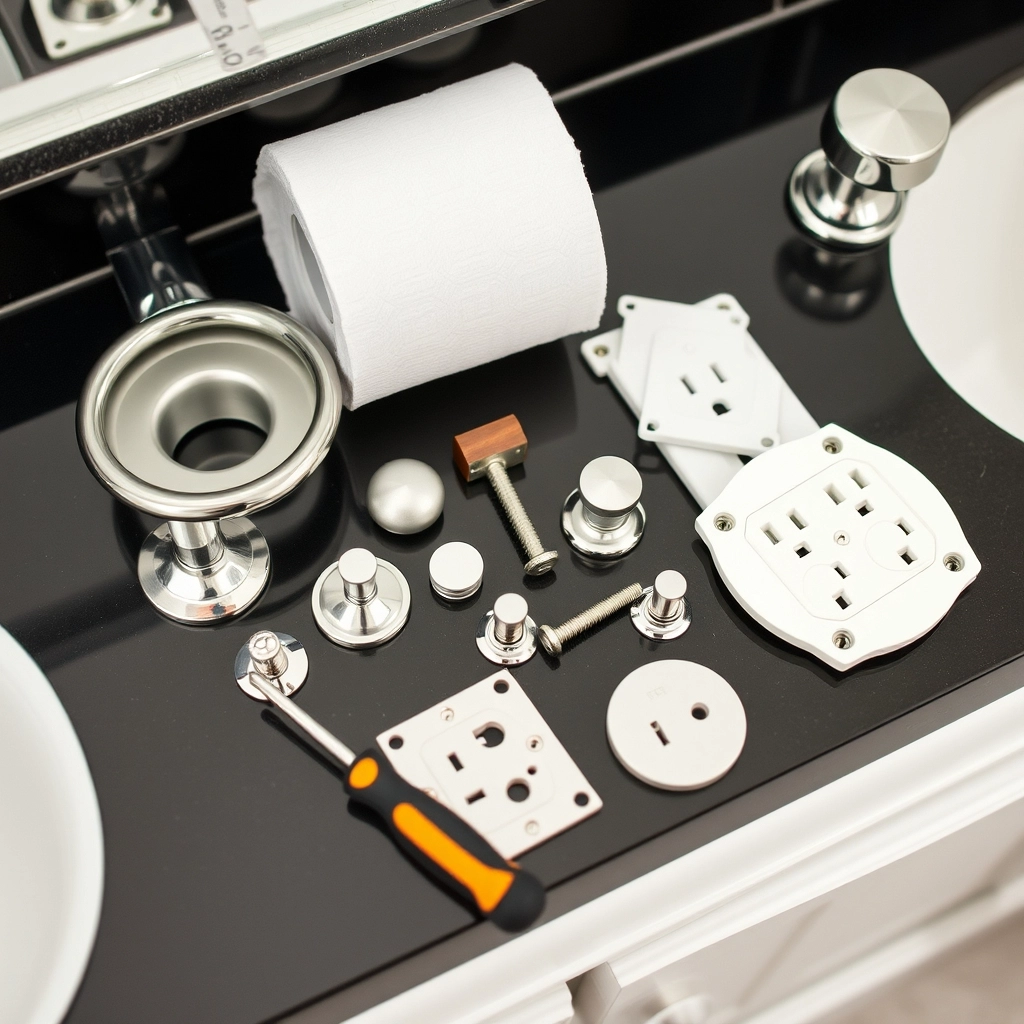
Hidden variables will wreck your budget. The current wall color is huge. Going from navy blue to white? You’ll need three coats of high-hide primer. That’s more material. That’s more hours. The ceiling is another one.
Ceilings are hotspots for damage. They need stain-blocking. If your fan is trash, the painter might bring in industrial air movers. Some guys charge an equipment fee for that. Check your fan before you hire someone.
If you want to keep your bill at the bottom of the market range, you have to do the grunt work before the pro arrives.
| Preparation Task | Potential Dollar Savings | Impact on Final Quality |
|---|---|---|
| Remove Hardware and Switch Plates | 50 to 100 dollars | None |
| Pre-Clean Walls with TSP | 75 to 150 dollars | High (Better Adhesion) |
| Clear Out All Personal Items | 25 to 50 dollars | Low |
| Self-Perform Minor Sanding | 100 to 200 dollars | Moderate |
My Take
Focus your energy on ‘cleaning and hardware removal’. Let the professional handle the tape and the paint; that is where the ‘visual line’ lives or dies.
Want to save money? Do the site prep. Take off the towel bars (and keep towel bar height in mind for reassembly). Pull the switch plates. Take the mirror down. This saves the painter two hours. That’s money in your pocket. Also, clean the walls yourself. If the painter shows up and the walls are covered in hairspray and soap scum, they’re going to charge you to clean it.
Choose a satin finish. High-gloss looks cool but it shows every single bump and dent. That means the painter has to do more sanding and patching. Satin is more forgiving. It keeps the cost to repaint a bathroom at the low end of the market range.
Conclusion
Getting the right cost to repaint a bathroom is about balancing your want for a new look with the need for a structural seal. Whether it’s a four hundred dollar quick fix or a big master suite project, the value is in the longevity.
A cheap job is just a mask. A pro job is a long-term asset. Know the 2026 rates. Account for the moisture. Protect your house.
Focus on the prep work. Don’t buy cheap paint. If you’ve had a budget win recently or a nightmare contractor story, put it in the comments. We need to keep the community updated on what labor is actually costing out there right now.