





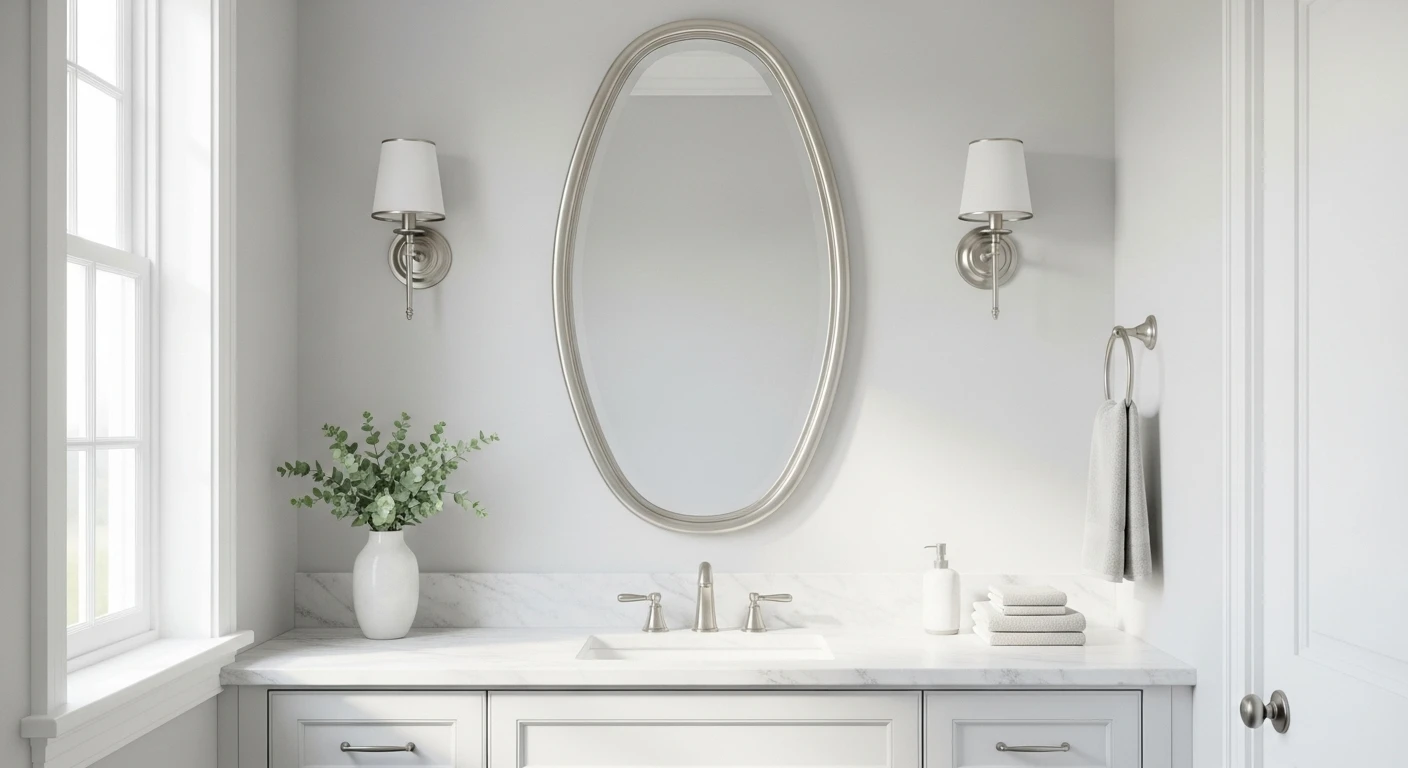

Yeah, I’ve put up a million of these things. Bathroom mirrors. And it seems like every time, every single person I work for, they always land on brushed nickel bathroom mirror. It’s the Toyota Camry of bathroom finishes. Doesn’t get your heart racing. But it works. And it lasts.
Some people call it a trend. It’s not a trend. It’s just… the standard. Been putting this stuff in since ’98. It works anywhere. A fancy modern place, some old house from the 50s with pink tile. Doesn’t matter. It has this softer look, not like that super shiny chrome that looks like a car bumper. And it doesn’t show fingerprints. That’s the real reason people love it. Water spots just kind of disappear. A godsend.
Alright, so I’m supposed to explain what I know. All the practical stuff I’ve picked up over the years. We’re not going to get into any of that high-minded designer talk about ‘visual language’ or whatever. No. This is about what works in a real house. For real people.
Choosing Your Brushed Nickel Framed Mirror Style
So you’re picking a style. Everyone just thinks ‘rectangle.’ Done. But there’s more out there now. All kinds of shapes. And believe it or not, the shape you pick can totally change how the room feels.
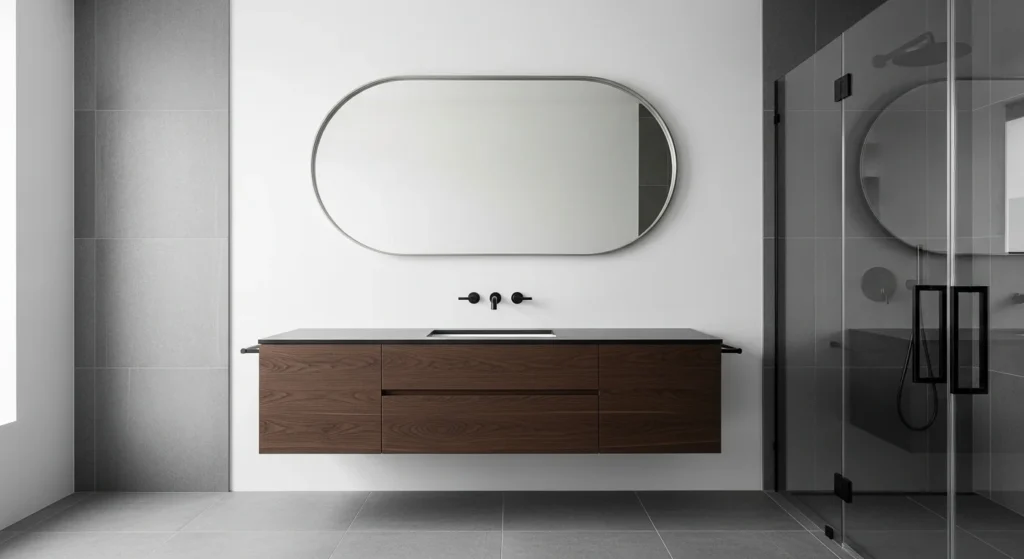
Rectangle’s the safe bet. Can’t go wrong. It’s clean, it works. But… if your bathroom is just all hard lines, you know? Square floor tiles, a blocky vanity, a shower door with sharp corners. The whole thing feels kind of aggressive. You put a round mirror in there, or one of those pill-shaped ones. It just… calms everything down. Breaks it all up. Makes a huge difference.
I remember this job I did for a guy named Kevin out in the suburbs near that new shopping center. His bathroom was super modern. All sharp angles, floating vanity, the whole nine yards. He had his heart set on this big rectangular mirror. I told him it was gonna look too harsh. He didn’t believe me.
So I actually brought an oval one I had in the truck, just to show him what I meant. We held it up. Instant difference. The whole room just relaxed. The curve fought against all the straight lines. He ended up going with the oval.
And the frame itself. That matters too. You going for that minimalist thing? Get a thin little metal frame. It just defines the edge, doesn’t scream at you. If you have an older house, maybe you want something with a thicker profile, a bit more detail on it. That brushed texture is the whole point. It’s not shiny. It’s not flat. It’s right in the middle. The perfect compromise between chrome and black. Which is why everyone ends up choosing it, I guess.
The Benefits of an LED Lighted Brushed Nickel Mirror
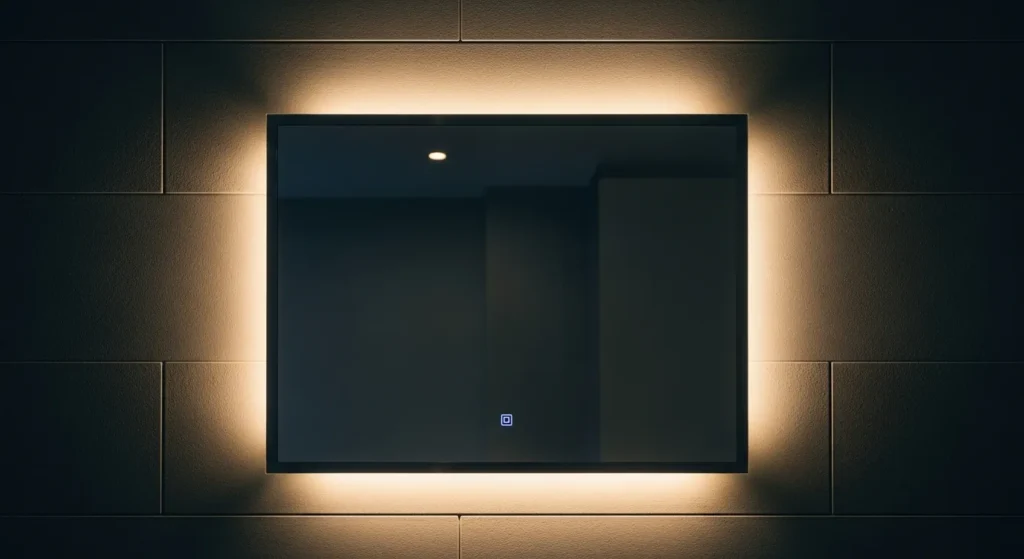
LED mirrors. They’re not just for fancy hotels anymore. They’ve gotten common. And for good reason, I guess. The light you get from them is the most even light you can get. No shadows. Great for shaving or whatever else people do in front of a mirror.
Think about the regular light fixture. The one above your mirror. It casts shadows down your face. Not great. An LED mirror shines right at you. Front-lit, back-lit, doesn’t matter. The light is coming from the right place. No shadows.
Now, from my side of things. There are two kinds. Back-lit—that’s the one that gives a soft glow on the wall behind it. Looks nice. Good for ambience. But it’s not always bright enough for, you know, tasks. The front-lit ones, with the light right in the glass? That’s the one you want for actually seeing your face. Practical choice. A lot of them have both now.
To make this a bit clearer, here’s how I break it down for my clients:
| Light Type | What It Does | My Verdict |
|---|---|---|
| Back-Lit | Shines light out the back, creating a halo on the wall. | Great for a soft, hotel-style glow. Not the best for tasks. |
| Front-Lit | Shines light forward, through the glass, onto your face. | This is the practical one. No shadows, perfect for shaving or makeup. |
Pro-Tip: If you can only have one, get the front-lit. Ambience is nice, but not being able to see a stray hair when you’re shaving is just annoying.
And here’s the part that trips everybody up. Power. These things need to be wired. You need a junction box in the wall, hidden behind the mirror. So if you’re replacing a plain old mirror, you can’t just hang this one up. It’s not a simple swap. You’ll need to get an electrician, my buddy Dave is always busy with these calls, to run a new line. It’s a whole thing.
On a real renovation, we put the wiring in during the rough-in stage, before the drywall goes up. Simple. Oh, and look at the light color. The ‘Kelvins.’ 2700K is that warm, yellowish light. 5000K is like an operating room. Super bright white. The good mirrors now let you adjust it. That’s the feature to look for. Trust me on that.
And about that ‘Kelvin’ number they throw around. It’s just a fancy way of saying how yellow or blue the light is. Here’s a quick visual.
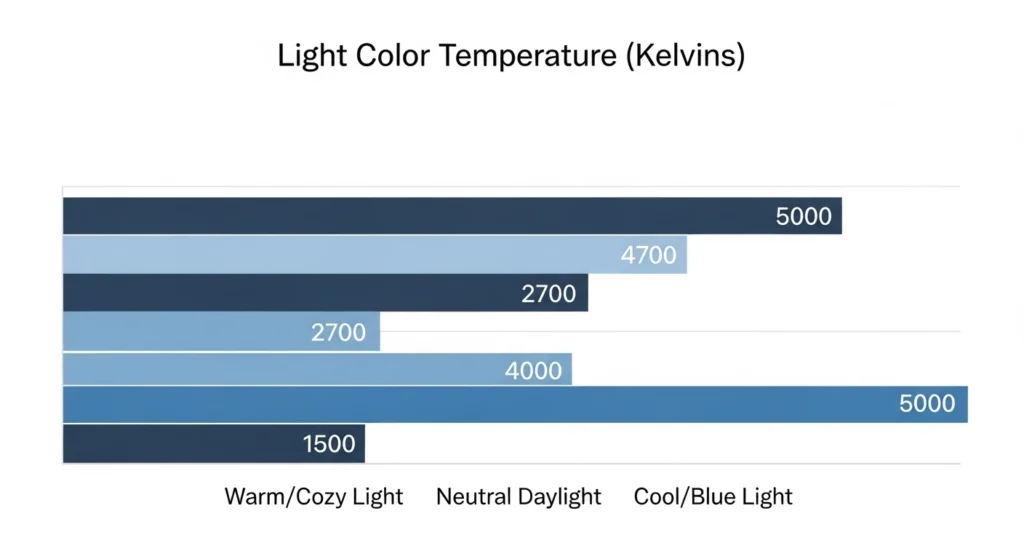
My Take: Get a mirror where you can adjust this. Warm light is nice for winding down at night, but you want that brighter neutral light in the morning. Having both is the real luxury.
Brushed Nickel vs. Other Finishes: A Contractor’s Comparison
Okay, the finish. A lot of this is just personal taste. But there are practical differences. I try to point them out to people so they know what they’re getting into. It can save you a lot of time wiping things down.
Brushed Nickel vs. Polished Chrome
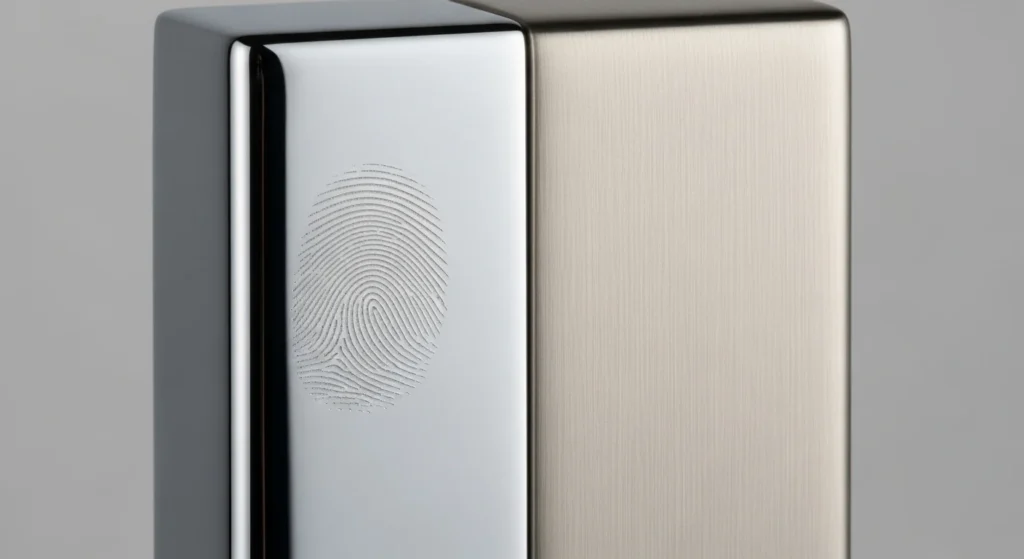
This is the big one. Chrome is shiny. Really shiny. It’s got that cool, almost bluish look to it. Looks great in a super modern bathroom. But my god, it shows everything. Every. Single. Fingerprint. Every water spot. You will be wiping it down for the rest of your life.
Brushed nickel’s different. It’s warmer, more of a champagne color sometimes. The texture… the little lines in it… they’re `excellent` at hiding smudges. And water marks. It’s just a much more practical finish for a bathroom that actually gets used. Especially a kids’ bathroom. In my experience, the people who go with brushed nickel are just happier a year later. They’re not constantly cleaning their faucets.
Look, words on a page are one thing. Let me just lay it out side-by-side so you can see what I’m talking about.
| Feature | Polished Chrome | Brushed Nickel |
|---|---|---|
| The Look | Very shiny, reflective, cool blue tone. | Softer, low-sheen, warmer tone. |
| Shows Fingerprints? | Shows everything. Every single smudge. | Hides them very well because of the texture. |
| Hides Water Spots? | Nope. They’re on full display. | Yes, this is its superpower. |
| Maintenance Level | High. You’ll be wiping it constantly. | Low. A quick wipe now and then is fine. |
My Take: For a main bathroom that gets a ton of use, especially with kids, brushed nickel is a no-brainer. It saves you the headache of constant cleaning.
Brushed Nickel vs. Satin Nickel
This one’s subtle. And to be honest, a lot of the manufacturers seem to use the names for whatever they feel like that day. There is a technical difference, though. `Brushed` means they literally took a wire brush to it. It leaves these tiny, tiny lines in the metal. You have to get up close to see them.
A `satin` finish is different. It’s smooth. They get that look from sandblasting or some chemical process. The result is just a low-gloss surface. No lines. If you put them side-by-side, the brushed nickel looks a little more handmade, a little more textured.
Honestly though? For a normal person, the difference is almost nothing. They look pretty much the same unless you’re staring at them under a bright light. The performance is identical. Don’t get hung up on the words. Just look at the thing and decide if you like it.
How to Choose the Right Size for Your Brushed Nickel Mirror
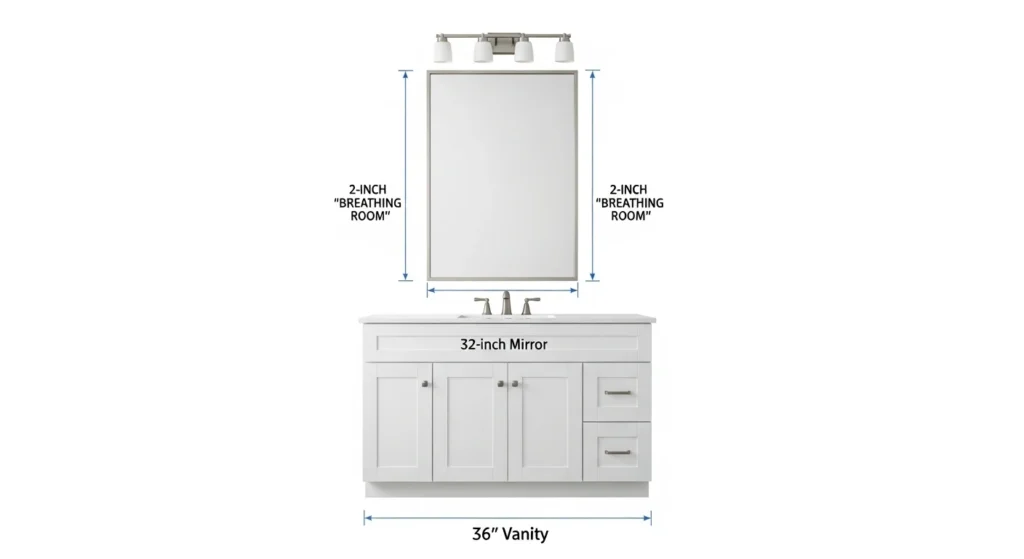
The biggest mistake. The one I see all the time. Getting the size wrong. A mirror that’s too small looks… wimpy. Just lost on the wall. And a mirror that’s too big makes the whole room feel off balance. It’s a very common mistake.
But there’s a simple rule of thumb. Works pretty much every time.
The mirror frame should be `2 to 4 inches narrower` than the vanity cabinet. That’s it. So for a 36-inch vanity, you want a mirror that’s somewhere between 32 and 34 inches wide. This gives you a little strip of wall on either side. Breathing room. Keeps it from looking crowded.
To make that rule of thumb even easier, here are some common vanity sizes and the mirror widths that work with them.
| If Your Vanity Is This Wide… | Look For a Mirror That’s… | Why It Works |
|---|---|---|
| 24 Inches | 20 to 22 inches wide | Leaves a perfect visual border on a small vanity. |
| 36 Inches | 32 to 34 inches wide | This is the most common setup. Looks balanced. |
| 48 Inches | 44 to 46 inches wide | Keeps a larger mirror from overpowering the space. |
| 60 Inches (Double Sink) | Two mirrors, 20 to 24 inches each. | Two separate mirrors often look more custom and high-end. |
Pro-Tip: When in doubt, take a roll of blue painter’s tape and tape out the mirror size on the wall. It costs nothing and you’ll see instantly if the proportions look right.
Height’s a little trickier. There’s no formula. You just want to center it in the space you have. Between the light fixture up top and the backsplash down below. The goal is just to make it look balanced. You just have to step back and look.
For those big double vanities, you’ve got two choices. One giant mirror that covers the whole thing. Or two smaller, separate mirrors, one over each sink. I think two mirrors usually looks more high-end, more deliberate. But one big one can make a small bathroom feel more open. So, it depends.
Making the Final Choice for Your Bathroom
So yeah. It’s a balance. Style, function, all that. And brushed nickel just keeps winning because it’s the easiest choice. It’s the path of least resistance. It’s not going to cause you any problems down the road.
Just think about the frame style, whether you need those LED lights, and get the sizing right. That’s pretty much it. If you pay attention to those three things you’ll pick something decent that works. It’ll probably look fine for the next twenty years. And you can move on to worrying about something else.