





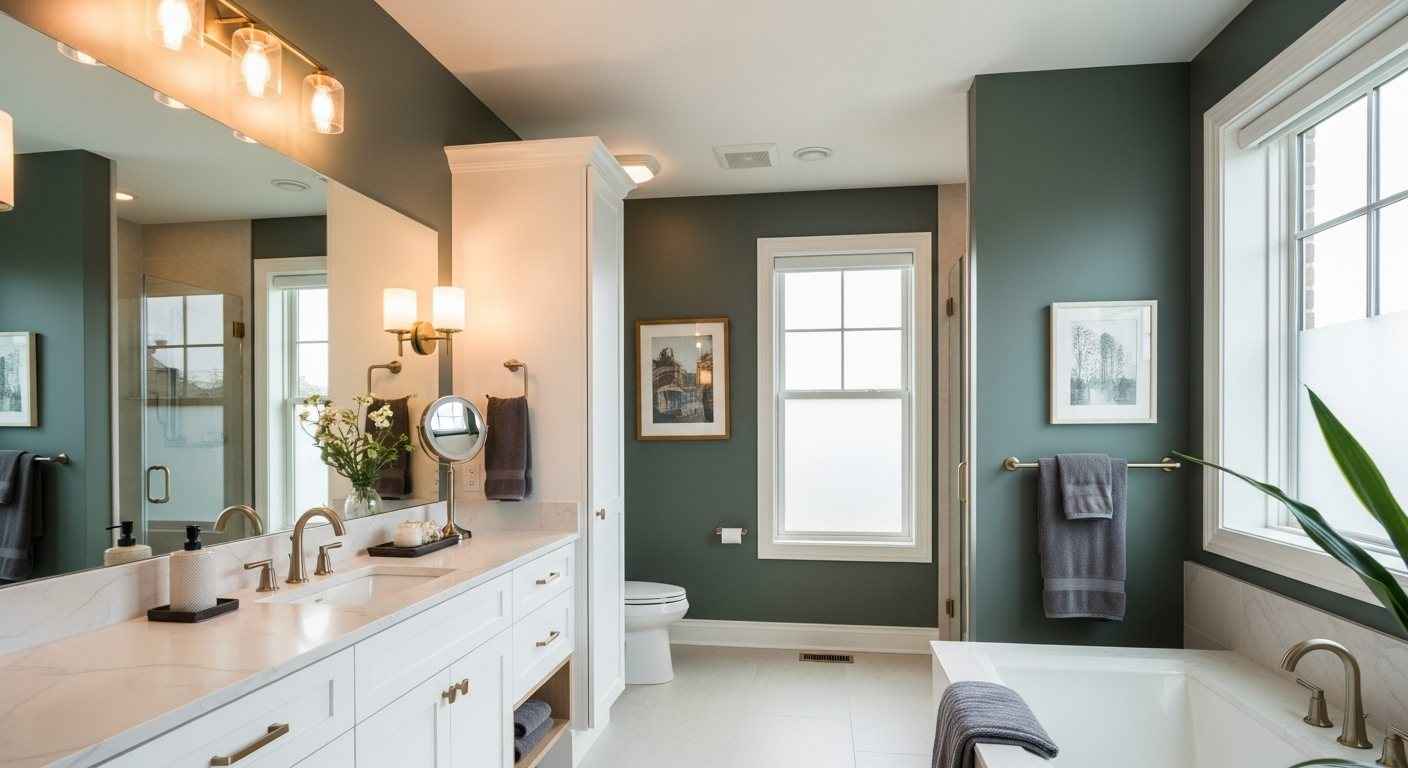

Choosing the right bathroom paint colors isn’t just about what looks good in the swatch book. As a veteran in bathroom renovations, I’ve seen countless homeowners get tripped up by factors they never even considered – things like moisture, lighting, and how a color actually lives with existing tiles and fixtures.
- Trending Bathroom Paint Colors for 2025: What’s Hot and Why They Work
- Maximizing Space: The Best Neutral and Light Paint Shades for Small Bathrooms
- Making a Statement: Accent Wall Ideas with Moody Greens and Rich Plums
- Bringing Warmth In: How to Incorporate Terracotta and Rust Hues
- Creating an Oasis: Spa-Inspired Color Palettes with Calming Blues and Seafoam Greens
- Beyond the Color: Essential Contractor Tips for Bathroom Paint Durability
It’s a critical decision, one that impacts the feel, durability, and even the perceived size of your bathroom for years to come.
Getting it right means blending aesthetics with solid, practical choices that can stand up to the unique demands of a bathroom environment. We’re talking about high humidity, variable light, and the need for easy cleaning. Let’s dive into some of the latest trends, classic solutions, and my professional insights to help you pick a color scheme that you’ll love, and that I, as a contractor, can confidently stand behind.
Trending Bathroom Paint Colors for 2025: What’s Hot and Why They Work
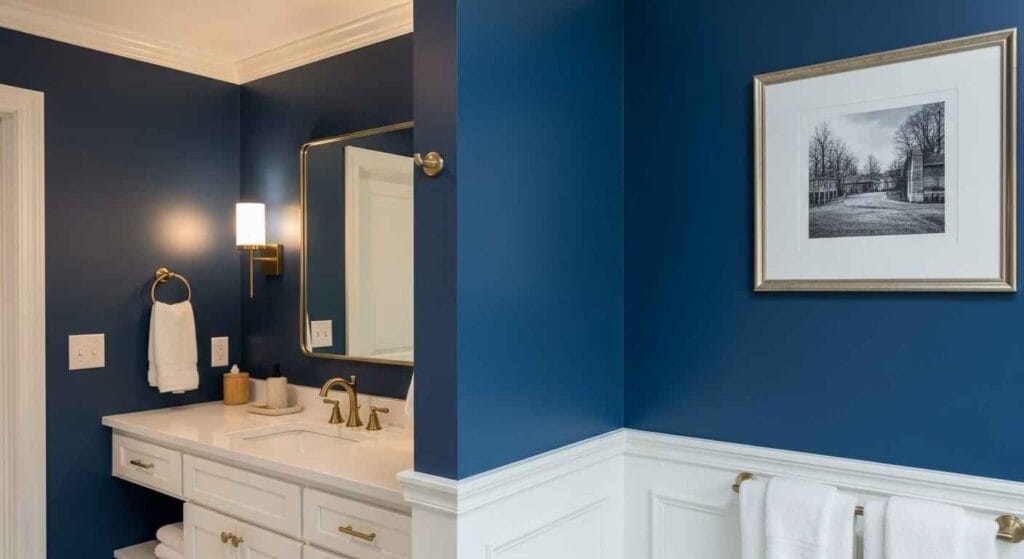
Homeowners are increasingly looking for ways to create sanctuaries within their homes, and bathroom paint colors are playing a big role in that. For 2025, I’m seeing a definite shift towards deeper, more grounding hues, along with the timeless appeal of natural, earthy tones. These aren’t just fads; they’re choices that bring character and a sense of calm.
Deep blues, for instance, are showing up everywhere. Think of shades like Sherwin-Williams Naval or Benjamin Moore Hale Navy. These aren’t your typical bright blues; they’re rich, sophisticated, and bring a wonderful depth to a bathroom. They pair beautifully with crisp white trim, brushed brass fixtures, or even some natural wood elements.
In my experience, while they can make a small powder room feel incredibly cozy and elegant, you’ll need ample lighting to prevent it from feeling too cave-like during the day.
Then there are the greens. From muted sage to lush forest tones, greens connect us to nature, providing a calming backdrop. Sherwin-Williams Evergreen Fog and Benjamin Moore October Mist are excellent examples of these versatile shades.
They work with almost any design style, from modern farmhouse to contemporary, and they’re particularly effective at softening harsh lines or blending with natural stone. I’ve often recommended these for clients who want a serene, organic feel without going full-on spa.
Earthy tones, like warm beiges, soft grays, and even subtle taupes, continue to be a strong contender. Farrow & Ball Elephants Breath or Sherwin-Williams Accessible Beige offer a grounding, natural warmth that’s incredibly versatile. They serve as a fantastic base for bringing in more textures – think woven baskets, wooden accents, or textured tiles.
What I appreciate about these is their ability to flex; they can lean warm or cool depending on the light and other elements in the room, making them a safe yet stylish bet for almost any bathroom. These trending bathroom paint colors are about creating a personal, comforting space.
Maximizing Space: The Best Neutral and Light Paint Shades for Small Bathrooms
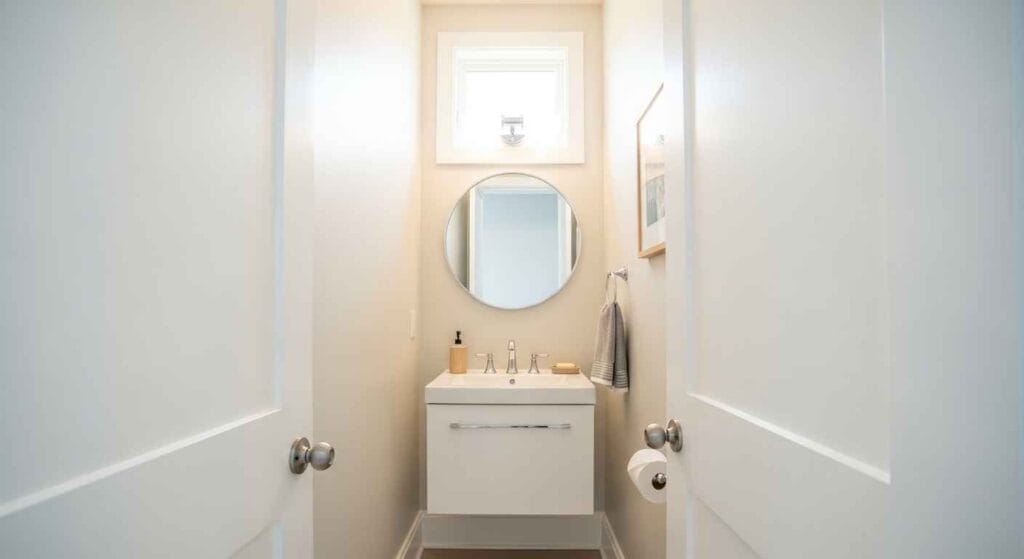
When you’re dealing with a compact space, the right bathroom paint colors can make a dramatic difference. The goal in a small bathroom or powder room is almost always to make it feel bigger, brighter, and more open, and light, neutral shades are your best friends here. They reflect light rather than absorbing it, immediately creating the illusion of more square footage.
Warm whites and off-whites are perennial favorites for good reason. Shades like Benjamin Moore White Dove or Sherwin-Williams Alabaster aren’t stark or clinical; they have a softness that keeps the room inviting while still bouncing light around beautifully. They also provide a clean canvas that allows your fixtures, tiles, or a piece of art to really shine.
I once had a client dead set on a dark gray for their tiny powder room, convinced it would be “dramatic.” After painting a large test swatch, they quickly realized how much it shrunk the room. We switched to a warm white, and the transformation was remarkable – it instantly felt more spacious and inviting.
Light grays are another excellent choice, offering a touch more character than white without sacrificing the spacious feel. Consider Sherwin-Williams Repose Gray or Benjamin Moore Gray Owl.
These shades offer a sophisticated backdrop that can lean warm or cool, adapting to your lighting and other design elements. When selecting light neutrals, remember that the undertones matter. A gray with a blue undertone will feel cooler, while one with a beige undertone will feel warmer.
Don’t forget the sheen. For small bathrooms, an eggshell or satin finish isn’t just about durability; it also helps reflect light better than a flat finish, enhancing that feeling of openness. It’s a small detail, but it truly makes a difference in brightening up tight quarters.
Making a Statement: Accent Wall Ideas with Moody Greens and Rich Plums
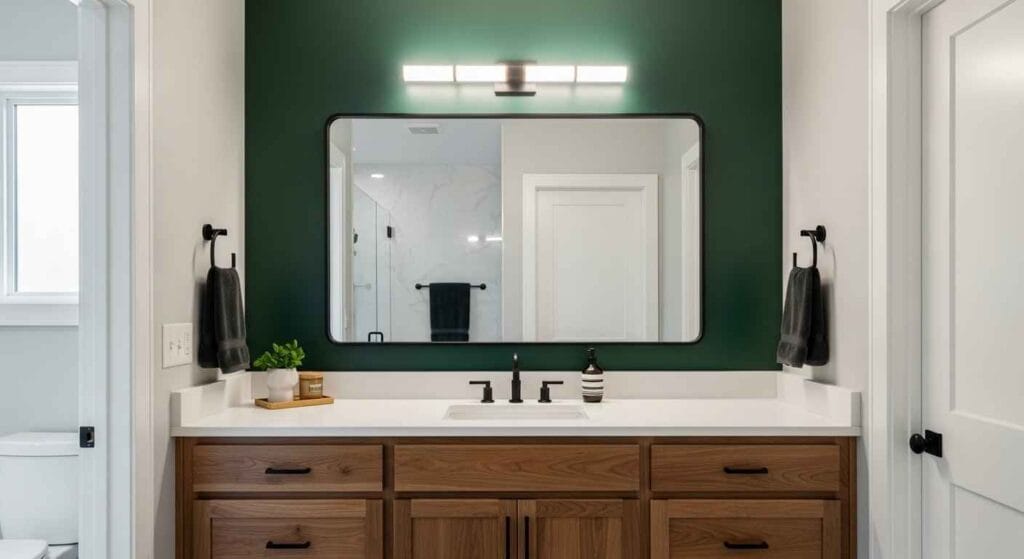
Sometimes, a bathroom needs a little drama, a focal point that really captures attention. That’s where accent walls come in. They allow you to introduce bolder bathroom paint colors without overwhelming the entire space, creating depth and a sophisticated visual interest.
Moody greens are fantastic for this purpose. Imagine a deep, saturated green like Behr Laurel Tree or Valspar Forest Green on the wall behind your vanity or toilet. These colors evoke a sense of calm and luxury, reminiscent of a hidden garden retreat.
They pair exceptionally well with natural wood cabinetry, white porcelain, and touches of gold or matte black hardware. An accent wall in one of these rich greens can transform a plain bathroom into something truly special, adding a layer of sophistication without the commitment of painting all four walls.
Rich plums and deep purples, on the other hand, offer an unexpected twist of luxury and boldness. Colors like Farrow & Ball Brinjal or Sherwin-Williams Cyberspace (which has deep violet undertones) can be incredibly striking.
They bring a luxurious, almost jewel-toned elegance to a bathroom, particularly when combined with metallic accents and perhaps some dark wood. This choice is certainly more daring, but when executed well, it can create a truly unique and memorable space.
When planning an accent wall, remember it’s not just about the color. Consider the wall’s location; typically, the wall you see first when entering the room or the one behind a key fixture like the vanity works best. Ensure the rest of your walls are a complementary, lighter neutral to let the accent shine.
And, as always in a bathroom, use a durable, moisture-resistant paint. Even if it’s “just” an accent, it still needs to stand up to the environment.
Bringing Warmth In: How to Incorporate Terracotta and Rust Hues
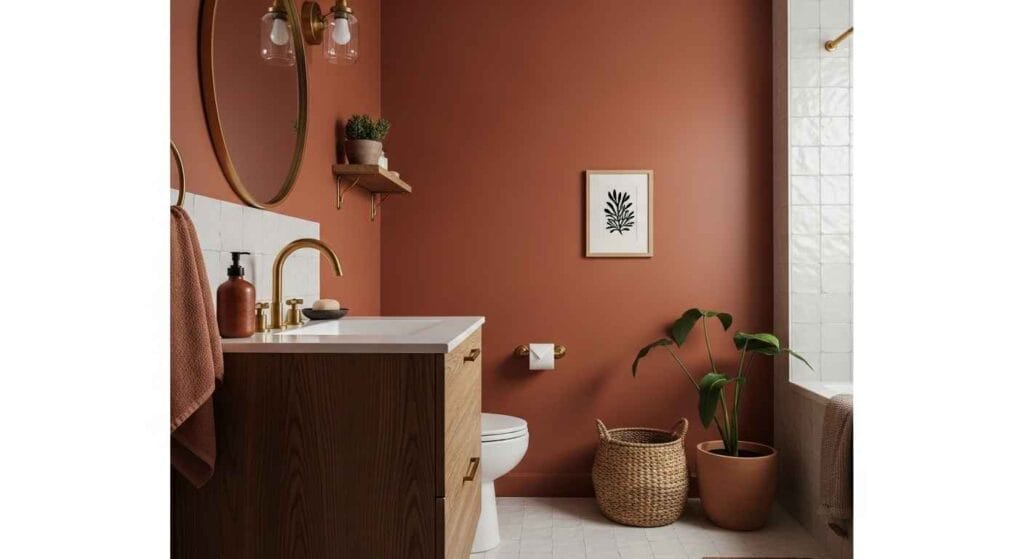
For those looking to infuse their bathroom with a grounded, earthy warmth, terracotta and rust hues are a beautiful choice. These bathroom paint colors draw inspiration from natural clays, sun-baked landscapes, and rich mineral tones, creating an inviting and incredibly stylish atmosphere. They’re a refreshing alternative to traditional neutrals, offering depth and character.
Shades like Benjamin Moore Potters Clay or Sherwin-Williams Cavern Clay are prime examples of this trend. They’re not just orange or brown; they possess complex undertones that can range from a soft, muted blush to a deeper, more reddish-brown.
What I love about these colors is their inherent ability to create a cozy, cocoon-like feeling. They’re perfect for achieving a Mediterranean, Southwestern, or even a bohemian aesthetic, especially when paired with natural materials.
To really make these hues sing, consider combining them with unlacquered brass fixtures, natural wood vanities (think oak or walnut), and perhaps some textured white or cream tiles.
On a recent project, we used a gorgeous terracotta shade in a guest bathroom and complemented it with a reclaimed wood mirror and crisp white linens. The result was a surprisingly airy yet incredibly warm space that felt unique and lived-in.
A word of caution, though: these warmer tones can be heavily influenced by light. In bathrooms with abundant natural, cool-toned light, they might appear a bit too muted.
Conversely, with warmer artificial lighting, they can become quite intense. Always test large swatches in your specific bathroom and observe them throughout the day. It’s about finding that perfect balance where the color feels rich and inviting, not overwhelming.
Creating an Oasis: Spa-Inspired Color Palettes with Calming Blues and Seafoam Greens
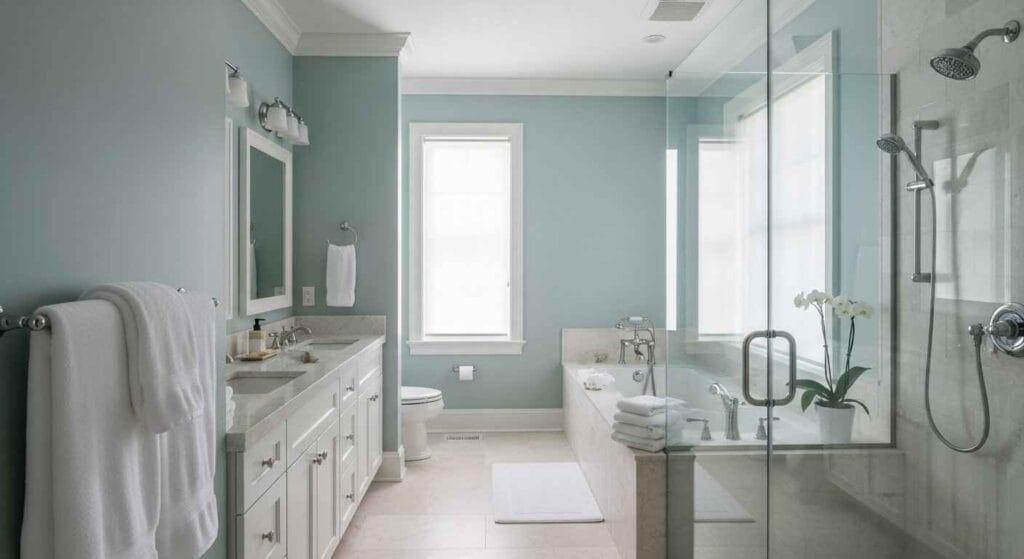
Many of my clients dream of transforming their bathroom into a tranquil retreat, a place to unwind and escape the daily grind. Achieving this spa-like ambiance largely comes down to the bathroom paint colors you choose. The key is to select hues that evoke serenity, cleanliness, and a sense of natural peace.
Calming blues are an obvious frontrunner. Think soft, watery shades like Benjamin Moore Palladian Blue or Sherwin-Williams Rainwashed. These aren’t bold, vibrant blues; they’re muted, airy, and often have subtle green or gray undertones that make them feel incredibly soothing.
They remind you of clear skies or gentle ocean waves, immediately lowering the stress level in a room. I’ve used these colors extensively in master bathrooms, and the feedback is always the same: they feel incredibly peaceful.
Seafoam greens offer a similar, yet distinct, calming effect. Shades like Behr Seafoam Green or Benjamin Moore Hollingsworth Green combine the freshness of green with the tranquility of blue, creating a color that is both invigorating and relaxing. They bring a subtle touch of nature indoors, reminiscent of cool, clean water or soft moss.
These greens pair beautifully with crisp white trim, light-colored natural stone, and polished chrome fixtures, enhancing the feeling of a pristine and refreshing environment.
To truly create that oasis feel, consider the full palette. Use these blues and greens on the walls, then incorporate crisp white towels, perhaps some light wood accents, and soft, diffused lighting. Just last year, we finished a master bath for a couple who wanted a true escape; we went with a muted seafoam green on the walls, added white wainscoting, and installed dimmable, warm LED lighting.
The transformation was exactly what they envisioned: a genuine spa experience right at home. The goal is to create a seamless, harmonious space where every element contributes to a sense of calm and rejuvenation.
Beyond the Color: Essential Contractor Tips for Bathroom Paint Durability
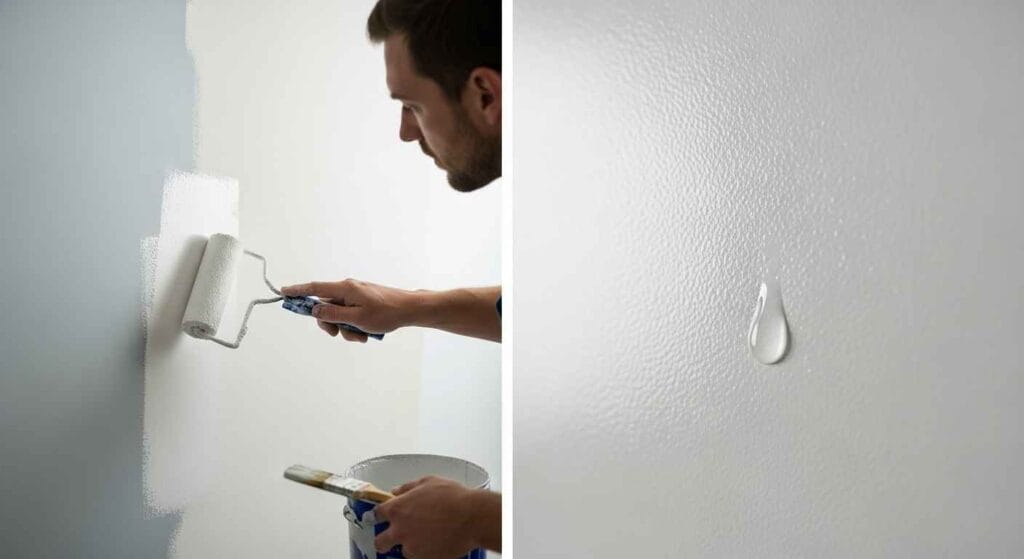
Choosing the right bathroom paint colors is only half the battle. As a professional, I can tell you that the type of paint, the sheen, and the prep work are just as crucial, especially in a high-moisture environment like a bathroom.
First and foremost, moisture resistance is non-negotiable. You simply cannot use standard wall paint in a bathroom and expect it to last. Always opt for paints specifically designed for kitchens and bathrooms. Brands like Sherwin-Williams Emerald Urethane Trim Enamel or Benjamin Moore Aura Bath & Spa are formulated to resist mildew, withstand scrubbing, and repel moisture effectively.
Never, ever use flat paint in a bathroom; it’s porous and will absorb moisture like a sponge, leading to mildew and peeling faster than you can say “repaint.”
Secondly, sheen truly matters. For bathroom walls, eggshell or satin finishes are generally your best bet. They offer a good balance of durability, cleanability, and a subtle reflective quality without being overly glossy. They’re tough enough to wipe down frequently without damaging the paint.
For trim, like baseboards and door frames, a semi-gloss is ideal. It’s even more resilient and easier to wipe clean, which is exactly what you need in areas prone to splashes and scuffs.
Third, lighting is absolutely crucial. I can’t stress this enough. A paint color will look drastically different under natural daylight compared to artificial light, and even different types of light bulbs (warm white vs. cool white) will change its appearance. Always buy sample pots and paint large swatches directly on your bathroom walls.
Observe them at different times of day and night to see how the light plays on the color before making your final decision. What looks perfect in the morning sun might appear dull or too intense under your evening vanity lights.
Finally, prep work is non-negotiable. A smooth, clean, and properly primed surface is the foundation for any lasting paint job. This means thoroughly cleaning the walls to remove soap scum, mildew, and grime, light sanding to create a good adhesion surface, and then applying a high-quality primer, especially if you’re painting over a dark color or if there’s any history of moisture issues.
Skipping these steps is a guaranteed way to see your beautiful new paint job fail prematurely. Also, ensure your bathroom has adequate ventilation; a good exhaust fan that’s actually used after showers is the best defense against moisture problems and will help your paint last much longer.