





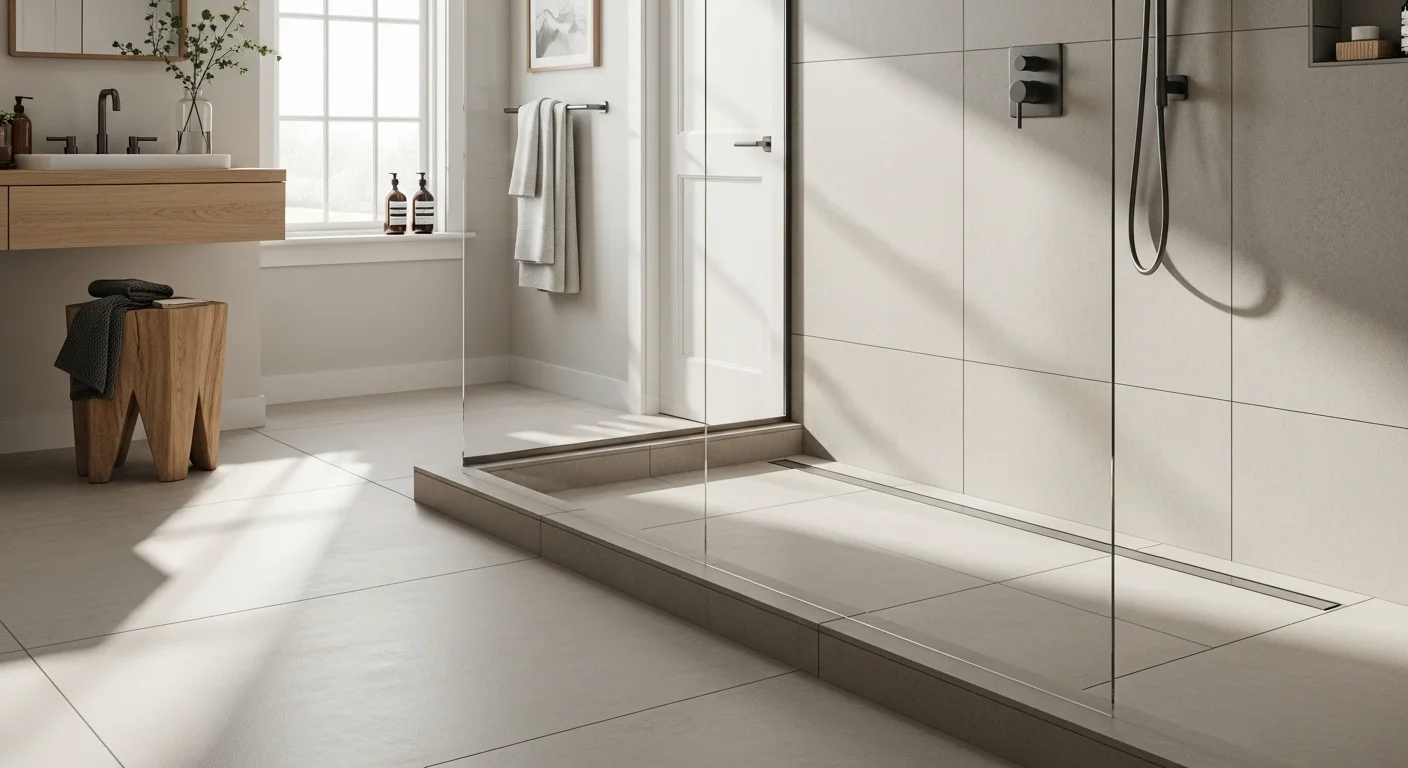

So, these linear drains. Yeah, they’re everywhere now. Every designer wants one, every magazine has one. Go into one of those new hotels, you’ll see it. Looks clean, I’ll give ’em that.
The whole point is the slope. A normal shower floor is like a shallow bowl, everything goes to the middle. A pain in the neck to tile. With these, the whole floor just… tilts. One way. Straight to the drain.
And because it’s just one flat slope, you can use those huge tiles everyone loves these days. No more cutting a hundred tiny pieces to fit around a center drain. It looks good, sure. But it’s really about making the water go where you want it to go. Or at least, where it’s supposed to go.
What Is a Linear Drain Shower Pan?
Okay, so the pan isn’t just the metal drain thing. It’s the whole floor. The entire sloped surface that’s gotta be perfectly waterproofed before a single tile goes down. People get that wrong all the time. They think the tile and grout are what’s keeping the water out. They’re not.
Think of it like this. Your old shower is a funnel. A square funnel. This new way?
It’s just a ramp. That’s it. A gentle ramp leading to a ditch.
How It Works
It’s just gravity, right? The floor is tilted. Water hits it, runs downhill, and falls into the trench. The trench drain collects it and sends it down the pipe. Nothing magical about it.
This is why the tile guys love ’em. Well, some of ’em. You can slap down those massive 24×48 inch tiles. Using unique colors can also make a statement, like with these “green tile bathroom ideas”. Try doing that with a center drain. You’d be cutting for a week, and it would look like a broken windshield. Just a mess.
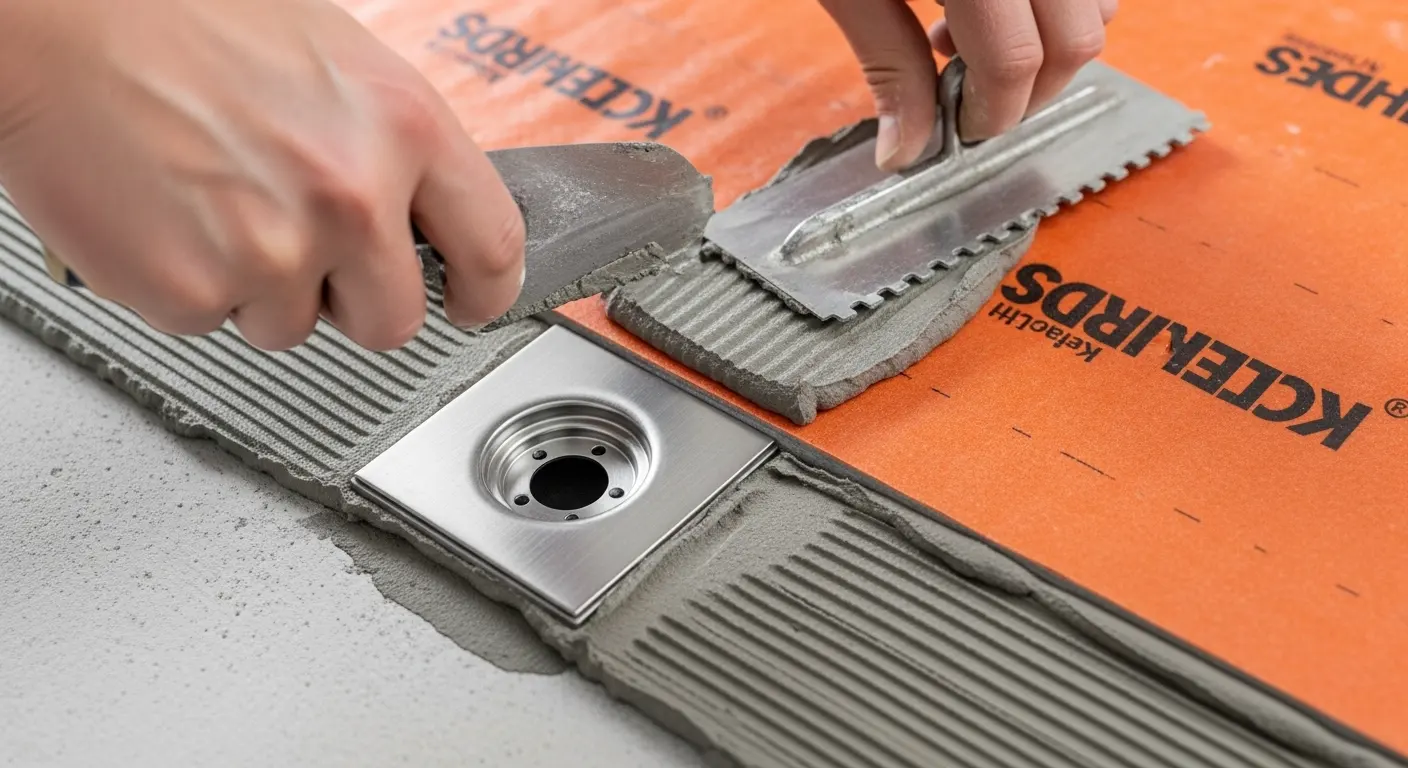
But the real trick isn’t the tile. It’s the waterproofing underneath. You have to have a membrane—that orange fabric stuff or one of those foam board systems—and it has to bond directly to the drain flange. It has to be one complete, sealed tub. No gaps. Not one. Because if water gets under there, your joists are done.
Linear Drains vs. Center Drains: Key Differences
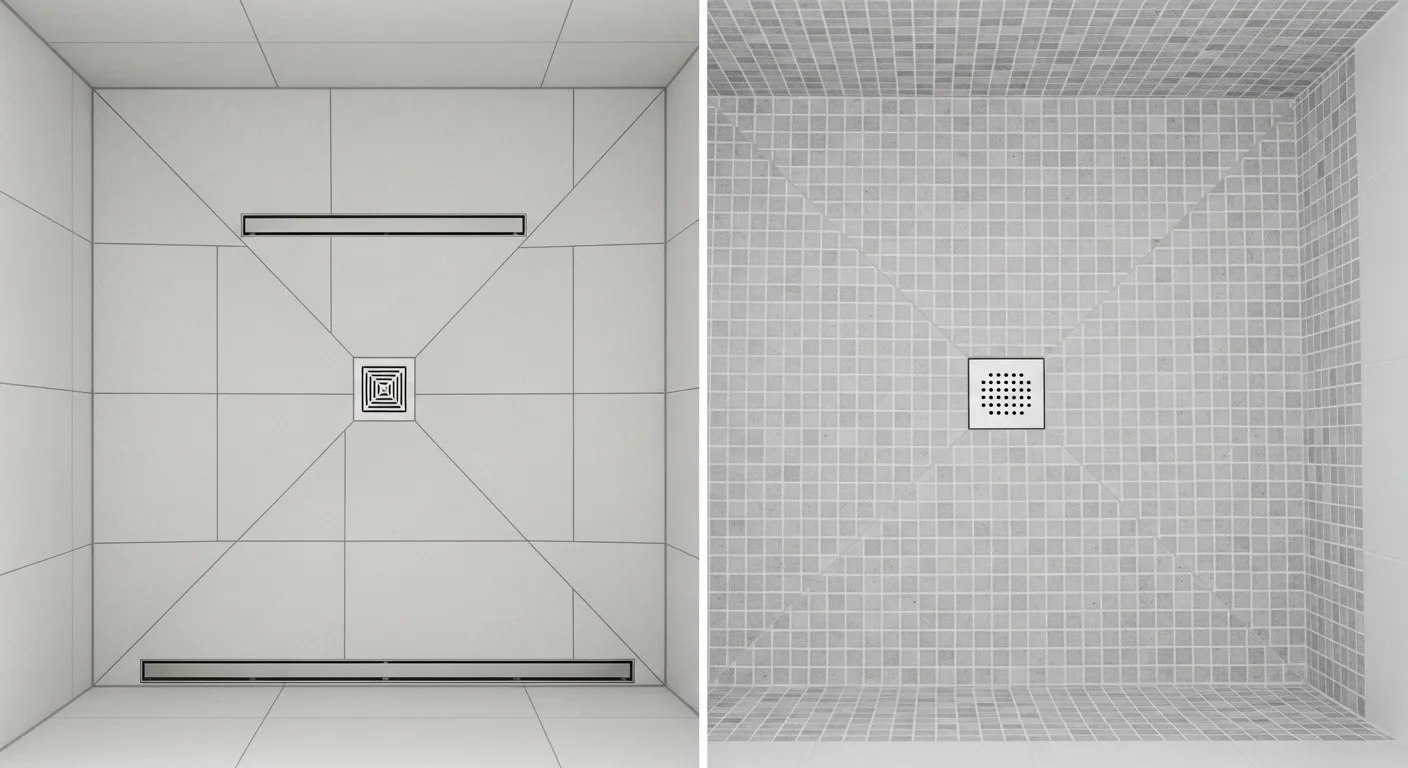
Everyone starts by talking about the look. I get it. It’s clean. Using those big tiles without a bunch of grout lines all over the place definitely makes a small bathroom feel… bigger. More open.
They have those `tile-in` grates now, too. You pop a piece of your floor tile right into the drain cover. Makes it almost disappear. Looks slick. But that’s just the surface stuff. The real reasons to consider one are more practical.
For me, the big deal is accessibility. You can do a true `curbless` shower. No step. Just walk right in. This is huge if you’re planning on staying in your house as you get older. Or for anyone with a bum knee. Or if you just hate stubbing your toe on that damn curb every morning.
Trying to do a curbless entry with a center drain is a nightmare. You have to depress the whole shower area, it’s structurally complicated. With a linear drain, you just stick it against the far wall and the whole bathroom floor can just flow right in. Much cleaner.
And setting the tile… it’s usually simpler. Tiling a four-way slope toward a center drain with little mosaic tiles? That’s an art form. Takes patience. But tiling one big slope with big tiles? Any decent tile setter, like Jerry who I’ve used since ’02, can do that pretty quick. Less cutting, cleaner lines.
So even though the drain itself costs more than a cheap plastic center drain you get at the big box store, you might save a bit on the tile labor. It’s a trade-off. But you usually end up with a much better-looking job in the end.
Look, it can get confusing when you’re just reading paragraphs. Let’s put ’em head-to-head so you can see the real story.
| Feature | Linear Drain (The New Way) | Center Drain (The Old Way) |
|---|---|---|
| The Look | Clean, modern, almost invisible. | Traditional, drain is obvious in the middle. |
| Tile Options | You can use huge tiles. Fewer grout lines. | Needs small tiles to follow the four-way slope. |
| Accessibility | Perfect for curbless walk-in showers. | Very difficult and expensive to make curbless. |
| Tiling Labor | Simpler, faster install with large format tiles. | Complicated cuts, takes more time and skill. |
| The Catch | The drain itself costs more upfront. | Drain is cheap, but tiling labor can be higher. |
My Take: For my money, if you’re doing a full remodel and can afford the slightly higher upfront cost, the linear drain wins. The accessibility factor alone makes it a smarter long-term choice, and it just looks a whole lot cleaner.
Installing Your Linear Drain Shower Pan: Slope and Waterproofing
Alright, this is the part where you can’t screw up. Seriously. The whole thing looks simple, but its success is `absolutely dependent` on getting the installation perfect. There is zero room for error with the waterproofing. Zero.
The biggest mistake, the one I see all the time, is the slope. It’s not a guess. It’s code. Minimum quarter-inch fall for every foot you go back. Has to be consistent across the whole floor.
So if your shower’s four feet from the door to the drain, the floor at the door needs to be one inch higher than the drain. An inch. It’s simple math, but people mess it up. Too shallow, and you get puddles. Water just sits there. Too steep, and it feels like you’re standing on a hill. Weird.
I had to rip out a shower somebody else just put in last year over on Ashcroft Lane. The guy set the drain maybe an eighth of an inch too high. Just a tiny bit. But it was enough to create a permanent puddle right in front of it. And that just destroys grout and grows mold. Had to tear it all out. A total waste.
Then there’s the waterproofing. This is the big one. You can’t just tile up to the drain. There has to be a system. A fabric membrane, or one of those foam board systems. And it has to be chemically bonded, glued, whatever the system calls for, right to the flange of the drain itself.
You’re making a swimming pool liner, basically. One single, sealed piece. Every corner, every seam, and especially the connection to the drain. It has to be perfect. You try to save a few bucks here, you’ll be paying me to tear your whole bathroom apart in five years. I guarantee it.
Choosing the Right Materials and Designs
Okay, so you’ve decided to do it. You got choices. The easiest way is a pre-made foam pan from a company like Wedi or Schluter. They’re pre-sloped, waterproof, lightweight. Hard to mess up. That’s what I prefer to use. The old-school way is a custom `mud bed,` packing deck mud to create the slope by hand. It works if you have a real artist doing it. Most guys aren’t artists. They just think they are.
When it comes to the pan itself, you’ve basically got two choices: the modern way and the old-school way. Here’s how I see them.
| Pan Type | How It’s Made | Best For | My Verdict |
|---|---|---|---|
| Pre-made Foam Pan | Factory-made, pre-sloped, already waterproof. | Standard shower sizes, DIYers, most pros. | Go with this. It’s consistent and reliable. |
| Custom Mud Bed | Packed concrete mix, sloped by hand on site. | Odd-shaped showers, old-school installers. | Risky. Only works if the installer is a true master. |
Pro-Tip: Unless you know for a fact your installer is a true artist with a trowel, stick with the foam pan system. It’s predictable, it’s fast, and the waterproofing is basically foolproof. It takes the guesswork out of the most critical part of the job.
Then the drain itself. The part in the floor is usually stainless steel. Has to be. But the grate, the part you see, that’s where you have all the options. Slotted, little holes, whatever. They come in all the finishes… brushed nickel, matte black… all that stuff to match your faucets.
And like I said, there’s the `tile-in` style. It’s a little metal tray you set your tile into. Makes the drain blend right in. People love that look. The water just disappears into a line in the floor. It’s a neat trick.
Placement matters, too. Most people put it right up against the back wall. That gives you that clean, open look. You can also put it at the entrance to the shower, which helps keep water in if it’s a curbless setup, but then you’re standing on a metal grate every time you get in and out. Not my favorite. If the shower is huge, like… ridiculously big, you could even put it in the middle and slope two sides down to it. Seen it once. Seemed like overkill to me.
Okay, where you stick the drain matters more than you think. Here are the common spots and what you need to know.
| Drain Placement | The Good Part | The Bad Part | Who It’s For |
|---|---|---|---|
| Against the Wall | Cleanest look, drain is out of the way. | The wall framing has to be right. | Pretty much everyone. This is the standard. |
| At the Entrance | Acts as a barrier to keep water in. | You stand on the grate getting in and out. | Curbless showers where you’re worried about splash. |
| In the Middle | Can handle a huge amount of water. | Complicates the slope and looks odd. | Giant, custom showers. You’ll know if you need it. |
My Take: Ninety-nine percent of the time, putting it against the far wall is the right call. It’s the cleanest look and keeps the drain out from under your feet. Don’t overthink it.
How to Clean and Maintain a Linear Drain
Yeah, everyone asks this. Does it get all gross? Is it gonna clog? Look, anything will clog if you let a year’s worth of hair build up in it. But no, they’re not bad. Honestly, they’re easier to clean than the old round ones.
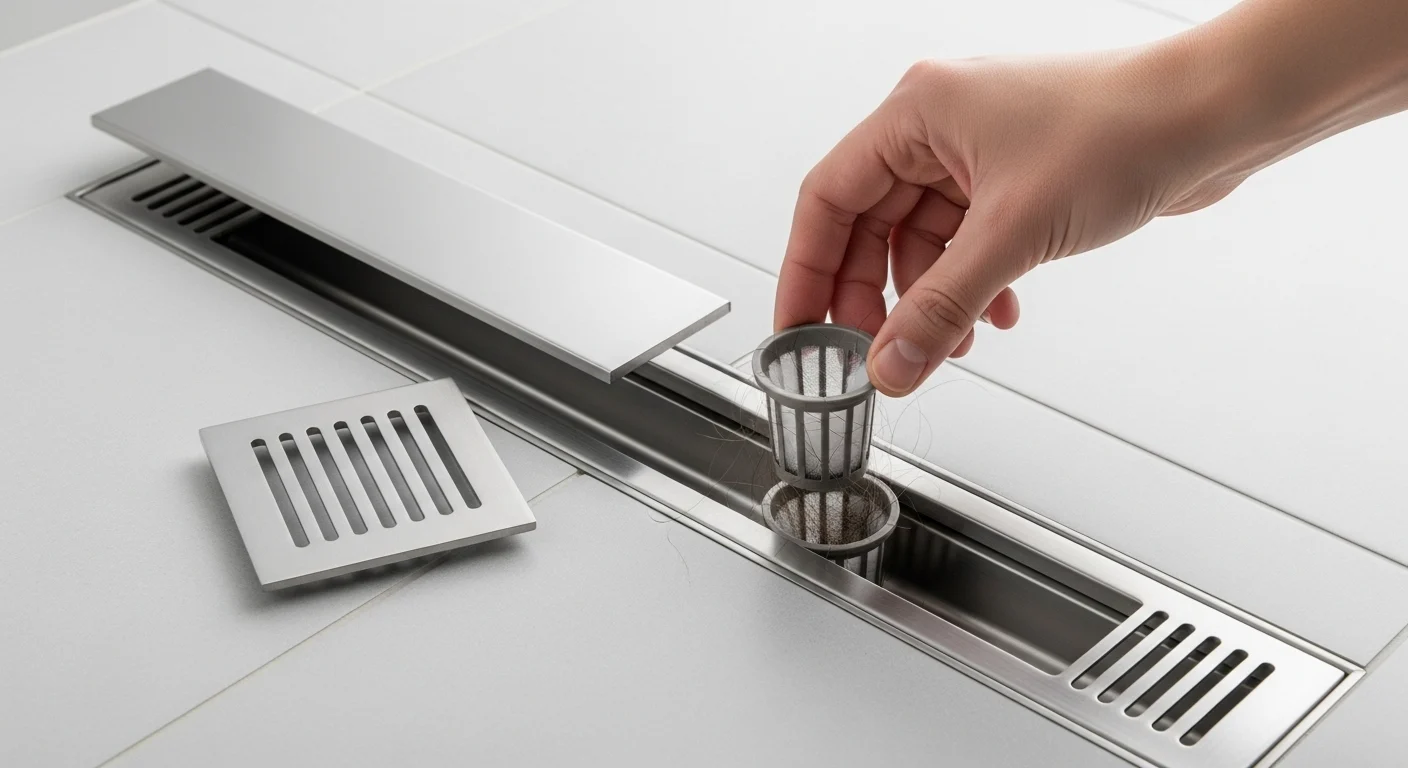
The grate on top just pops right off. They usually give you a little metal hook thing to lift it.
Simple.
Underneath that, there’s a little basket. A hair trap. That’s the key. You just pull that thing out, dump the gunk in the trash, rinse it, and put it back. Takes less than a minute. Do it every week or two and you’ll probably never have a clog. It catches everything before it gets down the pipe.
If you want to do a real deep clean, with the grate and basket out, you can get a brush in there. Just scrub the inside of the channel with some bathroom cleaner. Get any of that soap scum off.
Because you can actually reach in there and clean it, it stays a lot less nasty than a regular drain where everything just disappears into the dark. Just check that little basket. That’s 90% of the job.
Is a Linear Drain Shower Pan Right for You?
So, should you get one? If you want that modern, clean look, or if you need an accessible shower, it’s a great option. No doubt about it. It’s more than just a drain at that point; it’s part of the whole room’s design.
But don’t let the simple look fool you. The installation has to be dead-on. I’m talking perfect. The the slope and the waterproofing have to be done by someone who actually knows what they’re doing with these systems.
You get it done right, you’ll have a great shower that won’t give you any trouble. You try to cheap out on the install… well, you’ll be calling someone like me in a few years to fix a leaky mess. Your call.