





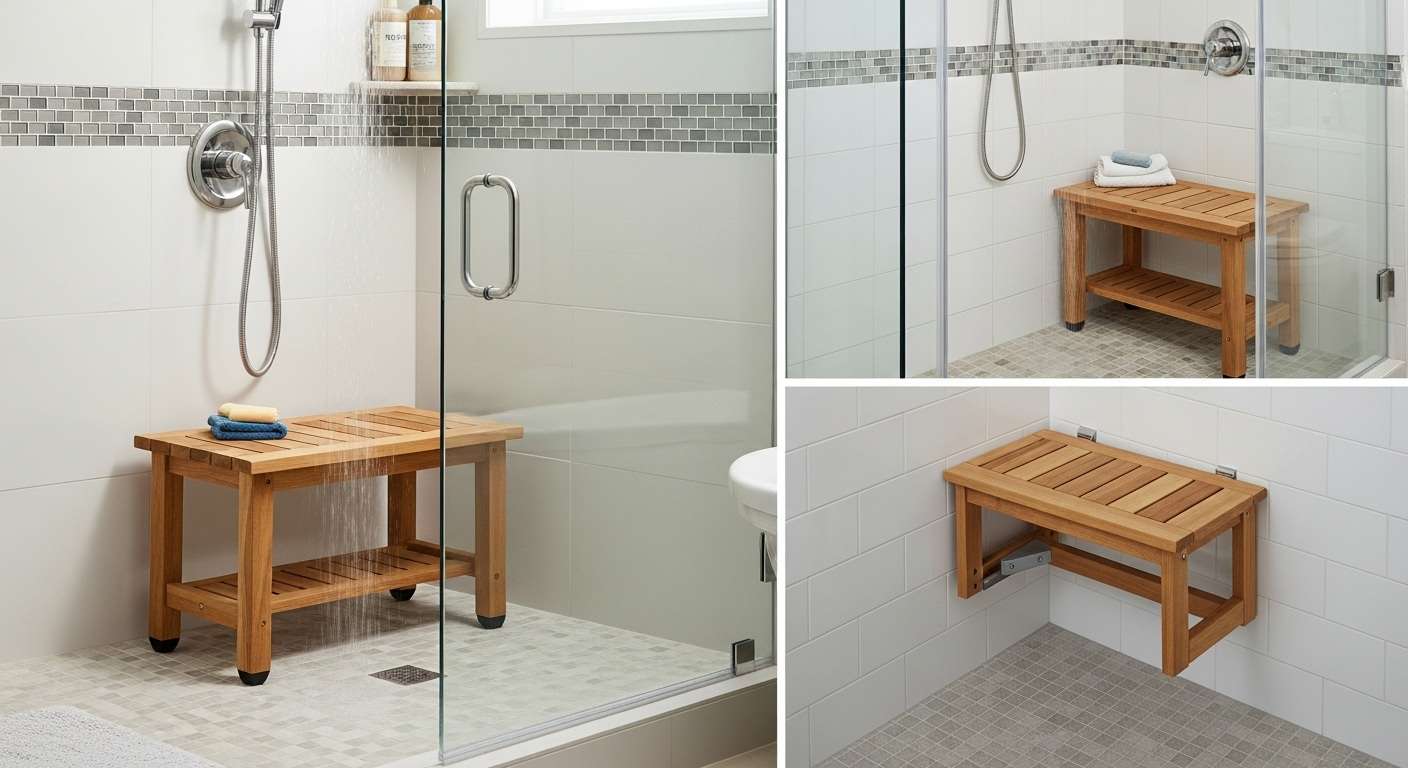

As a seasoned contractor, I’ve witnessed countless bathroom transformations, and one element consistently elevates a well-designed shower: a sturdy, functional teak shower bench. It’s more than a mere luxury; it’s an investment in practicality, safety, and everyday comfort. Over the years, I’ve installed, maintained, and sometimes had to replace benches that simply didn’t measure up.
That’s why I’m here to provide you with expert insights into why teak stands out as the premier choice, what crucial features to look for, and how to ensure your investment lasts for decades.
Choosing the right wooden shower bench isn’t just about aesthetics; it’s about making a smart, long-term decision for your home. This guide will walk you through everything you need to know, from understanding different wood grades to proper installation and essential maintenance, ensuring your teak shower bench provides lasting value and functionality.
The Unrivaled Benefits of a Teak Shower Bench
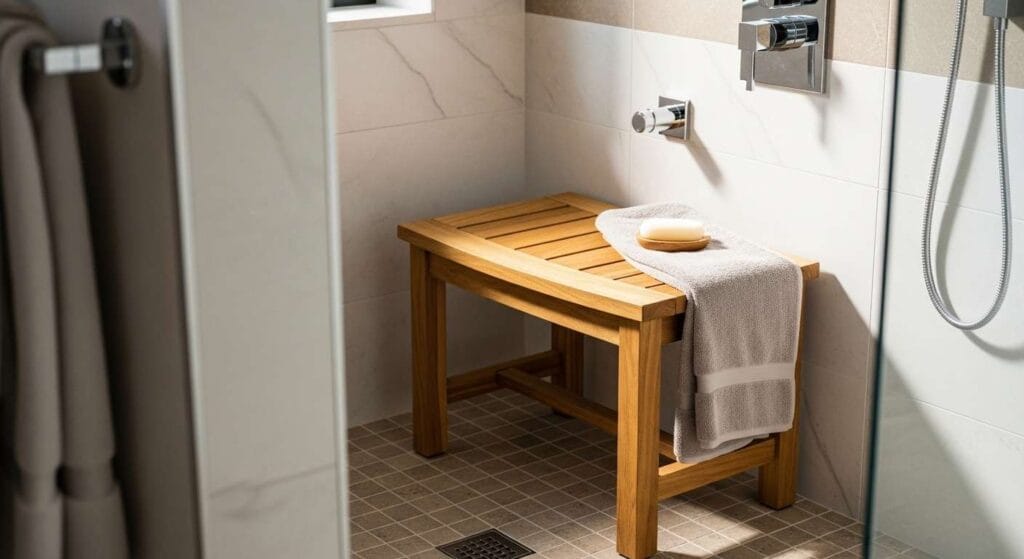
When clients inquire about materials for a shower bench, teak is almost always my primary recommendation. Its popularity isn’t solely due to its attractive golden-brown hue; it’s an exceptional performer in consistently wet environments. I’ve observed countless cheap plastic stools crack and warp, and metal benches rust and scratch tubs, but a well-crafted teak shower bench consistently demonstrates incredible longevity.
Is teak wood good for a shower? Absolutely. Teak’s inherent properties make it uniquely suited for the constant moisture and humidity of a shower. It naturally contains high levels of oils and rubber, which provide remarkable water resistance. These protective elements are deeply integrated into the wood’s cellular structure, enabling teak to repel water effectively. This natural resistance prevents common issues like rot, mildew, and warping—the primary adversaries of wood in a bathroom setting.
While the saying “teak never rots” is a slight exaggeration, it holds up far better than virtually any other wood you could place in a shower. On a recent high-end bathroom renovation, a custom teak shower bench was installed, and after five years, it remains a testament to teak’s durability when properly cared for.
Understanding Teak Grades: A, B, and C for Your Shower Bench
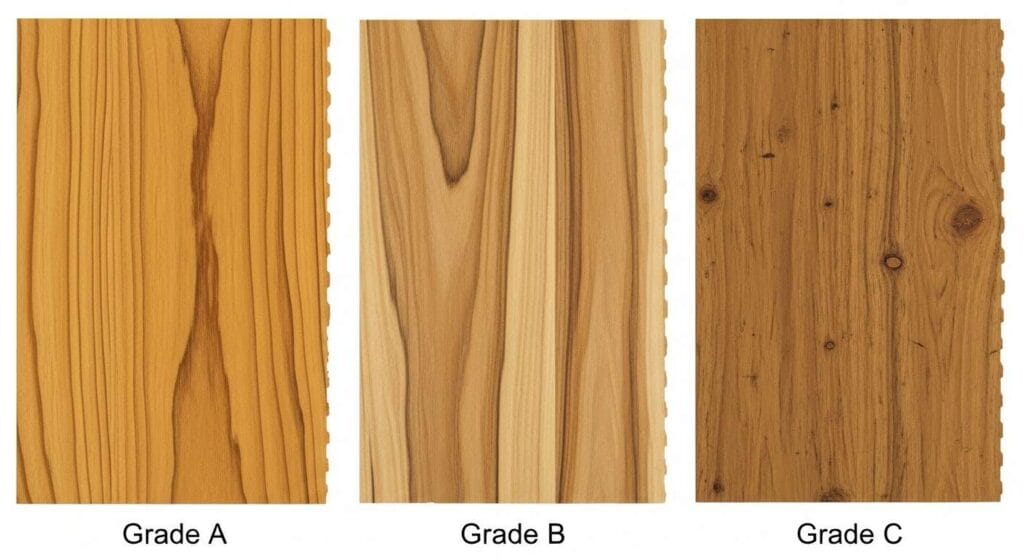
It’s crucial to understand that not all teak is created equal. There are typically three grades of teak—A, B, and C—and knowing the distinctions is vital for selecting a teak shower bench that meets your expectations for quality and longevity.
Grade A Teak represents the highest quality available. This wood is harvested from the mature heartwood of the tree, usually from the central core of the trunk. It is remarkably dense, exceptionally rich in those vital natural protective oils, and exhibits a consistent, uniform grain.
You can identify it by its warm, golden-brown color and smooth, almost buttery feel. While it is the most expensive option, Grade A teak is also the most durable and resistant to water, rot, and pests. If you desire a teak shower bench that will truly be an enduring feature in your bathroom for decades, Grade A is the definitive choice. I always advise my clients, “If you’re investing significantly in teak, always confirm it’s Grade A.”
Grade B Teak is a good alternative, offering a solid balance of quality and value. Sourced from the outer heartwood or inner sapwood, it still possesses good oil content but may show slight variations in color, minor knots, or a less consistent grain pattern. Generally lighter in color and slightly less dense than Grade A, Grade B teak is more affordable and performs very well in a shower environment.
However, it may require slightly more vigilant care and maintenance to ensure its longevity. It stands as an excellent compromise for budget-conscious buyers who still seek the benefits of genuine teak wood for their shower.
Grade C Teak is a grade I generally recommend against for any application involving regular water exposure, especially within a shower. This grade comes from the outermost layers of the tree (sapwood) or from younger, less mature trees. It contains very little of the natural oil content that makes teak so resilient, and it often features more knots, imperfections, and an uneven grain.
Grade C teak is typically used in less demanding applications or in products ambiguously labeled as “teak” that won’t withstand constant moisture. It’s inexpensive for a reason, and in my professional experience, it often leads to premature failure and disappointment in a shower setting. Avoid wasting your money on a Grade C wooden shower bench if durability is a priority.
Freestanding vs. Wall-Mounted: Choosing Your Teak Shower Bench Style
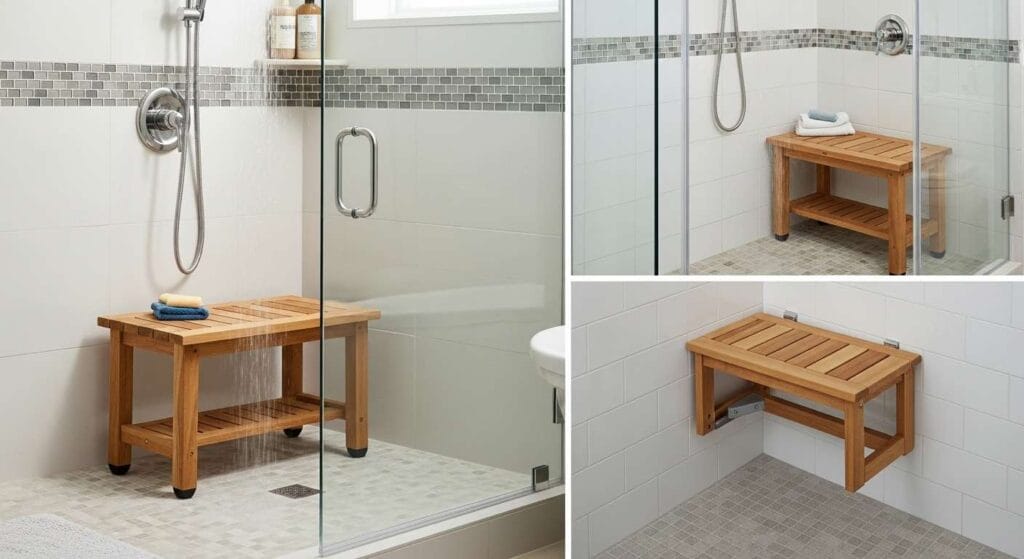
Once you’ve decided on the appropriate grade of teak, your next decision involves the style of your teak shower bench: freestanding or wall-mounted. Both options have distinct advantages and disadvantages, and the best choice depends largely on your shower’s dimensions, your specific needs, and your comfort level with installation.
Freestanding teak shower benches offer unparalleled flexibility. They can be easily moved within the shower, removed for thorough cleaning, or even repurposed in other areas of the bathroom. A major benefit is that they require no permanent installation, making them ideal for renters or individuals who prefer not to undertake a complex DIY project. However, stability is paramount for these benches.
Always select a model that feels absolutely solid and secure on its feet, preferably equipped with rubber or silicone non-slip pads to prevent any wobbling or sliding on wet tile. A common mistake is choosing a lightweight, flimsy bench that shifts when sat upon, posing a significant safety hazard, particularly for seniors or those with mobility challenges. Always test its stability thoroughly before making a purchase.
Wall-mounted teak shower benches are my preferred choice when a shower’s design permits their installation. They offer superior stability and can support considerably more weight, as they are securely anchored directly into your wall studs. Furthermore, they conserve valuable floor space, making your shower feel larger and facilitating easier cleaning. Many models are foldable, allowing them to swing up against the wall when not in use—an ingenious space-saving feature for smaller showers.
The primary drawback is the more involved installation process. It requires precisely locating wall studs, drilling into tile, and ensuring all penetrations are meticulously sealed to prevent water intrusion into the wall cavity.
This is a task that demands careful execution; incorrect installation can lead to expensive water damage. However, when installed correctly—utilizing appropriate anchors, stainless steel screws, and ample silicone sealant around all drilled points—a wall-mounted wooden shower bench becomes a fantastic, long-lasting addition to your bathroom.
Essential Considerations for Any Wooden Shower Bench
While teak wood remains the gold standard, it’s worth acknowledging that it isn’t the *only* wood capable of enduring a shower environment. However, any alternative wood shower bench material requires even greater scrutiny and often more rigorous maintenance. Materials like cedar or bamboo are sometimes used.
Cedar possesses natural aromatic qualities and some resistance to decay, but it is typically softer than teak and more susceptible to scratching. Bamboo, although incredibly strong and sustainable, is botanically a grass and usually processed as laminated planks.
Its long-term water resistance heavily relies on the adhesives and finishes applied, which can degrade over time in a consistently wet area. My professional advice is to proceed with extreme caution if it’s not teak and thoroughly research the material’s long-term durability in a shower setting.
Identifying a Quality Wooden Shower Bench: A Contractor’s Checklist
Regardless of whether you choose teak or another type of wood, here’s a comprehensive checklist I use on every job to identify a high-quality wooden shower bench built for enduring performance:
Grade Confirmation: For teak, always insist on Grade A or B. Ask the seller directly to confirm the grade. If they cannot tell you, or if it’s Grade C, it’s wise to walk away and seek a higher-quality teak shower bench.
Solid Construction: Look for robust joinery that signifies quality craftsmanship. Dovetail joints, mortise and tenon joints, or solid finger joints are excellent indicators. Avoid benches primarily held together with flimsy screws, staples, or minimal glue, as these rarely last in a high-moisture environment.
Hardware Matters: Any metal components, especially for wall-mounted models, must be made of stainless steel (Type 304 or 316) to prevent rust and corrosion in the humid shower environment. Nickel-plated or chrome-plated mild steel will simply not withstand long-term exposure to moisture.
Smooth Finish: Run your hand over every surface of the bench. It should feel perfectly smooth, devoid of any splinters, rough patches, or sharp edges that could snag skin or towels.
Even Grain and Color: This characteristic is particularly important for teak. Look for a consistent grain pattern and uniform color throughout the entire piece, which indicates it was crafted from quality timber rather than patched-together scraps.
Weight and Density: A truly high-quality teak shower bench should feel substantial and heavy. This weight is an indicator of dense wood and solid construction. If the bench feels light and flimsy, its durability is likely compromised.
Non-Slip Feet (for freestanding benches): These are absolutely essential for safety. Verify that any freestanding bench has durable, non-marking rubber or silicone feet designed to grip a wet tile floor securely, preventing slips.
Weight Capacity: Always check the manufacturer’s stated weight capacity. This is critical for wall-mounted benches, but even freestanding models should be robust enough to comfortably and safely support adult weight. Be wary of designs with unusually low weight limits.
Remember, a wooden shower bench will be subjected to a demanding environment day after day. Skimping on quality now will almost certainly lead to frustration, premature wear, and additional replacement costs down the road. Invest wisely to enjoy the lasting benefits.
Maximizing Longevity: Installation and Care for Your Teak Shower Bench
Congratulations on selecting a fantastic teak shower bench! Now, let’s focus on ensuring it’s properly set up and maintained so it serves you beautifully for many years to come.
Expert Installation for Your Wall-Mounted Shower Bench
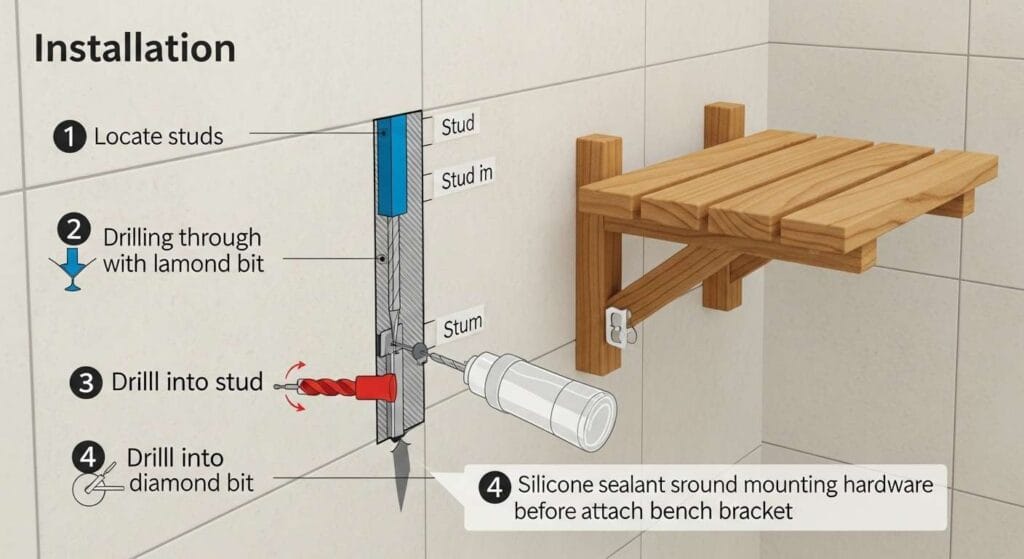
This is where my contractor expertise is crucial. Proper installation for a wall-mounted wooden shower bench is paramount. You are drilling into your wall, and the utmost priority is preventing water from infiltrating where it doesn’t belong.
First, accurately locate your studs. A reliable stud finder is an indispensable tool here. Clearly mark the center of each stud you intend to use. It is imperative that your mounting screws penetrate these studs squarely. Never rely solely on drywall anchors in a shower setting; they lack the necessary weight capacity and are not designed for constant moisture.
If your desired bench location doesn’t align with existing studs, you may need to open up the wall, install solid wood blocking between the studs, and then re-tile. While a more extensive undertaking, it is the only truly secure method for a wall-mounted shower bench.
Next, drilling through tile requires precision. Use a high-quality, diamond-tip drill bit. Begin by applying painter’s tape over your drilling spot to prevent the bit from “walking.” Operate the drill at a slow speed, *without* the hammer drill function, and continuously cool the bit with a spray bottle of water. Patience is key. Once you’ve successfully penetrated the tile, switch to a standard wood or metal bit to drill into the stud.
Finally, meticulously seal all penetrations. Before inserting your stainless-steel mounting screws, apply a generous bead of a high-quality silicone sealant—I typically recommend a marine-grade product like 3M’s Marine Grade Silicone Sealant—into the drilled holes and around the back of the mounting brackets.
This sealant forms your primary defense against water intrusion. As you tighten the screws, the sealant will spread, creating a watertight barrier. Immediately wipe away any excess sealant for a clean, professional finish. On a recent project, we encountered a challenge when a client wanted a wall-mounted bench but lacked solid backing.
We had to carefully cut into the tiled wall, install sturdy 2×6 blocking between the studs, then patch and re-tile before mounting the bench. This added a day to the schedule, but the peace of mind regarding long-term durability and water protection was invaluable.
Easy Setup for Freestanding Teak Shower Benches
For freestanding benches, the “installation” process is considerably simpler, but still important. Position your teak shower bench in its desired location within the shower.
Verify that it sits perfectly level and does not rock or wobble. If it does, you may need to adjust any leveling feet it possesses or use a thin, non-slip shim beneath one of the legs. Always ensure that the non-slip feet are securely attached and make firm contact with the shower floor. The bench must feel absolutely stable before anyone uses it.
Teak Shower Bench Cleaning and Maintenance Tips
How do you maintain a teak shower bench? One of the great advantages of teak is its low maintenance requirement, but “low” does not mean “none.” Regular cleaning is essential to prevent soap scum buildup and preserve its beautiful appearance.
For daily or weekly upkeep, simply rinse your bench thoroughly with fresh water after each use to wash away soap residue. Then, wipe it down completely with a clean towel or a squeegee. This crucial step prevents the slippery, slimy film that can develop if soap scum is allowed to accumulate.
For a more thorough cleaning, I recommend a mild soap and water solution. You can use a soft-bristled brush—such as a gentle scrub brush or even an old toothbrush for tight crevices—to work the soap into the wood grain. Always scrub gently in the direction of the grain. Rinse the bench meticulously with clean water, ensuring no soap residue remains, then dry it completely.
Avoid using harsh chemical cleaners or abrasive pads, as these can strip away the natural protective oils or scratch the surface of your wooden shower bench.
Should You Oil Your Teak Shower Bench? The Truth About Teak Oil
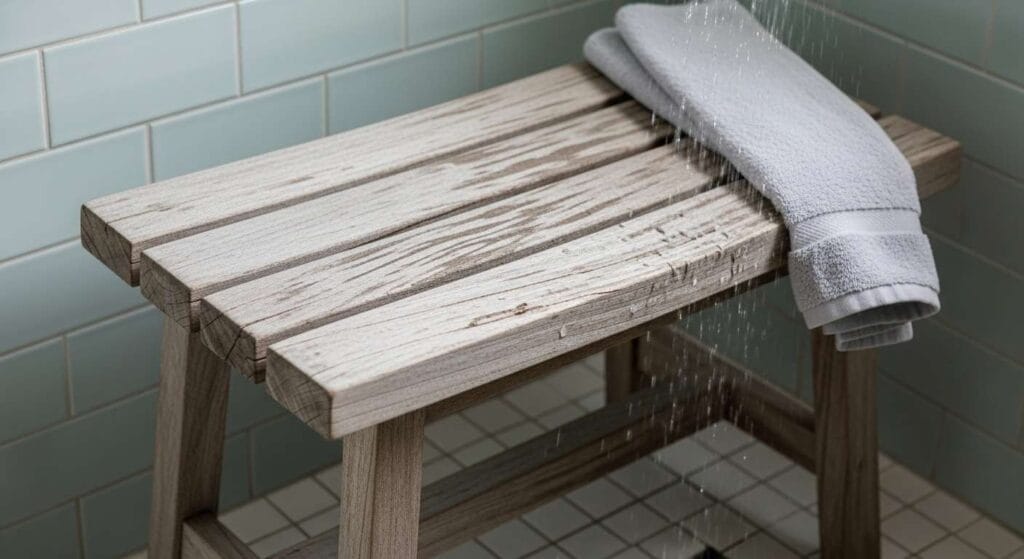
This is a frequently asked question, and my answer for a teak shower bench used *inside* the shower is generally: no, not typically. Here’s why: The natural oils inherent in quality teak are what provide its protection. Adding more oil, particularly traditional teak oil, can actually create an environment conducive to mildew growth and make the surface undesirably slick, which is the last thing you want in a shower.
If you have Grade A or good Grade B teak, it will naturally weather to a beautiful silvery-grey patina over time if left untreated. This “greying” is purely cosmetic and does not compromise the wood’s durability or functionality. Most homeowners find this natural patina quite appealing, contributing a sophisticated, spa-like aesthetic to the bathroom.
If you are insistent on maintaining the original golden-brown color, you would need to clean the bench thoroughly and reapply a marine-grade teak sealer (distinct from oil) every few months. This is a significant amount of work for an item constantly exposed to water. In my experience, most people prioritize the convenience of allowing the teak to age naturally.
For teak furniture situated *outside* the shower, such as a bench in the main bathroom or on a patio, then periodic oiling is more appropriate for aesthetic preservation. But for inside the shower, let your teak shower bench embrace its natural transformation.
The Lifespan of a Teak Shower Bench: What to Expect
With proper care and if you’ve invested in a good quality teak shower bench (Grade A or B, with solid construction), you can confidently expect it to last a very, very long time. I’m referring to a lifespan of 15 to 20 years, easily, and often even more. I’ve encountered older, meticulously maintained teak pieces in homes that are practically heirlooms. The crucial factor here is “well-maintained.” Neglecting regular rinsing and drying, or using inappropriate cleaners, will undoubtedly shorten its life.
Signs of significant wear might include a perpetually rough surface texture, persistent mildew that resists cleaning, or visible cracking. Should you observe these indicators, it may be time to consider a replacement. However, given its inherent durability, a quality teak shower bench truly represents a buy-it-for-life product for your bathroom. It’s an investment that richly rewards you with both aesthetic appeal and robust functionality, standing strong through countless showers.