





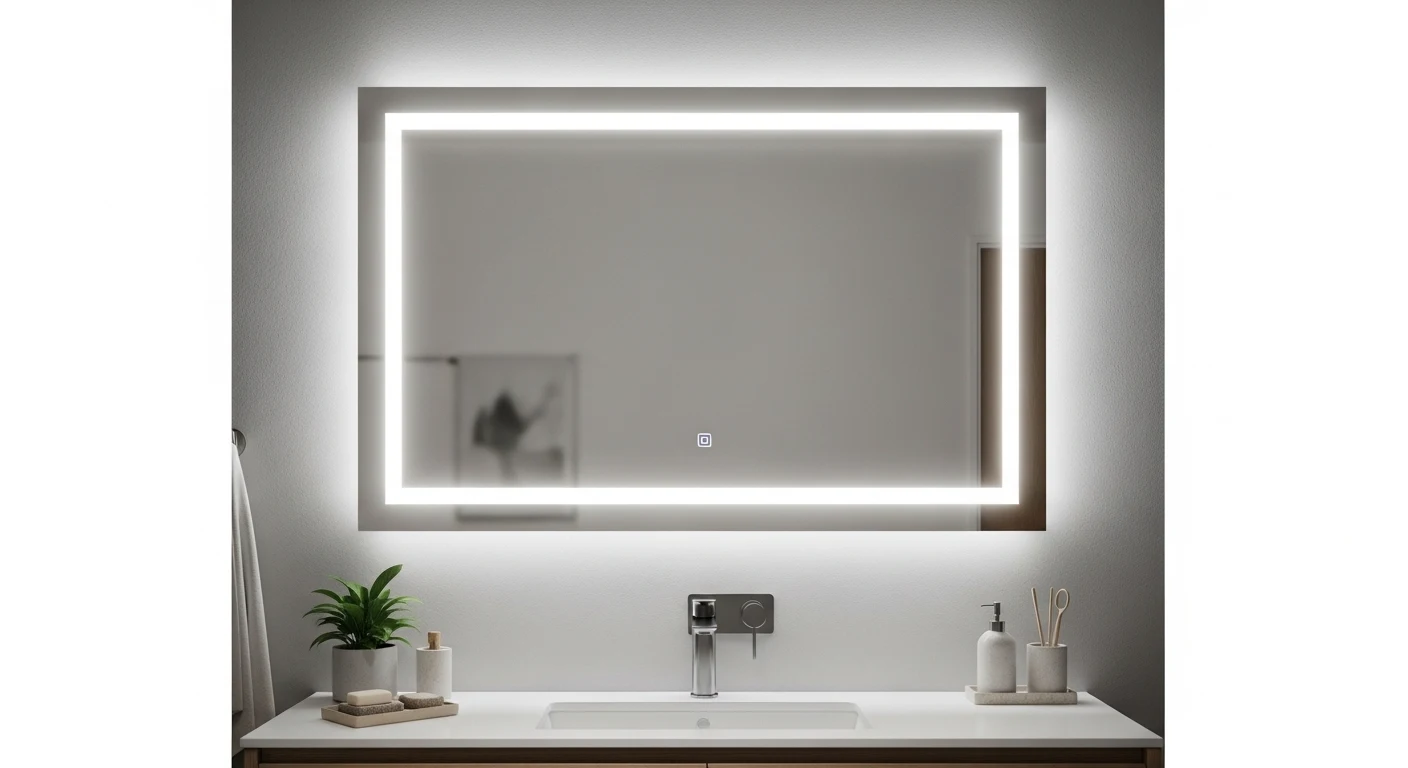

Look, choosing one of these things isn’t just about what looks nice. I mean, yeah, you have to look at it every day. But don’t let some marketing guy convince you it’s a central hub of functionality that’s going to change your life.
It’s a box with a mirror and a light. Let’s be real.
I’ve been installing these things since ’98. I’ve seen the cheap junk from the big box stores and the fancy Italian ones that cost more than my first truck. People get hung up on the wrong things. The shiny bits. Forget all that for a minute. Let’s talk about what actually matters before you waste a bunch of money on a glorified, glowing box, bathroom mirror cabinet with lights.
Decoding the Lights: Color Temperature and Dimmers
This is where everybody messes up. The lights. They see LED and think it’s all the same. It’s not. You get the wrong kind of light and you’re going to look sick every single morning.
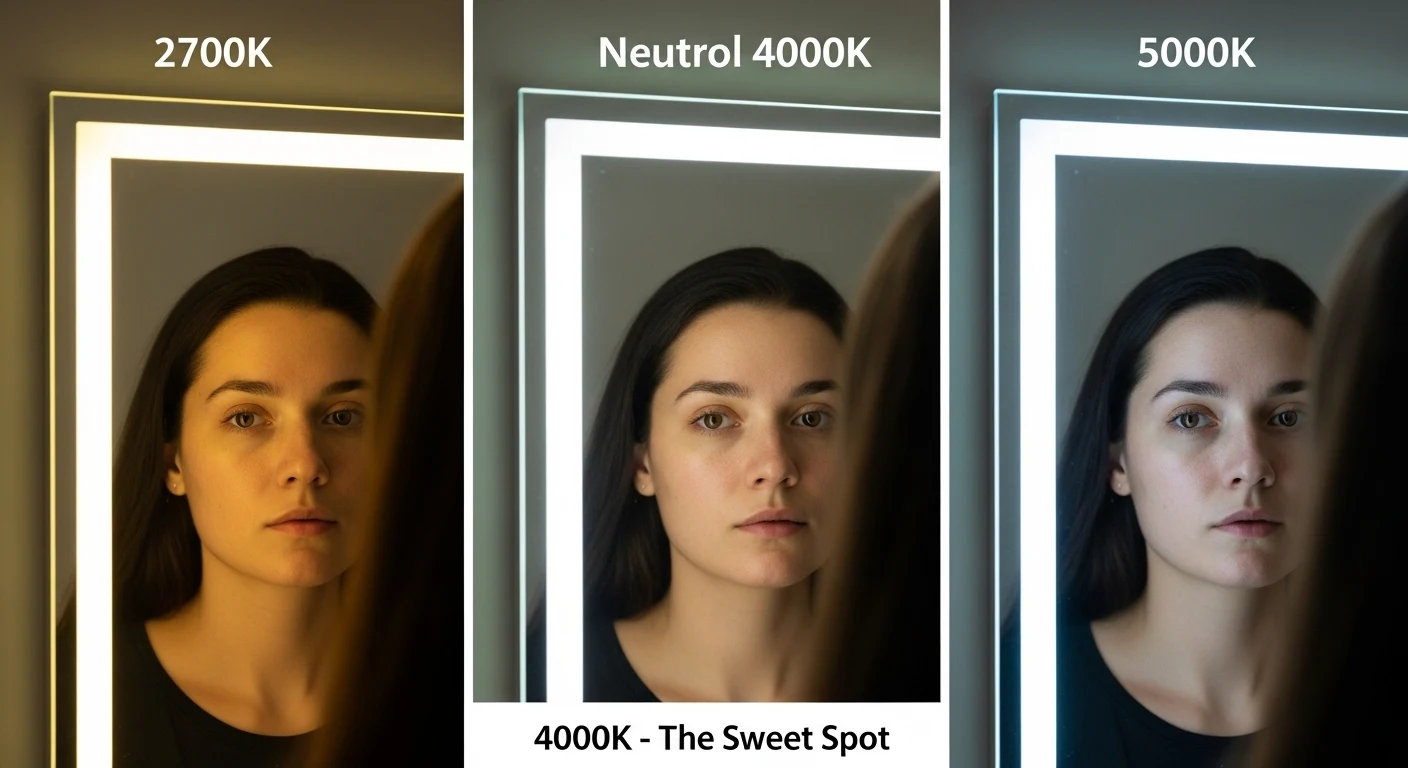
It’s called color temperature. They measure it in Kelvin. Don’t worry about the term, just remember the number. I had a guy over on Maple Ave, nice house, but he bought this 5000K cabinet. It was like an operating room in there. Blue-white light. Awful. Made him look like a ghost.
For a bathroom, you want something in the 3000K to 4000K range. That’s the sweet spot. It’s clean, it’s bright. You can see what you’re doing when you’re shaving but it doesn’t make your skin look like plastic.
The best ones, the ones I recommend, let you change the temperature. A warmer light for a relaxing bath, a brighter white for the morning. If you can find one that does that, get it.
And dimmers. You need dimmers. You don’t always need a thousand watts blasting you in the face at 6 AM. The good ones dim smoothly. The cheap ones just have a high and a low. It’s a small detail that makes a big difference.
To make this a bit clearer, here’s how I break it down for my clients:
| Kelvin Number | What it Looks Like | My Verdict |
|---|---|---|
| 2700K | Warm, yellowish, like a cozy lamp | Too warm for tasks, can make colors look off |
| 3000K – 4000K | Clean, neutral to cool white | The Sweet Spot. Perfect for makeup and shaving |
| 5000K and up | Harsh, blue-white, like an office | The Operating Room. Avoid this at all costs |
My Take: Honestly, just stick to that 3000K to 4000K range and make sure it has a dimmer. The fancy ones that let you adjust the color are nice, but not essential if you find a good one in the sweet spot.
Smart Features That Actually Matter: Anti-Fog and Sensors
They call everything smart these days. My toaster is probably trying to connect to the wifi. Most of it is useless junk designed to get you to spend more money.
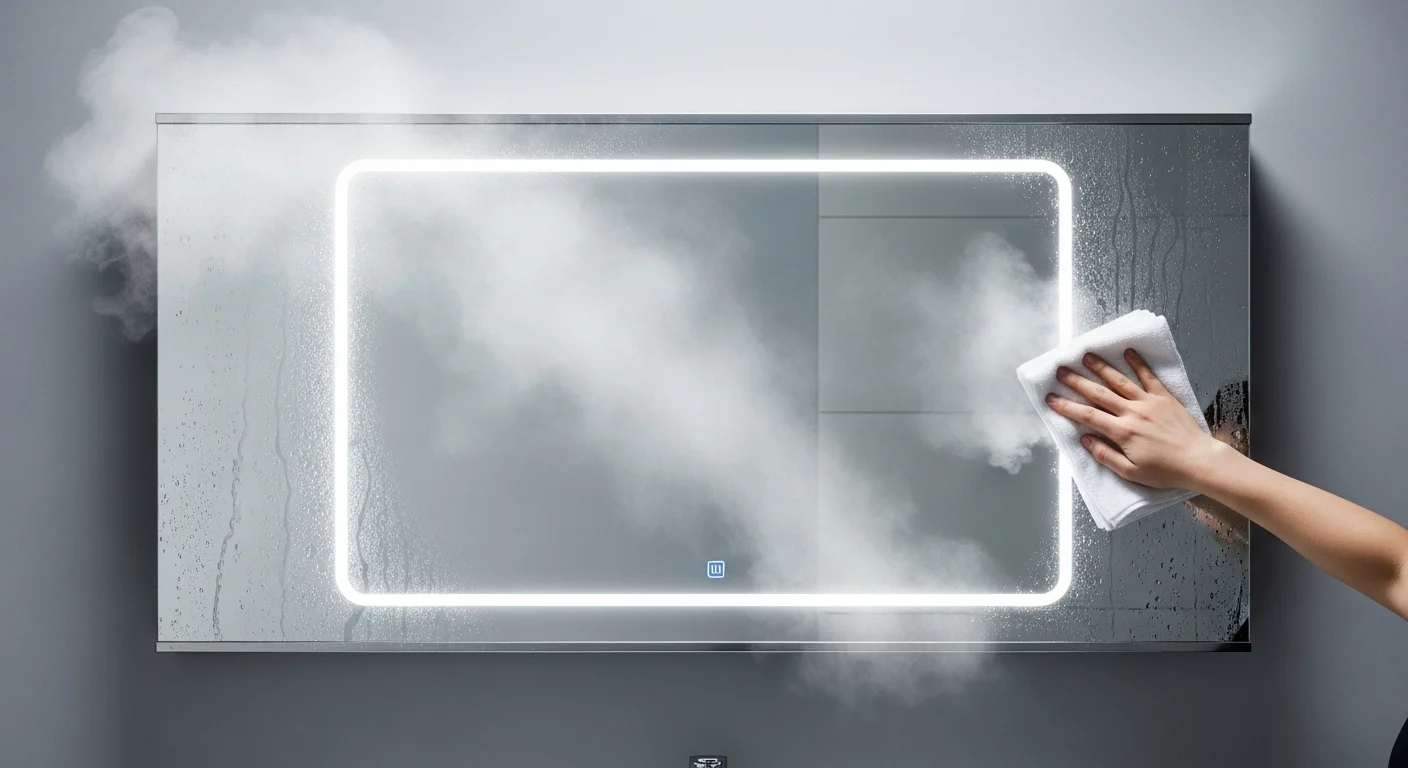
But the anti-fog feature? The little heater pad behind the glass?
Yeah, that one’s actually worth it.
You get out of a hot shower and the mirror is just… clear. No wiping it down with a towel, no streaks. It’s simple, and it works. It’s probably the one smart feature I tell everyone they have to get. Had a job last fall in that new subdivision out by the highway, tiny little bathroom with no window. Total steam box. That demister was the only thing that made the room usable.
Then you have motion sensors. Some of them have a little light underneath that kicks on when you walk in at night. That’s actually pretty handy. Helps you find your way without blinding yourself with the main lights.
But don’t fall for the gimmicks. Built-in Bluetooth speakers. Just stop. The sound quality is always terrible. Thin and tinny. If you really need to listen to music in the shower, just buy a real waterproof speaker for fifty bucks. Focus on the stuff that solves a problem.
Let’s put them side-by-side so you can see what I mean.
| The Smart Feature | Is it Worth the Money? | My Two Cents |
|---|---|---|
| Anti-Fog Pad (Demister) | Absolutely, 100 percent | This is the one feature I tell everyone is a must-have. |
| Motion Sensor Night Light | Pretty handy | Good for navigating at night without blinding yourself. |
| Built-in Speakers | Nope. Hard pass. | The sound is always terrible. Buy a separate speaker. |
| Digital Clock | It’s fine, I guess | Your phone has a clock. Don’t pay extra for this. |
Pro-Tip: Pay attention to that anti-fog feature. It tells you a lot about the quality of the cabinet. If they put in a good demister, they probably didn’t cut corners elsewhere.
Recessed vs. Surface Mount: The Big Installation Decision
Alright, this is the big one. This is where you can really screw things up bad.
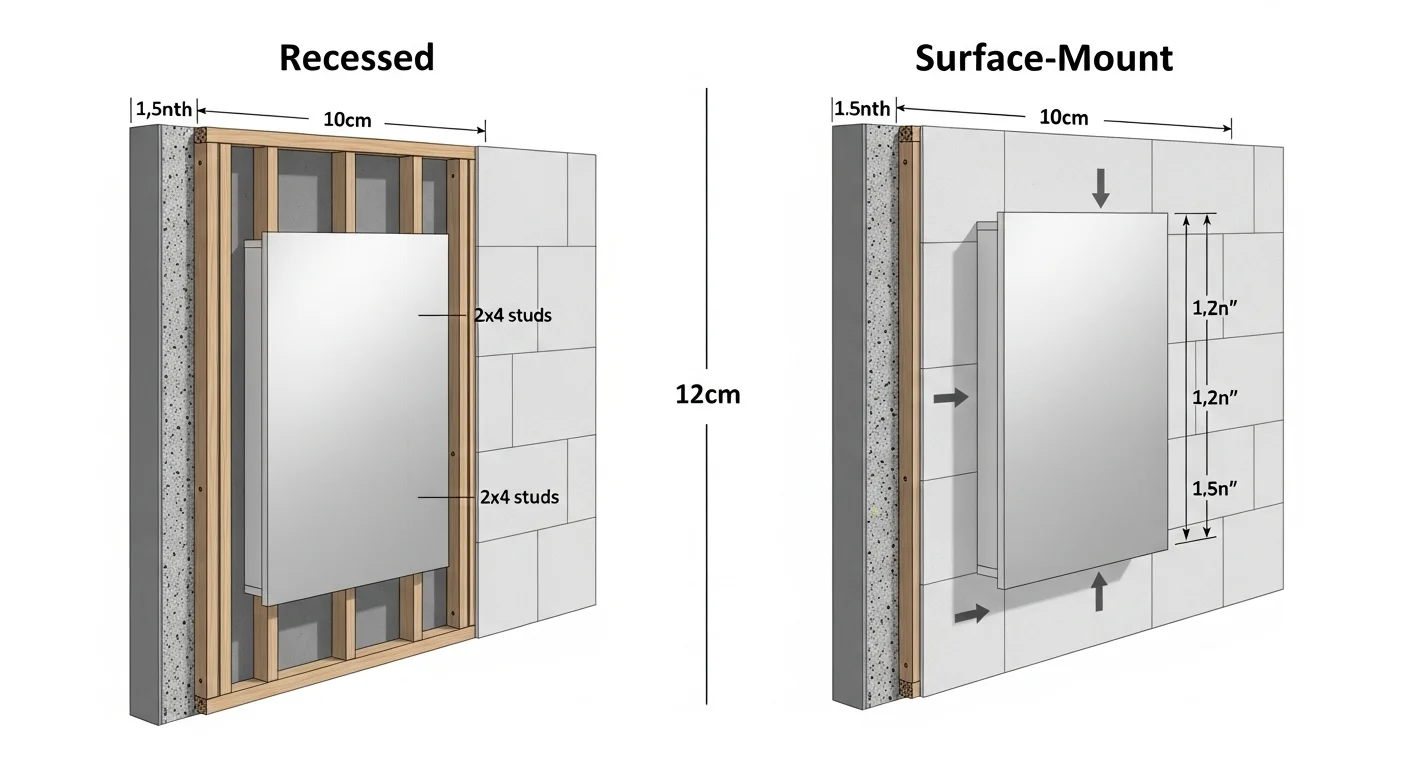
A surface-mount cabinet is easy. You hang it on the wall like a picture. Simple. Fast. If you have a concrete wall or you just don’t want to cut into your drywall, this is your option. The only thing is, it sticks out from the wall. Four, maybe five inches. In a small bathroom, you feel it.
A recessed cabinet looks better. A lot better. It sits inside the wall, so the mirror is almost flush. A nice, clean, high-end look.
But. And it’s a big but.
You have to cut a giant hole in your wall. Before you even think about this, you have to know what is inside that wall. You need a stud finder, first of all. Find the studs, they’re usually 16 inches apart. The cabinet has to fit between them. More important, you have to be dead sure there’s no plumbing in there. No vents. No major wiring. I work with a plumber, Dave, who gets calls all the time from homeowners who went right through a drainpipe. It’s a nightmare you do not want.
A recessed installation is a great upgrade. But you gotta plan for it.
Here’s a quick cheat sheet on the two options:
| Installation Type | The Good Part | The Bad Part |
|---|---|---|
| Surface Mount | Easy to install, hangs on any wall | Sticks out 4-5 inches, can feel bulky |
| Recessed Mount | Sits flush, very clean and modern look | Major surgery. You have to cut a hole in the wall. |
My Take: If you’re already renovating and have the walls open, go recessed. It’s a premium look. But if you’re just swapping out an old mirror, a surface-mount cabinet will save you a world of pain. Don’t cut into a wall unless you are 100 percent sure what’s behind it.
Getting the Size and Storage Right for Your Space
Here’s a simple rule. Your mirror cabinet should never be wider than the vanity it’s sitting over. Never. It looks top-heavy and just… wrong. Like a man with a tiny head wearing a giant hat. It can be the same width, that looks good. A little narrower is fine too. But never wider.
And check the height. And the door swing. Oh, man, the door swing. People always forget the door. I had a client, she picked out this beautiful tall faucet, really expensive. We install the cabinet and what happens? The corner of the mirror door smacks right into the faucet every time she opens it. She had to send the whole cabinet back. Measure everything twice.
Inside, don’t settle for fixed shelves. You’d think adjustable shelves would be standard on everything now, but they’re not. Make sure you can move them around. You need to fit your electric toothbrush, your shaving cream, all your stuff. The inside matters just as much as the outside.
Power and Practicality: Outlets and Energy Use
A lot of these new cabinets come with outlets inside. Sometimes USB ports, too. It’s incredibly useful. You can charge your shaver or your toothbrush in there, with the door closed. Keeps all the cords and clutter off the counter. I like ’em.
Just remember this needs power. And this is not a DIY job. You’re mixing electricity and water in a bathroom. It has to be done right, by an electrician, on a proper GFCI circuit. Don’t cheap out on this. Seriously.
As for how much power they use? Don’t even worry about it. They’re all LED. They use practically nothing. That’s the one thing you don’t have to think about. The bulbs will probably last longer than you own the house.
Your Perfect Bathroom Awaits
So that’s the story. It’s a mirror, yeah, but there are a dozen ways to pick the wrong one.
Focus on getting the light right, get the anti-fog pad, and be damn careful if you decide to cut a hole in your wall. Do that, and you’ll be fine.
How do you power a lighted mirror cabinet?
You don’t. An electrician does. It has to be hardwired into a circuit in your wall, and that circuit has to have GFCI protection. It’s code, and it’s for safety. Don’t mess with it yourself.
Do lighted medicine cabinets provide enough light for a bathroom?
No. Not for the whole room. They give you great light for your face at the vanity. For shaving, makeup, that kind of stuff, it’s perfect. But it won’t light up the whole bathroom. You still need a main light in the ceiling.
What is the best color temperature for a bathroom mirror?
I feel like I already said this. Stick between 3000K and 4000K. It’s a clean, neutral light that doesn’t make you look weird. If you can get a cabinet that lets you adjust it, even better.
Are anti-fog mirrors worth the money?
Absolutely. Yes. It’s the most useful feature on any of these things. You’ll use it every single day.
How deep should a recessed medicine cabinet be?
Most of them are built to fit in a standard 2×4 wall. The space inside the wall, the cavity, is about 3.5 inches deep. So that’s how much storage depth you get. It’s usually enough for toothpaste, pill bottles, that sort of thing.
Great post! A bathroom mirror cabinet with lights is the ultimate combo of style and functionality. It brightens your space, makes daily routines easier, and provides convenient storage—all while giving your bathroom a modern, polished look.
I agree with you on this point.